Best Museums in Tokyo
Last updated: August 2026
Tokyo ranks among the world’s great museum cities. In a single day you can move from ancient Japanese ceramics to cutting-edge digital art to a recreation of Edo-period streetscapes. Entry prices are reasonable by international standards, collections are world-class, and most major institutions now offer English-language audio guides or signage. This is the definitive guide to the best museums in the city, organized by type.
| At a glance | |
|---|---|
| Where | Mostly Ueno, Roppongi, and Omotesando/Shinjuku |
| Cost | Around 400-2,000 yen per museum; teamLab venues 3,200-3,800 yen |
| Time needed | Half a day for one museum cluster; a full day for a true museum crawl |
| Getting there | JR Yamanote Line to Ueno; Tokyo Metro to Roppongi or Omotesando |
| Best time | Weekday mornings for smaller crowds; book teamLab and Ghibli well ahead |
How Much Museum Time Should You Budget in Tokyo?
Tokyo rewards planning by cluster rather than trying to hop across the city in one day. The Ueno Museum Mile alone could absorb two full days if you wanted to see everything, and the Roppongi Art Triangle is a comfortable single afternoon. First-time visitors with only one museum slot in their itinerary tend to be happiest at the Tokyo National Museum (for depth and history) or teamLab Planets (for something genuinely unlike home). Families with children under ten often do better at the National Museum of Nature and Science, where the blue whale model and hands-on galleries hold attention longer than glass cases of lacquerware — see the Tokyo family guide for more kid-friendly pacing tips.
If you are combining museums with temple-hopping, see the Tokyo temples and shrines guide — Ueno Park’s Toshogu shrine sits a few minutes from the National Museum, so the two pair naturally into one outing.
Tokyo National Museum — Japan’s Finest Collection
The Tokyo National Museum in Ueno is the oldest and largest art museum in Japan, holding over 120,000 objects including 89 National Treasures. The main Honkan building covers Japanese art from prehistoric Jomon pottery through Edo lacquerwork and samurai armor. The Toyokan building focuses on Asian art including Chinese bronzes, Korean ceramics, and Egyptian artifacts.
The Heiseikan building hosts the Japanese Archaeology gallery — one of the most impressive presentations of ancient material culture in Asia. Special exhibitions (held in the larger halls) often feature loaned National Treasures and draw long queues.
- Entry: 1,000 yen general; special exhibitions 1,600–2,000 yen extra
- Hours: 9:30–17:00 Tuesday–Sunday (until 20:00 Fridays and Saturdays)
- Getting there: Ueno Station (JR Yamanote Line), 10-minute walk through Ueno Park
- Duration: 2–4 hours
Mori Art Museum — Contemporary Art at Altitude
Perched on the 53rd floor of Mori Tower in Roppongi Hills, the Mori Art Museum presents major international and Japanese contemporary art exhibitions in a gallery with sweeping city views. The museum changes exhibitions several times a year and consistently attracts high-profile shows.
Admission includes access to the Tokyo City View observation deck, which makes the ticket excellent value. The museum is open until midnight on most nights, making it one of very few late-night cultural options in the city.
- Entry: 2,000 yen (includes City View deck)
- Hours: 10:00–22:00 daily (until midnight Fridays and Saturdays); closed Tuesdays when exhibitions change
- Getting there: Roppongi Station (Tokyo Metro Hibiya Line, Toei Oedo Line), 3-minute walk
- Duration: 1.5–2.5 hours
teamLab Planets — Immersive Digital Art
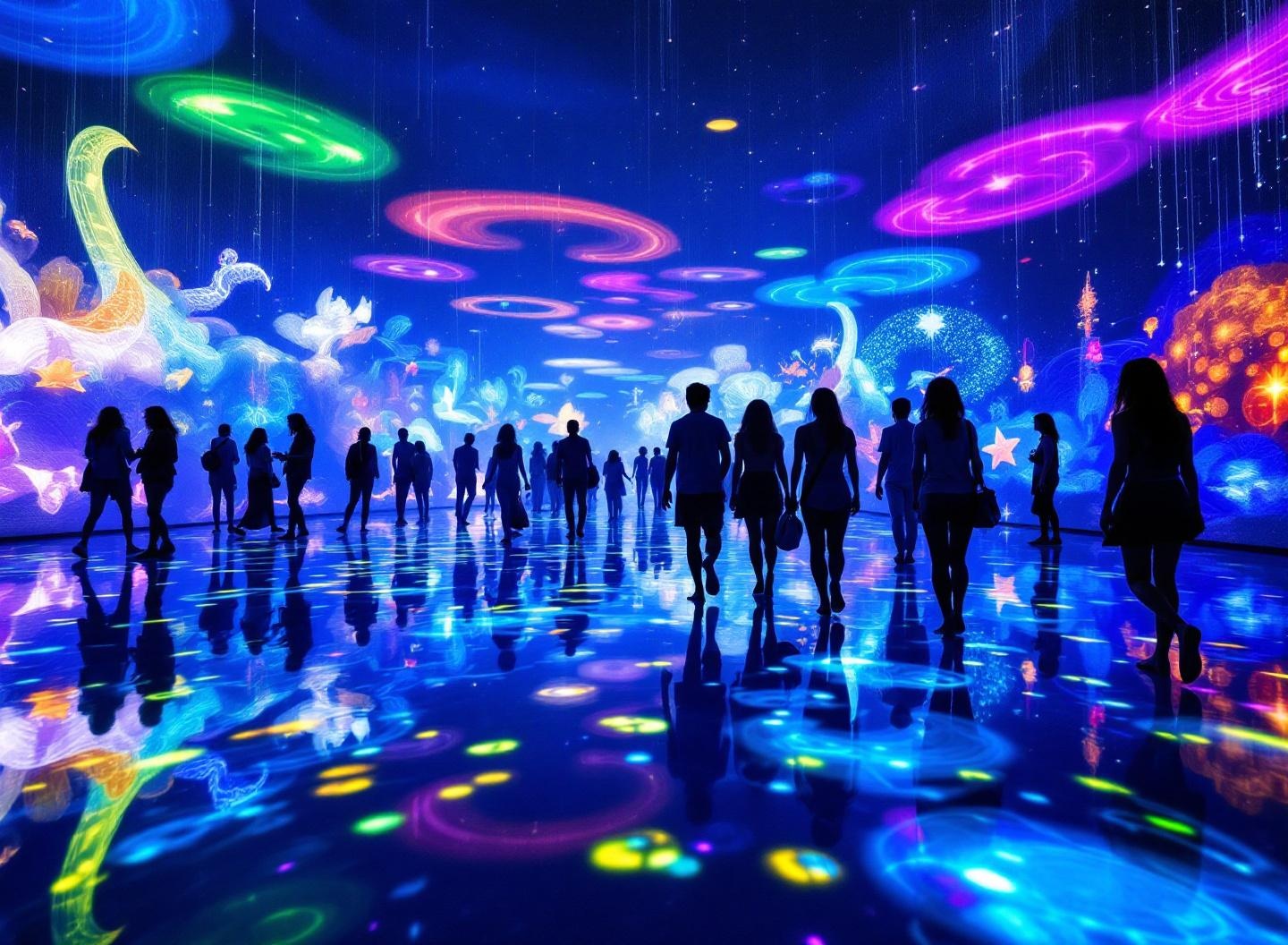
teamLab Planets in Toyosu is the more intimate of Tokyo’s two teamLab venues, and consistently rated among the most memorable experiences in the city. Visitors remove their shoes and wade through ankle-deep water into rooms filled with projections of koi, flowers, and infinite mirror spaces.
The experience takes 60–90 minutes and is completely unlike any conventional museum visit. Tickets must be booked in advance online — it frequently sells out weeks ahead, especially for weekend slots.
- Entry: 3,200 yen adults; 1,000 yen children (ages 4–12); must book online
- Hours: 9:00–21:00 daily (last entry 20:00)
- Getting there: Shin-Toyosu Station (Yurikamome Line), 3-minute walk
- Duration: 60–90 minutes
- Tip: Book 2–3 weeks ahead for weekend visits; weekday morning slots are easier to secure
Secure your entry to one of Tokyo's most popular digital art experiences with advance tickets. Includes guaranteed time slot.
teamLab Borderless — The Larger Venue
teamLab Borderless reopened in 2024 at a new location in Azabudai Hills after relocating from Odaiba. It is larger than Planets and more labyrinthine — rooms flow into each other without a fixed path, making every visit slightly different. The athletic forest installation and crystal universe room are standouts.
- Entry: 3,800 yen adults (prices vary by date and time slot); book online
- Hours: Check current schedule at the teamLab website — varies seasonally
- Getting there: Azabu-Juban Station (Tokyo Metro Namboku Line, Toei Oedo Line), 5-minute walk
- Duration: 90–120 minutes
National Art Center Tokyo — Architecture as Art
The National Art Center in Roppongi is Japan’s largest exhibition space, designed by Kisho Kurokawa with a stunning undulating glass facade. Unlike most major museums it has no permanent collection — it operates entirely through rotating exhibitions, often hosting the major annual juried shows of Japan’s art associations.
The building itself is worth visiting. The interior atrium with its inverted cone structures housing restaurants is one of Tokyo’s most striking interior spaces. Entry prices vary by exhibition.
- Entry: Varies by exhibition (usually 1,500–1,800 yen)
- Hours: 10:00–18:00 Wednesday–Monday (until 20:00 Fridays)
- Getting there: Nogizaka Station (Tokyo Metro Chiyoda Line), direct underground access
- Duration: 1–2 hours
Edo-Tokyo Museum — A City’s 400-Year Story
The Edo-Tokyo Museum in Ryogoku is one of Japan’s most impressive history museums, housed in a giant elevated structure designed to evoke a traditional kura (storehouse). The permanent exhibition traces Tokyo’s history from the founding of Edo in the 17th century through postwar reconstruction, using full-scale reconstructions of Edo-period neighborhoods, merchant houses, and a replica of the original Nihonbashi bridge.
Note: The museum underwent extensive renovation and reopened in 2024 — check current operating status before visiting.
- Entry: 600 yen permanent exhibition; special exhibitions extra
- Hours: 9:30–17:30 Tuesday–Sunday (until 19:30 Saturdays)
- Getting there: Ryogoku Station (JR Sobu Line, Toei Oedo Line), 3-minute walk
- Duration: 2–3 hours
Ghibli Museum — A Mandatory Advance Booking
The Studio Ghibli Museum in Mitaka is unlike any other museum in Japan. Designed by Hayao Miyazaki himself, the building is a layered, whimsical labyrinth with spiral staircases, stained glass windows featuring Ghibli characters, a rooftop garden with a giant Laputa robot, and a small cinema showing exclusive short films not available anywhere else.
Critical: Tickets are only sold in advance and cannot be purchased at the museum. International visitors should book through a licensed reseller — tickets release monthly and sell out within minutes. Book as early as possible.
- Entry: 1,000 yen adults; 700 yen teenagers; 400 yen children (ages 4–12)
- Hours: 10:00–18:00 Wednesday–Monday
- Getting there: Mitaka Station (JR Chuo Line), 15-minute walk or shuttle bus (210 yen each way)
- Duration: 2–3 hours
- Booking: Via Lawson ticket system (Japanese site) or international travel agencies; releases on the 10th of each month for the following month
21_21 Design Sight — Design Thinking in Midtown
21_21 Design Sight in Roppongi Midtown is a small but consistently excellent design museum founded by Issey Miyake and designed by Tadao Ando. The semi-subterranean building itself is a masterpiece of concrete and glass. Exhibitions explore design thinking broadly — past shows have covered topics from insects to transportation to water.
- Entry: 1,200 yen; varies by exhibition
- Hours: 10:00–19:00 Wednesday–Sunday
- Getting there: Roppongi Station (Tokyo Metro Hibiya Line, Toei Oedo Line), 8-minute walk through Midtown complex
- Duration: 45–90 minutes
Nezu Museum — Japanese Decorative Arts and Garden
The Nezu Museum in Omotesando holds one of Japan’s finest private collections of Japanese and Asian decorative arts, including several National Treasures. The building by Kengo Kuma integrates seamlessly with the attached traditional garden — a genuine pocket of calm in the middle of one of Tokyo’s most fashionable neighborhoods.
The garden alone (included in admission) is worth the entry fee. Seasonal events mark cherry blossom, iris, and autumn foliage seasons.
- Entry: 1,500 yen (permanent collection); higher during special exhibitions
- Hours: 10:00–17:00 Tuesday–Sunday
- Getting there: Omotesando Station (Tokyo Metro Ginza/Chiyoda/Hanzomon lines), 8-minute walk
- Duration: 60–90 minutes
National Museum of Nature and Science — Ueno’s Science Giant
Located in Ueno Park next to the Tokyo National Museum, this science museum covers the natural history of Japan and the broader natural world across two large buildings. Highlights include a life-size blue whale model, meteorites, preserved specimens of Hachiko the dog, and extensive geology and human evolution galleries. Excellent for families.
- Entry: 630 yen; free for children under high school age
- Hours: 9:00–17:00 Tuesday–Sunday (until 20:00 Fridays and Saturdays)
- Getting there: Ueno Station (JR Yamanote Line), 8-minute walk through Ueno Park
- Duration: 2–3 hours
Sumida Hokusai Museum — One Artist, One Vision
This small, dedicated museum in Sumida celebrates Katsushika Hokusai, the ukiyo-e artist who created The Great Wave. Designed by Kazuyo Sejima, the angular aluminum building is striking from the outside. Inside, rotating exhibitions draw on the museum’s extensive Hokusai archive alongside permanent displays covering his life and technique.
- Entry: 400 yen permanent; higher for special exhibitions
- Hours: 9:30–17:30 Tuesday–Sunday
- Getting there: Ryogoku Station (Toei Oedo Line), 5-minute walk; or Asakusa (10-minute walk)
- Duration: 45–75 minutes
Yayoi Kusama Museum — Infinity in Shinjuku
The Yayoi Kusama Museum in Shinjuku is a small, tightly curated space dedicated entirely to the world-famous Japanese artist known for her polka dots and infinity rooms. The museum holds rotating exhibitions from the Kusama Foundation’s archive. Tickets must be booked online — demand is extraordinarily high and slots sell out far in advance.
- Entry: 1,100 yen; online booking only
- Hours: 11:00–17:30 Thursday–Sunday
- Getting there: Wakamatsu-Kawada Station (Toei Shinjuku Line), 5-minute walk
- Duration: 60 minutes
- Tip: Book 4–6 weeks ahead; tickets release on the 1st of each month for two months out
Planning a Museum Day in Tokyo
Ueno Museum Mile: The Ueno Park complex contains the Tokyo National Museum, National Museum of Nature and Science, Tokyo Metropolitan Art Museum, and the National Museum of Western Art — all walkable from Ueno Station. A full day here barely scratches the surface.
Roppongi Art Triangle: Mori Art Museum, National Art Center Tokyo, and Suntory Museum of Art form a triangle walkable in 10–15 minutes between each. All three are consistently world-class.
Museum passes: The Grutto Pass (2,500 yen) gives discounted or free entry to over 100 museums and parks in greater Tokyo. Worth it for dedicated museum-goers staying 10 or more days.
Museum days pair well with a broader Tokyo itinerary — see Tokyo in 3 days for how to slot a museum morning between temples and shopping, or where to stay in Tokyo if you want a hotel base near Ueno or Roppongi.
Frequently asked questions
Is the Tokyo National Museum worth visiting if I only have one museum slot? Yes — it holds the largest and most historically important collection in Japan, and 2-4 hours there covers everything from Jomon pottery to samurai armor without needing a second museum to fill out a cultural day.
Do I need to book teamLab tickets before arriving in Japan? Yes, especially for weekend visits. Both teamLab Planets and teamLab Borderless sell out 1-3 weeks ahead in busy periods, so book online as soon as your dates are fixed.
More tours on Viator
Top-rated experiences with verified reviews, bookable on Viator (a Tripadvisor company).
 Viator
Tokyo: Make Your Own Chopsticks Shibuya
FromUSD 11Check availability → Viator
Private Curated Tour | Get Tokyo’s Must Sees & Unique Insights
FromUSD 144Check availability → Viator
Akihabara Tailor-made Private Tour for Anime Fans
FromUSD 128Check availability → Viator
Experience all of Japanese culture and Japanese food experience classes "origami, udon, Japanese food, green tea, calligraphy" in 4 hours
FromUSD 89Check availability → Viator
Samurai Experience - Learn Bushido through Kendo, in Tokyo
FromUSD 128Check availability → Viator