Best Temples in Kyoto
Last updated: August 2026
Kyoto was Japan’s imperial capital for over a thousand years, and the temples and shrines built across that millennium represent one of the densest concentrations of historic architecture anywhere on earth. The city has 17 UNESCO World Heritage Sites, more than 1,600 registered Buddhist temples, and over 400 Shinto shrines. Choosing where to spend your time requires a clear sense of priorities.
This guide ranks Kyoto’s most significant temples and shrines honestly — by the quality of the experience, not the size of the souvenir shop — and gives you the practical detail needed to visit each one well.
| At a glance | |
|---|---|
| Where | Spread across Higashiyama, northwest Kyoto, and outlying towns like Uji |
| Cost | Most main halls charge around 500-1,500 yen; many shrine grounds are free |
| Time needed | A focused day covers 3-4 major sites; a full week barely exhausts the list |
| Getting there | City buses and the Tozai/Karasuma subway lines reach nearly every temple on this list |
| Best time | Weekday mornings at opening; avoid midday during cherry blossom and autumn foliage peaks |
Choosing Which Temples to Prioritize
With 1,600 registered temples and 400 shrines, the practical problem is not access but selection. If this is your first visit to Kyoto, group your priorities by area rather than by fame alone: Fushimi Inari and the Fushimi sake district sit together in the south, Kinkaku-ji and Ryoan-ji share the northwest, and Kiyomizu-dera, Nanzen-ji, and the Philosopher’s Path cluster through Higashiyama. Trying to cross the city more than twice in a day wastes hours in transit that would be better spent inside a garden.
For travelers with only one full day, Fushimi Inari at dawn followed by Kiyomizu-dera and a walk through Gion covers the two most iconic sites without doubling back across town — see the things to do in Kyoto guide for how to sequence a full day. For those staying longer, pairing a major temple day with a day trip from Kyoto to Uji or Nara adds variety without sacrificing quality.
Fushimi Inari Taisha
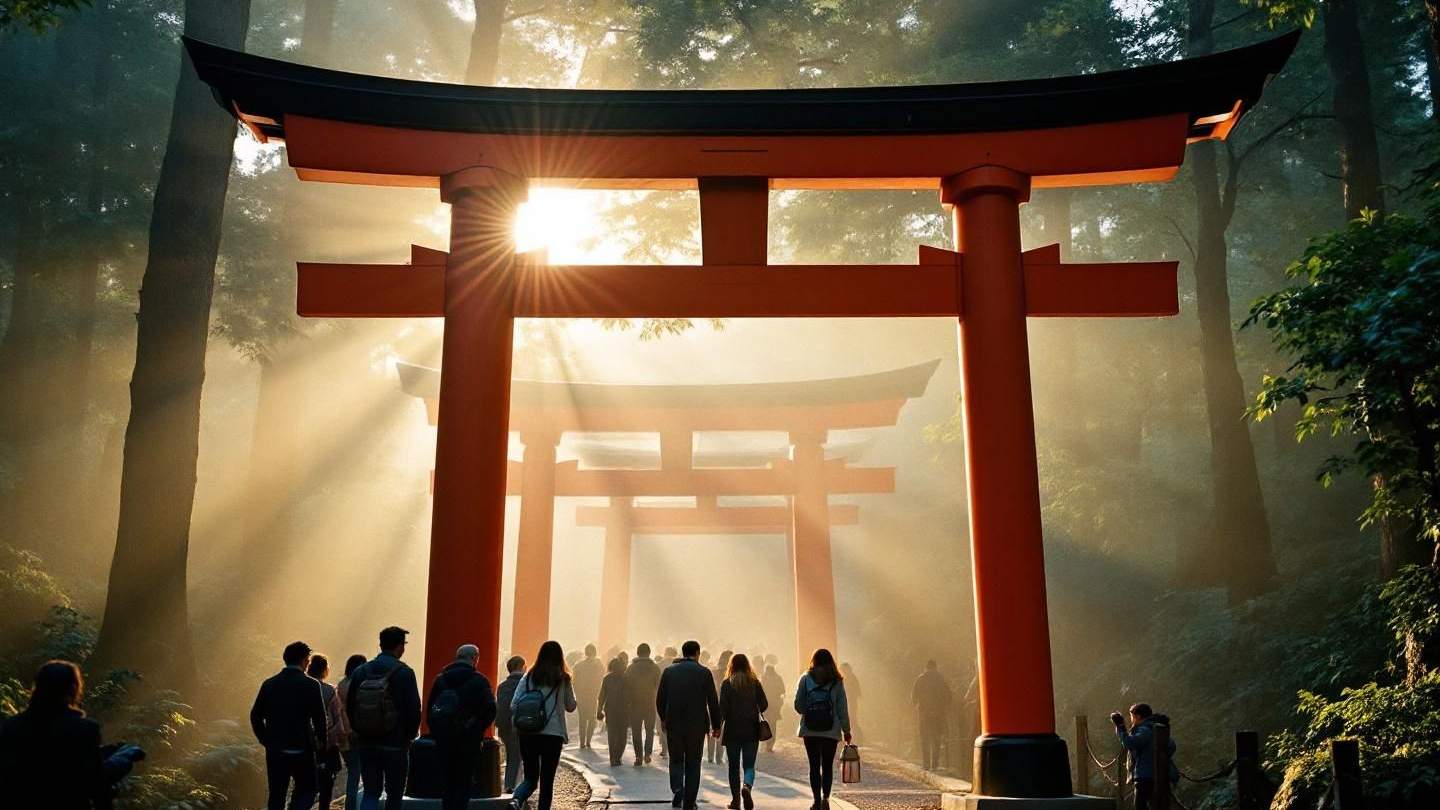
Fushimi Inari is the most visited site in Kyoto and the defining image of Japan for much of the world: ten thousand vermilion torii gates forming tunnels that climb four kilometers up a densely forested mountain. The shrine is dedicated to Inari, the Shinto deity of foxes, rice harvests, and commercial success. Every gate was donated by a Japanese business or individual — each one has the donor’s name and date carved into the back post. Some date back centuries.
The site is free to enter and open 24 hours. The lower precincts from the main gate to the first major viewing platform take about 30 minutes at a relaxed pace. The full hike to the summit of Mount Inari and back is 4 kilometers and takes 2 to 3 hours. Most visitors turn back at the viewing platform, which means the upper trails are significantly quieter and more atmospheric at any hour.
The fundamental problem with Fushimi Inari is crowds. From 9am to 5pm on any day, the lower gates are packed with tour groups and day-trippers. The solution is simple: arrive before 7am or after 6pm. At those times, the moss-covered gates in the upper mountain feel entirely different — still and genuinely sacred rather than a backdrop for photos.
Entry fee: Free Best time: Before 7am or after 6pm Time needed: 30 minutes to 3 hours depending on how far you hike Getting there: JR Nara Line from Kyoto Station to Inari Station (5 minutes, 150 yen). The main gate is a 2-minute walk.
Fushimi Inari Night Walking Tour
Experience the torii gates after dark on a guided evening walk that reaches sections of the mountain that almost no independent visitors see. Includes local izakaya stop.
Kinkaku-ji — The Golden Pavilion
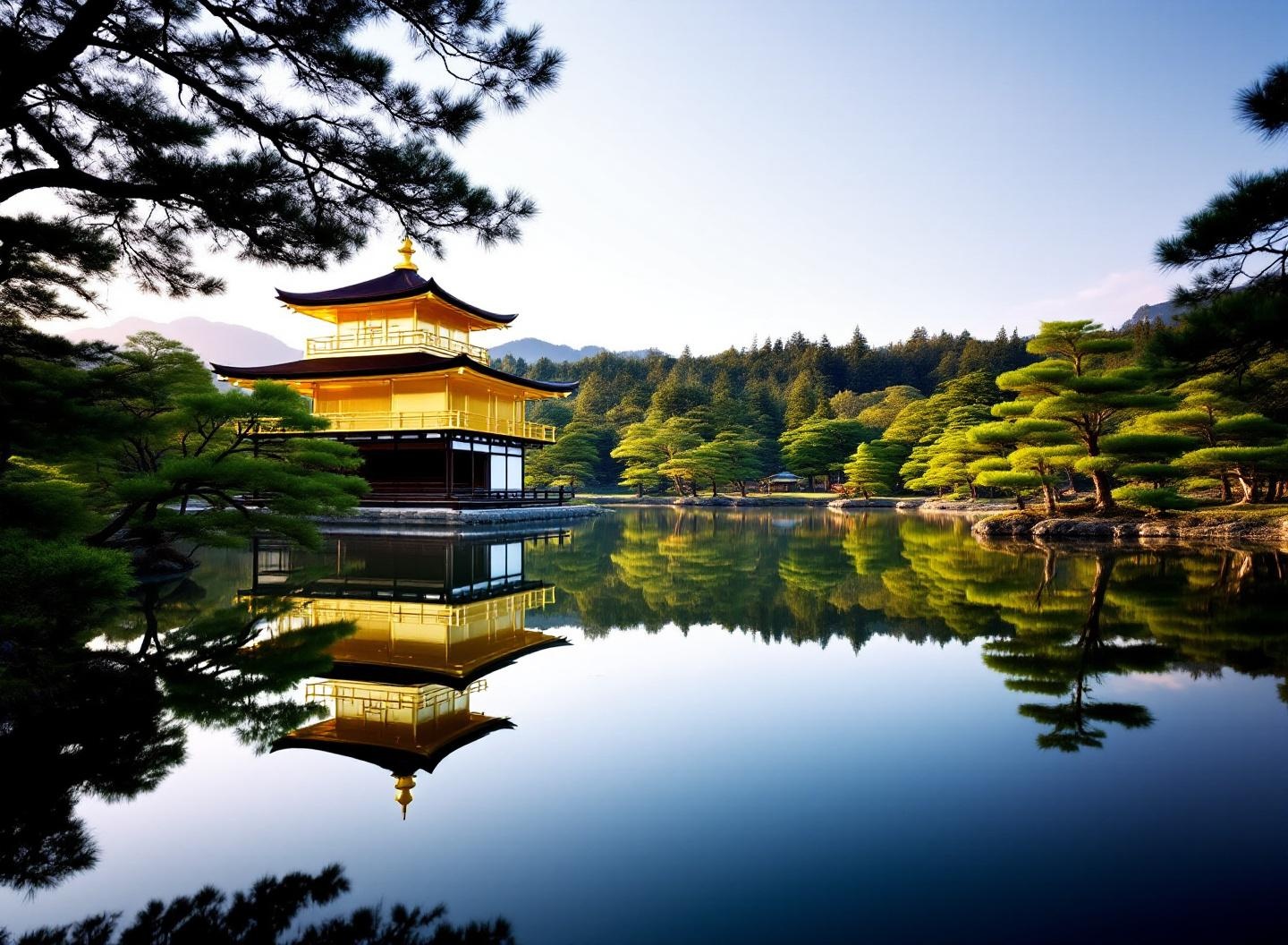
The three-story pavilion of Kinkaku-ji, its upper two floors entirely sheathed in gold leaf and perfectly reflected in the mirror pond in front of it, is one of the most iconic images in all of Japanese architecture. Originally built as a retirement villa for shogun Ashikaga Yoshimitsu in the late 14th century, it was converted to a Zen Buddhist temple after his death. The current structure is a 1955 reconstruction — the original was burned by a monk in 1950 in an act of obsessive protest against its beauty, an event later novelized by Mishima Yukio.
The approach from the ticket gate to the main viewing platform takes only a few minutes, and most visitors complete the garden circuit in under an hour. The pavilion itself cannot be entered. The experience is primarily visual — the contrast of brilliant gold against a backdrop of ancient pines and composed garden — and it delivers fully on that promise regardless of how many photographs you have seen beforehand.
Kinkaku-ji is crowded almost always. Arrive at opening time (9am) to experience it with smaller crowds, particularly on weekday mornings.
Entry fee: 500 yen Opening hours: 9am–5pm daily Best time: Weekday mornings at opening, or winter when snow settles on the roof Time needed: 45–60 minutes Getting there: Bus 101 or 205 from Kyoto Station to Kinkakuji-michi stop (30 minutes). Or Randen Kitano Line to Kitano Hakubaicho Station (20-minute walk).
Kiyomizu-dera
Kiyomizu-dera occupies a dramatic hillside position in the Higashiyama mountains, its main hall supported on a massive wooden stage extending over the forested slope without a single nail. The view from this stage — over the treetops toward the city below — is one of the great urban panoramas in Japan, and changes completely with each season: pale pink in spring, deep green in summer, blazing red and gold in November, and stark white when winter snow falls.
The temple complex dates to 778 AD, though the current main hall was rebuilt in 1633 under the patronage of Tokugawa Iemitsu. The site is also famous for the Otowa waterfall beneath the stage, where three separate streams of water allow visitors to drink from one and make a wish — each stream is said to grant a different blessing (longevity, success in studies, or lucky love, depending on who you ask).
The approach through the Sannenzaka and Ninenzaka historic shopping streets below the temple is itself a significant experience: stone-paved lanes lined with traditional machiya townhouses converted into tea shops, ceramics sellers, and matcha dessert cafes.
Entry fee: 500 yen (main hall). Additional inner sanctuaries cost extra. Opening hours: Generally 6am–6pm; extended hours during illumination events Best time: Dawn on a weekday morning; also spectacular during autumn illuminations Time needed: 1–2 hours including the Sannenzaka approach Getting there: Bus 100 or 206 from Kyoto Station to Gojo-zaka or Kiyomizu-michi stop (20 minutes), then 15-minute walk uphill.
Arashiyama: Bamboo Grove and Tenryu-ji
The Arashiyama district in western Kyoto contains two experiences that belong together in a single half-day visit. The Sagano Bamboo Grove, just north of the Tenryu-ji garden, is a narrow path through towering stands of bamboo whose hollow stalks create a distinctive soft rushing sound in any wind. The grove itself takes about 15 minutes to walk through at a normal pace. It is genuinely beautiful even when busy — the scale of the bamboo makes the crowds feel irrelevant.
Tenryu-ji is a UNESCO World Heritage Zen temple established in 1339, and its garden is considered one of the finest pond gardens in Japan. The central garden, designed by master gardener Muso Soseki, frames borrowed scenery from the Arashiyama hills so precisely that the mountains appear to be part of the garden design. The inner halls are worth the additional fee for the painted ceiling dragon alone.
Entry fees: Bamboo Grove — free. Tenryu-ji garden — 500 yen; inner halls additional 300 yen. Best time: Early morning for the bamboo grove (crowds arrive from 9am); Tenryu-ji is best mid-week Time needed: 2–3 hours for the full Arashiyama area Getting there: JR Sagano Line from Kyoto Station to Saga-Arashiyama Station (15 minutes, 240 yen). Or Hankyu Line to Arashiyama Station.
Ryoan-ji
Ryoan-ji contains what is widely considered the most important dry landscape garden in Japan: 15 rocks arranged in raked white gravel within a walled rectangle roughly 30 meters wide and 10 meters deep. No plants. No water. No obvious narrative. The composition is designed so that no matter where you stand along the viewing verandah, one of the 15 rocks is always hidden from sight. The garden dates to the late 15th century and its designer remains unknown.
The experience is meditative or frustrating depending entirely on your expectations and patience. The garden demands stillness. Arrive early or late, find a spot on the wooden verandah, sit, and allow time to pass. The large pond garden around the main temple complex — usually overlooked because of the famous dry garden — is also exceptional and much less crowded.
Entry fee: 600 yen Opening hours: 8am–5pm (Dec–Feb until 4:30pm) Time needed: 45–90 minutes Getting there: Bus 59 from Kyoto Station to Ryoanji-mae stop. Or walk 20 minutes from Kinkaku-ji.
Ginkaku-ji — The Silver Pavilion
Ginkaku-ji is a counterintuitive choice for a highlight — the pavilion itself was never actually covered in silver, as the shogun who commissioned it died before the project was completed. What you get instead is something arguably more interesting: a beautifully proportioned pavilion in weathered dark wood, a sculpted sand garden with a precise cone representing Mount Fuji, and one of the finest stroll gardens in Kyoto, all without Kinkaku-ji’s crowds.
The temple anchors the southern end of the Philosopher’s Path, making it the natural starting or ending point for a walk up the canal-side footpath in spring or autumn.
Entry fee: 500 yen Opening hours: 8:30am–5pm (Dec–Feb 9am–4:30pm) Time needed: 45–60 minutes Getting there: Bus 5 or 17 from Kyoto Station to Ginkakuji-michi stop (35 minutes).
Tofuku-ji
Tofuku-ji is Kyoto’s finest destination for autumn foliage. The temple complex — one of the great Five Mountain Zen complexes of medieval Kyoto — stretches across a narrow valley bridged by three historic wooden bridges. In November, the gorge below those bridges fills with maple trees turning brilliant red and orange, creating a view that draws enormous crowds but genuinely earns them.
Outside autumn, Tofuku-ji is remarkably uncrowded given the quality of its gardens. The four “checkerboard” gardens designed by Mirei Shigemori in 1939 — which blend traditional Zen aesthetics with a sharply modern geometric sensibility — are among the most interesting gardens in Kyoto regardless of season.
Entry fee: 600 yen (500 yen additional for the autumn bridge viewing) Best time: Mid-November for peak foliage; any time for the Shigemori gardens Time needed: 1–1.5 hours Getting there: JR Nara Line from Kyoto Station to Tofukuji Station (5 minutes, 150 yen).
Nanzen-ji
Nanzen-ji occupies an elevated position at the base of the Higashiyama mountains and is one of the most important Zen temples in Japan. Its most distinctive feature is an unexpected one: a 19th-century brick aqueduct running directly through the temple grounds, the remains of a canal that brought Lake Biwa water to Kyoto. The contrast of weathered brick engineering against ancient temples and forests is genuinely strange and worth seeing.
The Sanmon gate, a massive two-story wooden structure built in 1628, offers views over the city from its upper level. The temple complex connects directly to the Heian Shrine and the northern section of the Philosopher’s Path, making it a natural component of a full eastern Kyoto day.
Entry fee: 500 yen (additional charges for sub-temples; Nanzen-in is worth the extra 300 yen) Time needed: 1–1.5 hours Getting there: Tozai subway line to Keage Station (5-minute walk).
Daigo-ji
Daigo-ji is one of Kyoto’s least-visited major temples and one of its most rewarding. The complex covers an entire mountain, with the Lower Daigo section (a flat garden temple) connected to the Upper Daigo section (a 45-minute hike up a forested mountain trail) that preserves Japan’s oldest five-story pagoda, built in 951 AD and still entirely original. The contrast between the manicured lower temple and the wild mountain sanctuary above it is unlike anything else in Kyoto.
Toyotomi Hideyoshi staged his famous cherry blossom viewing party at Daigo-ji in 1598, and 700 cherry trees were planted in his honor. The lower garden in late March and early April remains one of the best sakura experiences in Kyoto despite being largely unknown to visitors.
Entry fee: 1,500 yen (includes both precincts and sub-temples) Time needed: 2–3 hours for the full complex including the mountain hike Getting there: Daigo subway station on the Tozai Line (10-minute walk to the lower precinct).
Byodoin — Uji
Byodoin is technically outside Kyoto city in the small town of Uji (30 minutes south by train), but it belongs on any serious list of Kyoto-area temples. The Phoenix Hall — built in 1053 and depicting the Western Paradise of Amitabha Buddha — is one of the best-preserved examples of Heian-period architecture on earth. Its image is so significant that it appears on the 10-yen coin. The reflection of the pavilion in the pond in front of it is one of the most serene visual experiences in all of Japan.
Uji is also famous for the finest matcha in Japan. The main street has been producing ceremonial-grade green tea for over 400 years. The combination of the temple and a proper tea experience makes a half-day excursion entirely worthwhile.
Entry fee: 700 yen (600 yen additional for museum) Opening hours: 8:30am–5:30pm Time needed: 1.5–2 hours Getting there: JR Nara Line from Kyoto Station to Uji Station (17 minutes, 240 yen).
Eikan-do
Eikan-do is Kyoto’s premier temple for autumn foliage after Tofuku-ji, and in some ways the more beautiful of the two. The complex climbs a hillside with pagodas, covered walkways, and pavilions connected by steep staircases, all surrounded by maple trees that peak in mid-to-late November. The famous figure of Amitabha Buddha — depicted looking backward over his left shoulder in an attitude of compassion — is the philosophical heart of the temple.
The night illuminations held every November are among the most atmospheric events in Kyoto’s autumn calendar.
Entry fee: 600 yen (1,000 yen during autumn illumination events) Best time: Mid-to-late November Time needed: 60–90 minutes Getting there: Bus 5 to Nanzenji-Eikando-michi stop, or walk 10 minutes from Nanzen-ji.
Kitano Tenmangu
Kitano Tenmangu is Kyoto’s principal shrine dedicated to Sugawara no Michizane, the deified patron of scholarship and learning. Students from across Japan come here before examinations to pray for success, and the grounds are hung year-round with wooden ema prayer tablets covered in student wishes. The shrine is also home to one of Kyoto’s finest plum orchards — 1,500 trees that bloom in February and early March before the cherry season begins.
Every 25th of the month, the shrine hosts a major antique and flea market (Tenjin-san) that draws vendors and buyers from across the city. It is one of the best places in Kyoto to find genuine antiques, ceramics, kimono fabric, and unusual household items.
Entry fee: Free (plum garden 1,000 yen during bloom season) Best time: February for plum blossoms; the 25th of any month for the flea market Time needed: 45 minutes Getting there: Randen Kitano Line to Kitano-Hakubaicho Station (3-minute walk).
Shimogamo Shrine
Shimogamo Shrine is one of Kyoto’s oldest religious sites, predating the establishment of the capital, and sits at the confluence of the Kamo and Takano rivers inside the Tadasu no Mori, a primeval forest of ancient trees that feels completely at odds with its urban surroundings. Unlike most major Kyoto temples, it sees very few foreign visitors and almost no crowds.
The UNESCO-listed main sanctuary dates from the late 8th century, though the buildings are periodically rebuilt according to Shinto tradition. The forest path from the outer torii to the main hall takes about 15 minutes through enormous trees and is one of the most serene walks in the city.
Entry fee: Free (inner sanctuary 500 yen for special viewing periods) Time needed: 45–60 minutes Getting there: Keihan Line to Demachiyanagi Station (10-minute walk).
Kurama-dera
Kurama is a mountain village 30 minutes north of central Kyoto served by the narrow-gauge Eizan Railway, and its mountain temple offers one of the most distinctive religious experiences accessible from the city. The hike from the cable car station (or on foot from the base) climbs through ancient cedar forest to a series of temple buildings at different elevations, culminating in the Inner Sanctuary at the mountain summit. The descent down the other side of the mountain to the hot spring village of Kibune completes a circuit that feels genuinely remote.
Kurama-dera is associated with Sojobo, the legendary king of the tengu (mountain spirit beings), and the mountain has a palpable quality of wildness and mythology that is entirely different from Kyoto’s city temples.
Entry fee: 300 yen mountain entry fee (cable car additional 200 yen) Time needed: Half day including Kibune descent Getting there: Eizan Railway from Demachiyanagi Station to Kurama terminus (30 minutes, 430 yen).
Practical Tips for Visiting Kyoto Temples
Timing: The two peak crowd periods are cherry blossom season (late March to mid-April) and autumn foliage (mid-November to early December). During these times, even minor temples attract significant visitors. Book accommodation 3 to 6 months in advance.
The Kyoto bus day pass (700 yen) covers most temple routes and is the most efficient way to move between sites. The subway day pass (600 yen) is better for east-west travel along the Tozai Line.
Dress code: There is no strict dress code at most Kyoto temples, but covering shoulders and knees is respectful and required at some inner sanctuaries. Shoes that slip on and off easily are essential — many interiors require removing footwear repeatedly.
Photography: Most temple gardens and exteriors are freely photographable. Some inner sanctuaries prohibit cameras. When in doubt, look for signs or follow local visitors’ behavior.
See our full Kyoto travel guide and things to do in Kyoto for broader planning advice.
Best Time of Year to Visit Kyoto’s Temples
| Season | Weather | Crowds | What to prioritize |
|---|---|---|---|
| Spring (late March-early April) | Mild, occasional rain | Very high, book months ahead | Cherry blossom at the Philosopher’s Path, Daigo-ji, Heian Shrine |
| Summer (June-August) | Hot, humid, rainy June | Moderate, fewer daytime crowds | Early-morning visits before the heat; Gion Matsuri in July |
| Autumn (mid-November-early December) | Cool, crisp | Very high at foliage sites | Tofuku-ji and Eikan-do for maple color |
| Winter (December-February) | Cold, occasional snow | Lowest of the year | Kinkaku-ji under snow, Kitano Tenmangu plum blossoms in February |
Combining Temples With the Rest of Your Trip
A temple-focused day works best when it is paired with something restorative. Many visitors follow a morning of temple-hopping in Higashiyama with an afternoon tea ceremony or a stroll in kimono rental through the same streets, since both activities move at the same unhurried pace as temple visiting itself. If you want a break from historic architecture altogether, Kyoto’s food guide and Nishiki Market cover where to eat between sites, and where to stay in Kyoto helps you pick a base close to whichever cluster of temples you prioritize.
Frequently Asked Questions
Do I need to buy temple tickets in advance?
For almost all the temples on this list, no — tickets are sold at the gate and lines are short outside cherry blossom and autumn foliage peaks. The exception is special evening illumination events, which do sell out and should be booked ahead.
Which Kyoto temple should I see if I only have time for one?
Fushimi Inari, for its scale and because it is free and open around the clock, edges out Kinkaku-ji and Kiyomizu-dera as the single most rewarding stop for a first visit — arrive at dawn to see it at its best.
More tours on Viator
Top-rated experiences with verified reviews, bookable on Viator (a Tripadvisor company).
 Viator
Private Tea Ceremony and Sake Tasting in Kyoto Samurai House
FromUSD 102Check availability → Viator
Kyoto: Zen Garden, Zen Mind (Private)
FromUSD 380Check availability → Viator
Private car tour in Kyoto (up to 4)
FromUSD 287Check availability → Viator
Become a Samurai Movie Star in Kyoto by Filming with a Real Actor
FromUSD 126Check availability → Viator
Near Fushimiinari: Kyoto Home Cooking Class & Supermarket tour
FromUSD 121Check availability → Viator