Kyoto Kimono Rental and Experience Guide
Last updated: August 2026
No single activity in Kyoto is as immediately transformative as renting a kimono and walking through the city wearing it. The cobblestone lanes of Gion, the vermilion torii gates of Fushimi Inari, the stone steps leading up to Kiyomizu-dera — all of these settings shift when you experience them dressed in traditional silk. This is not a costume exercise. Kyoto has been the cultural and imperial capital of Japan for over a thousand years, and the kimono is still genuinely worn here for festivals, ceremonies, and seasonal occasions. Renting one as a visitor is entirely normal and is welcomed by locals.
What makes Kyoto the best city in Japan for a kimono experience is not just the backdrop. The infrastructure here is unmatched: dozens of professional rental shops, trained dressers who work with foreign visitors daily, and photo spots within easy walking distance of the historic center. The city is compact enough that you can visit three or four major landmarks in a single afternoon without needing to navigate public transport in wooden sandals. This guide gives you everything you need to plan the day properly, from which shop to choose to where to walk once you step outside.
| At a glance | |
|---|---|
| Where | Shops cluster in Gion, the Kiyomizu-dera approach, and Arashiyama |
| Cost | Around 3,000–10,000 yen basic to premium; couple plans 8,000–18,000 yen |
| Time needed | Half a day minimum — 30–45 min fitting, then walking until the 5–6 pm return deadline |
| Booking | Reserve 2–3 days ahead year-round; essential in cherry blossom and autumn foliage season |
| Best time | Spring and autumn for the light and foliage; early morning for the quietest photo spots |
How Kimono Rental Works
The process is simpler than most visitors expect. You book in advance — almost essential in spring and autumn peak season — and arrive at the shop at your appointed time. Most shops require no prior kimono knowledge. Staff handle everything.
The fitting process takes between 30 and 45 minutes. You select your kimono from a rack of options, which typically number in the dozens. Premium shops have hundreds of designs across different fabrics, weights, and eras of style. Once you have chosen, a dresser helps you put it on. A kimono involves multiple layers and a complex system of folding and tying, so the dresser’s skill matters. The obi — the wide sash tied at the back — is the most technically demanding element and is always done by staff, not self-tied.
What is typically included in the rental price:
- Kimono (or yukata in summer)
- Obi sash
- Tabi socks (white split-toe socks)
- Geta sandals or zori
- Kago bag (woven bamboo bag)
- Seasonal accessories such as a decorative hair pin
Hair styling is included at most mid-range and premium shops. Basic updo styles come at no extra cost; elaborate styles inspired by traditional geisha aesthetics are available for an additional fee of around 1,000–2,000 yen.
Return times are standardized across nearly all shops. The standard return window is 5:00 PM to 6:00 PM regardless of what time you started. If you rent early in the morning, you get a full day. If you rent at noon, you still return by the same deadline. A handful of shops offer overnight rental or next-day return for an additional charge, which is useful if you want to wear the kimono during an evening walk through lantern-lit Gion.
Most shops offer a changing room on-site. You return the kimono as you received it — you do not need to fold it or worry about removing it yourself, as staff will assist.
Price Guide
Kimono rental in Kyoto is priced across a clear range, and what you pay directly affects the quality of the fabric, the variety of designs, and the attentiveness of the dressing service.
Basic rental: 3,000–5,000 yen Entry-level plans cover a standard kimono, obi, sandals, and bag. Hair set is sometimes excluded or offered as a 500-yen add-on. The fabric tends to be synthetic rather than silk, which is durable and practical for a full day of walking. Design selection at this tier is adequate but not extensive.
Premium rental: 6,000–10,000 yen This range unlocks a significantly wider design selection, including vintage and hand-dyed kimono, more elaborate obi styles, and a full hair set included in the price. Staff attention is generally more thorough. For first-time visitors who want to invest in the experience, this tier is worth it.
Couple plans: 8,000–18,000 yen Most shops offer discounted bundle pricing for two people booking together. A couple plan typically covers two kimono rentals, two hair sets, and sometimes a small welcome gift. Gion-area shops in particular market these packages heavily to visiting couples.
Men’s kimono: 3,500–7,000 yen Men’s rentals follow the same tier structure. Design options are more limited than women’s but have expanded considerably in recent years. The haori (short over-jacket) can be added for 500–1,500 yen and changes the overall look significantly.
Yukata (summer, July–August): 2,500–4,500 yen The yukata is a lighter, cotton version of the kimono worn during summer. It is less formal, easier to put on, and significantly more comfortable in Kyoto’s humid summer heat. Most shops switch over to yukata-dominant rental from late June through early September.
Best Kimono Rental Shops
Kimono rental shops in Kyoto are concentrated around three main areas: Gion, the Kiyomizu-dera approach, and Arashiyama. Each area has a different atmosphere, which affects where you walk after renting.
Gion area
Gion is the heart of Kyoto’s traditional culture and the natural home base for a kimono day. The streets of Hanamikoji and Shimbashi are flat, well-maintained, and photogenic. Yumeyakata (夢館) operates one of the largest shops in this area, with an inventory of over 3,000 kimono designs and English-speaking staff. They have multiple Kyoto locations and a well-organized online booking system. Prices start around 4,400 yen. Okamoto Kimono is another reliable choice near Gion, known for its vintage collection and experienced dressers. They offer same-day bookings when available.
Kiyomizu-dera approach (Higashiyama)
The slope leading up to Kiyomizu-dera — Ninenzaka and Sannenzaka — is the most photographed street in Kyoto and one of the most photographed in Japan. Wargo operates a large, efficient shop in this area with prices starting at 3,300 yen, making it one of the most accessible options. The model is streamlined for high volume: selection is more limited than premium shops, but the process is fast and the location is ideal for walking the Higashiyama district immediately after.
Arashiyama
Several shops operate near the Togetsukyo Bridge and the entrance to the Bamboo Grove. Rental here is slightly less crowded than Higashiyama and suits visitors combining a kimono day with the western Kyoto circuit. Prices are broadly comparable. The drawback is that you are farther from Gion and Fushimi Inari, so plan your itinerary accordingly.
Booking advice: Reserve at least two to three days in advance during cherry blossom season (late March to mid-April) and autumn foliage season (mid-November to early December). During these peak periods, popular shops sell out completely by mid-morning.
Best Photo Spots in Kimono
The right location transforms a kimono rental from a nice activity into a genuinely memorable set of photographs. These are the spots worth prioritizing.
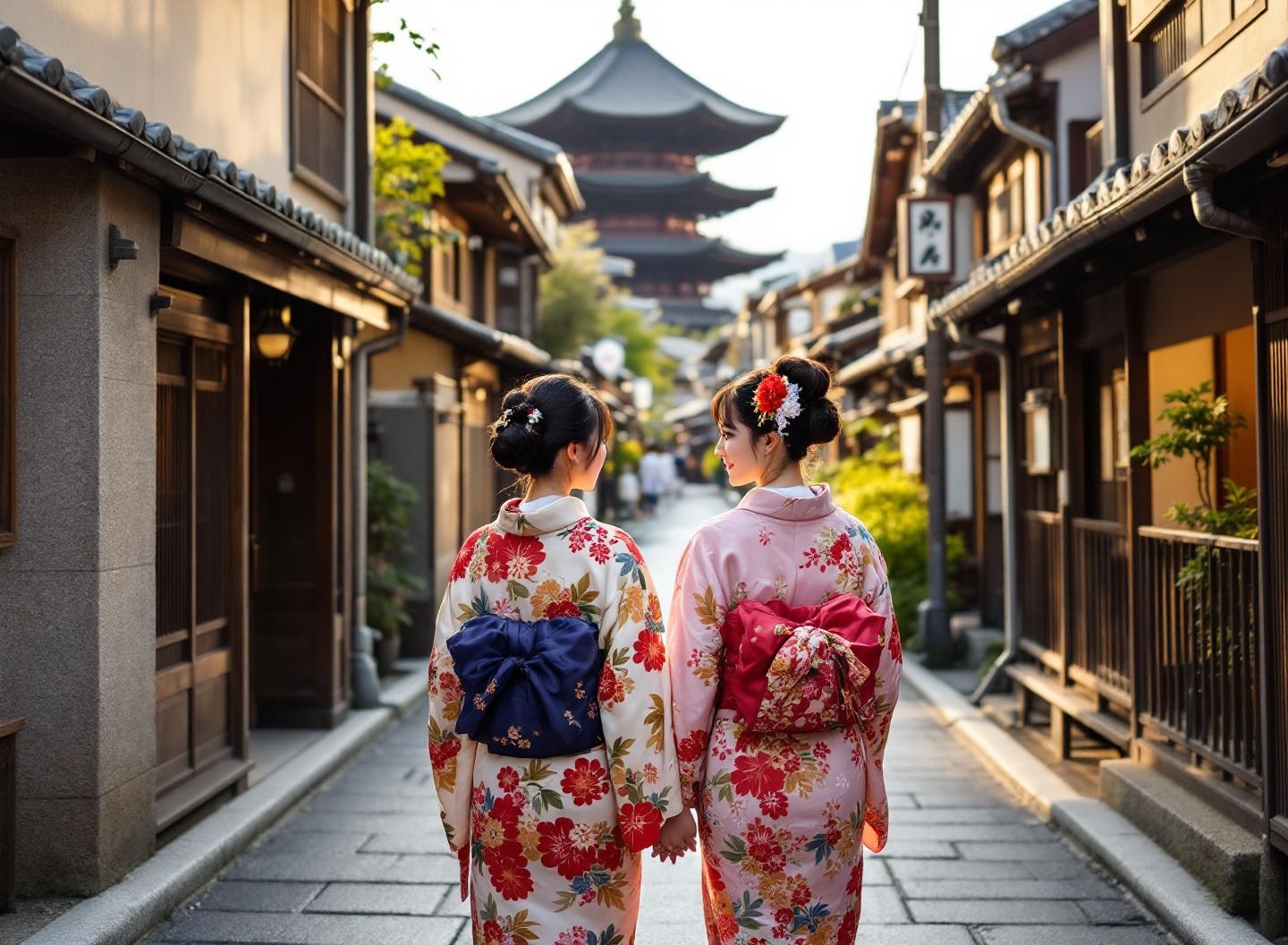
Yasaka Pagoda (Hokanji Temple), Higashiyama The five-story pagoda framed by the narrow sloping lane of Yasakadori is the single most iconic kimono photo location in Kyoto. Arrive before 8:30 AM on weekdays to photograph it without crowds. The morning light falls well on the pagoda from the east.
Ninenzaka and Sannenzaka The preserved stone-paved lanes lined with wooden machiya townhouses are ideal for walking shots. The gentle curve of Ninenzaka photographs beautifully. These lanes are extremely crowded by 10:00 AM on weekends.
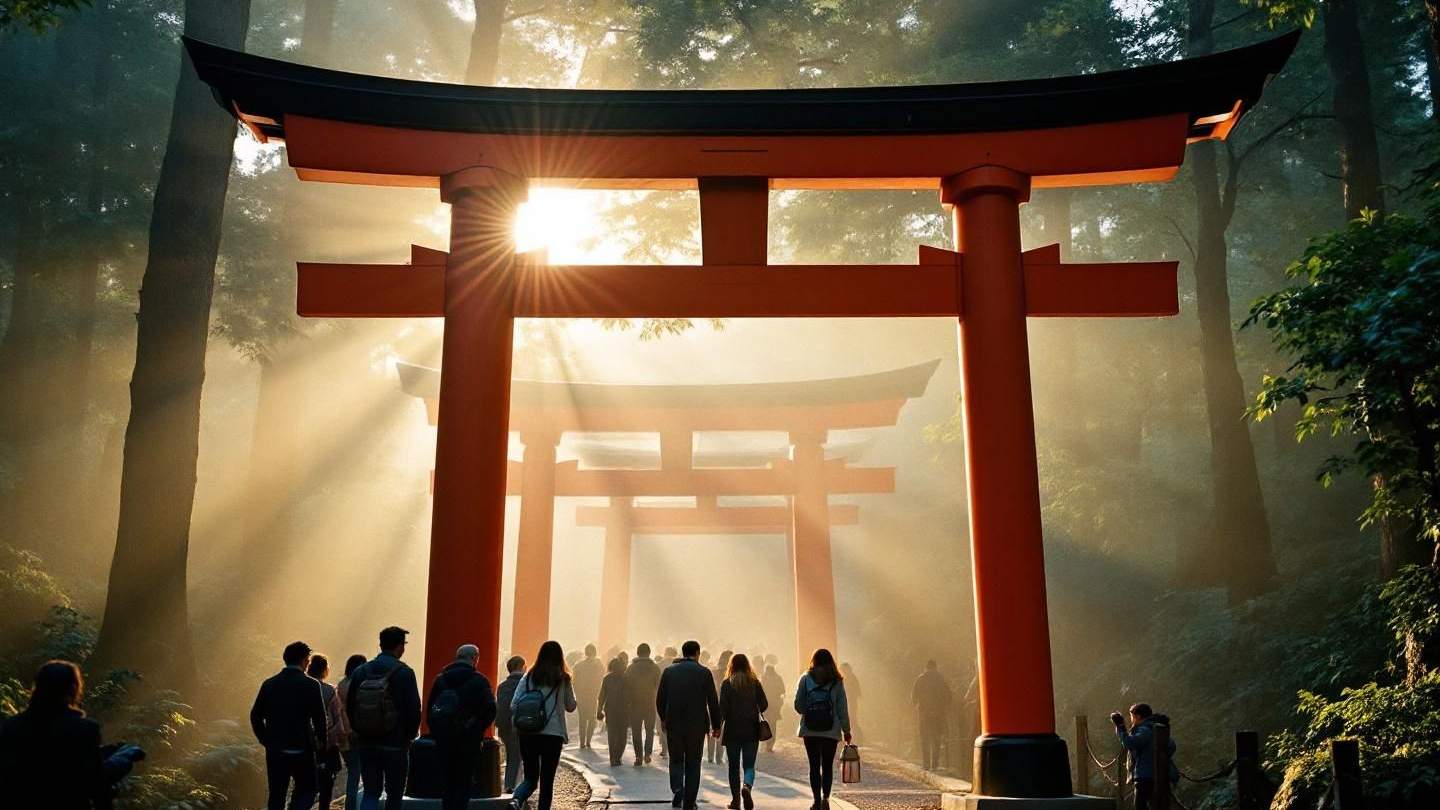
Fushimi Inari Taisha The thousands of vermilion torii gates provide a striking and unusual background. The lower portion of the main tunnel (the first 10–15 minutes of walking from the main gate) is the most photographed and easiest to reach. Wearing kimono here is common and well-received. Be aware that the path is uneven stone, which matters when wearing geta sandals.
Bamboo Grove, Arashiyama The green light filtering through the bamboo is visually unlike anywhere else. Early morning — before 8:00 AM — is essential here; by 9:00 AM the path is too crowded for good photographs. If you are renting from an Arashiyama shop, ask about their opening time and aim to be at the grove immediately after dressing.
Philosopher’s Path The canal-side walkway lined with cherry trees runs between Nanzenji and Ginkakuji. In spring, the combination of kimono and cherry blossoms here is extraordinary. Outside of cherry blossom season it is still pleasant and far quieter than Higashiyama.
Gion streets — Hanamikoji and Shimbashi These streets are famous as the home territory of Kyoto’s geisha district. The dark wooden facades of the ochaya teahouses and the paper lanterns provide a backdrop that feels genuinely historical. Evening walks here in kimono — if you have booked an overnight rental — are particularly atmospheric.
Kimono vs Yukata
These two garments are frequently confused but serve different functions and are worn in different seasons.
Kimono is the formal garment, made from silk or high-quality synthetic fabric, with long sleeves and a complex multi-layer construction. It is appropriate year-round for rental purposes, though most locals avoid wearing it in the peak summer heat of July and August. Kimono require professional dressing and the full set of accessories including the structured obi.
Yukata is a casual summer garment made from lightweight cotton or polyester. It has a simpler construction, fewer layers, and a softer obi style. Yukata are traditionally associated with summer festivals, fireworks events, and visits to onsen. They are much easier to move in and significantly cooler in hot weather. Rental shops typically offer yukata from late June through early September, sometimes maintaining kimono options year-round as a premium alternative.
Seasonal considerations: Spring and autumn are the most visually rewarding seasons for kimono rental. The colors of cherry blossoms in April and maple leaves in November complement traditional fabrics particularly well. Winter kimono rental is possible and increasingly popular — the streets are quieter, and some shops offer padded kimono options or allow a haori over-coat.
Professional Photoshoot Packages
A growing number of shops and independent photographers in Kyoto offer combined kimono rental and photoshoot packages. These range from informal guided walking shoots to full studio-style productions at major landmarks.
Shop-based photoshoot packages: 8,000–20,000 yen Several larger shops such as Yumeyakata and Kyoto Kimono Rental Chameleon include a professional photoshoot as a bookable add-on. A photographer accompanies you to two or three nearby locations for 45–90 minutes and delivers edited digital images within a few days. The advantage is convenience: you dress, shoot, and then explore at your own pace for the rest of the day.
Independent photographer packages: 15,000–40,000 yen Photographers who specialize in kimono and travel portraiture can be found through platforms such as Flytographer and Localgrapher. These sessions are longer, more personalized, and produce a higher volume of edited images. Couple packages are popular and typically cover two hours with 60–80 edited photographs.
Combined experience packages: tour operators Some tour operators combine kimono rental, dressing, and a curated walking route with a professional photographer and a cultural guide. These packages are the most expensive but the most hands-off — useful if you want everything organized without making separate bookings.
Premium Tea Ceremony with Maiko in Kimono
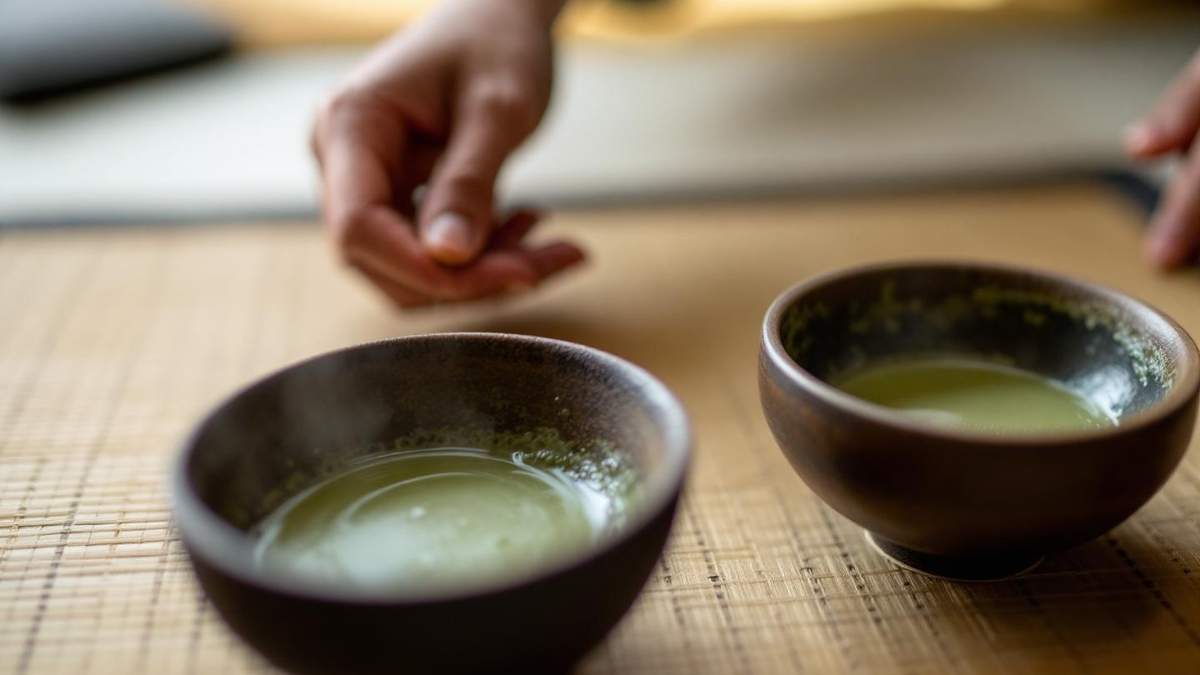
Combine your kimono experience with a traditional tea ceremony alongside a Maiko (apprentice geisha) in a historic Kyoto teahouse.
Tips for a Great Kimono Day
Best time to rent: Open as early as possible. Most shops open at 9:00 AM or 10:00 AM. Arriving at opening gives you the longest usable day before the 5:00–6:00 PM return deadline, and the most popular photo spots are far quieter in the first two hours of daylight.
Walking in geta sandals: Geta are wooden platform sandals held by a fabric thong between the toes. They require a short adaptation period. Walk in small, deliberate steps. Shuffle rather than stride. Most visitors find them manageable after 15–20 minutes; if they cause genuine discomfort, ask the shop about zori (flat straw sandals) as an alternative. Avoid very steep or uneven paths, and step carefully on wet stone surfaces.
Weather: Kyoto has four distinct seasons with strong weather character. Summer (July–August) is intensely hot and humid — plan a shorter route and prioritize shaded areas. Autumn and spring offer ideal conditions. Winter can be cold, particularly in the mornings; layering is possible under a kimono, and shops can advise on this. Light rain does not necessarily cancel a kimono day, but heavy rain is problematic since traditional kimono should not be soaked. Most shops have contingency policies for weather-related returns.
What to bring: Leave your large backpack at your hotel or in a coin locker. The kago bag included with rental is small by design. Bring your phone, a small wallet, a portable charger, and any medication you might need. Wear underwear that is smooth and close-fitting — visible bra straps and waistbands can be problematic under the kimono’s layering. The shop staff will advise on this during dressing.
Temple etiquette in kimono: Wearing a kimono does not grant any special access at temples or shrines, but it is viewed positively. Behave as you would in any sacred space: speak quietly, do not smoke in designated non-smoking areas, and follow any posted rules. Some shrines offer small discounts on entry fees for kimono-clad visitors — notably Fushimi Inari and several Higashiyama temples. Ask at the entrance.
Avoiding common mistakes: Do not book from an unmarked street-side stall with no online presence. Verify that hair setting is included in the price before confirming. If you are tall or have a larger frame, contact shops in advance — most accommodate well, but stock in larger sizes can be limited at budget-tier shops.
Men’s Kimono Experience
Men’s kimono rental has grown substantially as a category over the past five years. What was once an afterthought at most shops — a small rack of dark-toned kimono tucked beside the main women’s section — has evolved into a genuine offering at the better rental houses.
A men’s kimono ensemble typically consists of the kimono itself, a hakama (wide pleated trousers worn over the kimono for formal occasions, optional but striking), a haori jacket, tabi socks, and geta or zori sandals. The color palette skews toward deep navy, charcoal, slate, dark green, and brown, with subtle pattern work on the fabric — pine needles, geometric weaves, wave motifs. Premium shops stock kimono in genuine silk with more elaborate haori designs.
The dressing process for men is faster than for women — typically 15–25 minutes — because the layering is simpler and no elaborate obi tying is required. Men’s rentals start at around 3,500 yen for a basic plan and reach 7,000–9,000 yen for premium options including haori and hakama.
The photographic results of men’s kimono are frequently underestimated. Against the wooden facades of Gion or the vermilion gates of Fushimi Inari, a well-chosen men’s ensemble photographs with a quiet formality that is entirely different from tourist photography in casual clothes. Couples who both rent find that coordinating color palettes — typically chosen with shop staff assistance — creates a coherent visual story.
Several shops specifically market men’s rental with the same level of care as women’s: Yumeyakata and Okamoto Kimono both have strong men’s collections. If you are traveling solo as a man, the activity is completely normalized in Kyoto and requires no special explanation or justification at any shop.
Building a Kimono Day Around the Rest of Kyoto
A kimono rental works best when it is planned around the rest of your Kyoto sightseeing rather than treated as a standalone activity. If you are visiting during cherry blossom season or the autumn foliage weeks, book your shop and your timed sights on the same day so you are not wasting the kimono’s limited hours on transit. Pairing the rental with a stop at one of Kyoto’s major temples — Kiyomizu-dera and the Higashiyama shops are a natural match — means you barely change your itinerary at all.
If you want a deeper cultural pairing, a traditional tea ceremony while dressed in kimono is one of the more meaningful combinations available in the city; several shops and tour operators bundle the two. For a first-time visitor deciding what else to fit around the rental, the Kyoto things to do guide covers the rest of the city’s temples and districts, and the Japan etiquette guide is worth a skim before you go — most of what applies in a kimono is simply Japanese temple and public-space etiquette at large.
Weather planning matters more than most visitors expect. Check Japan in spring or Japan in autumn for what to expect from the season you are traveling in, since heavy rain is the one condition that can force a shop to cut your rental short.
Frequently asked questions
Do I need to book kimono rental in advance, or can I walk in? Walk-ins are possible outside peak season but risky. During cherry blossom season (late March to mid-April) and autumn foliage (mid-November to early December), popular shops in Gion and near Kiyomizu-dera routinely sell out of sizes and designs by mid-morning. Book online at least 2–3 days ahead, and a week or more ahead for the busiest weekends.
Can I wear a rented kimono into Kyoto’s temples? Yes. Wearing kimono at temples and shrines is common and welcomed, and a few sites — including Fushimi Inari and several temples in Higashiyama — offer small entry discounts for visitors in kimono. Normal temple etiquette still applies: quiet voices, no smoking in restricted areas, and following any posted rules.
More tours on Viator
Top-rated experiences with verified reviews, bookable on Viator (a Tripadvisor company).
 Viator
Private Tea Ceremony and Sake Tasting in Kyoto Samurai House
FromUSD 102Check availability → Viator
Kyoto: Zen Garden, Zen Mind (Private)
FromUSD 380Check availability → Viator
Private car tour in Kyoto (up to 4)
FromUSD 287Check availability → Viator
Become a Samurai Movie Star in Kyoto by Filming with a Real Actor
FromUSD 126Check availability → Viator
Near Fushimiinari: Kyoto Home Cooking Class & Supermarket tour
FromUSD 121Check availability → Viator