Skiing in Japan
Last updated: August 2026
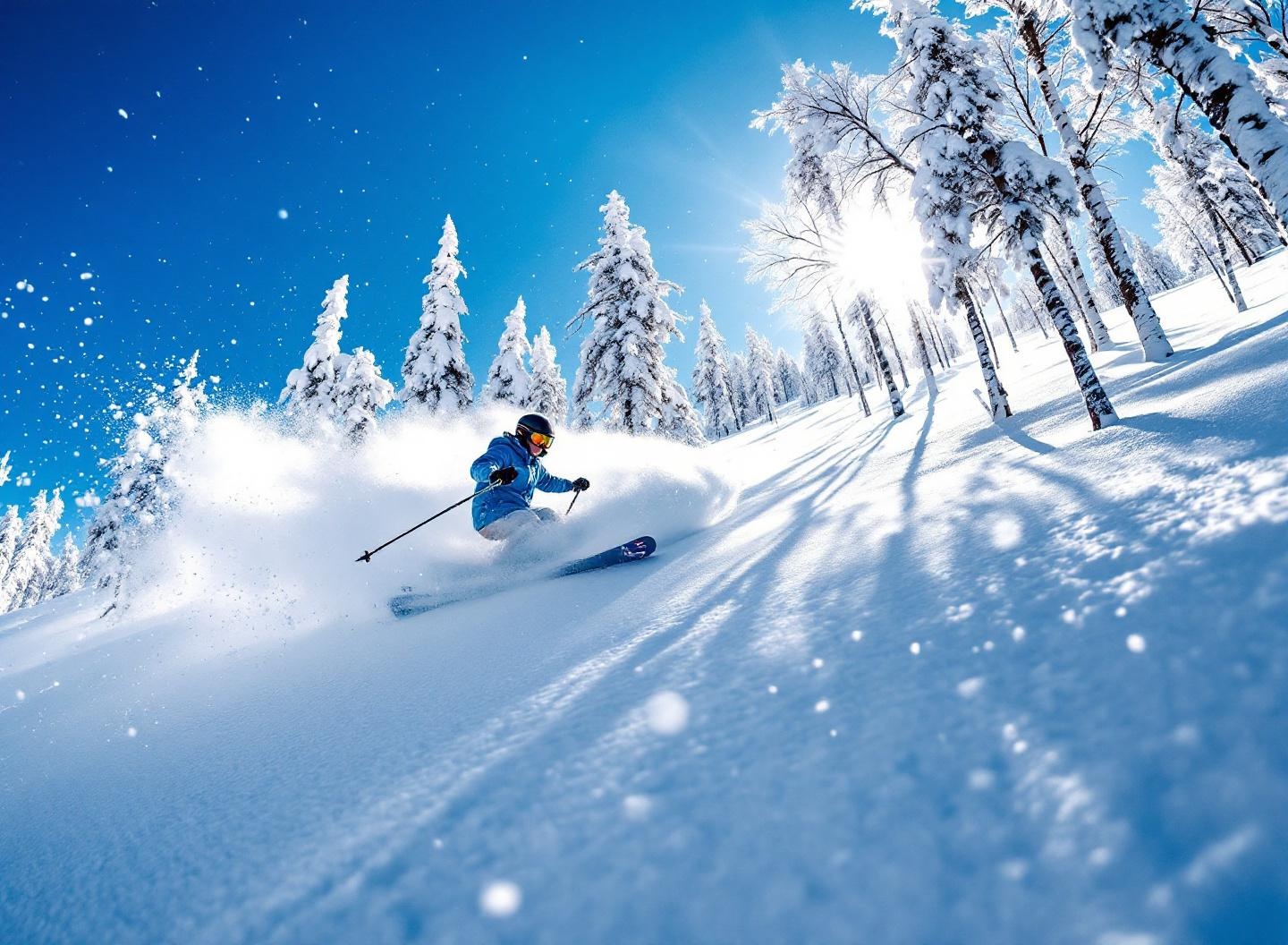
Japan is one of the world’s elite ski destinations. Not for the vertical drop or the lift infrastructure — which, while perfectly adequate, does not compete with the Alps or Rockies in scale — but for the snow. The powder that accumulates in Japan’s mountain ranges from December through March is a consequence of unique geography: wet, warm air crossing the Sea of Japan collides with cold polar air from Siberia and dumps extraordinary volumes of ultralight, dry snow on the mountains of Hokkaido and the Japan Alps. Skiers who have experienced what the Japanese call “Japow” — Japanese powder — often describe it as the best they have ever skied.
The country has over 500 ski resorts, ranging from large destination resorts with international infrastructure to small family areas serving regional towns. This guide covers the resorts that matter most to visiting skiers: the terrain, the snow, the access, the costs, and the cultural experience — especially the onsen — that makes a Japan ski trip different from skiing anywhere else in the world.
At a Glance
| Where | Hokkaido (Niseko, Furano, Tomamu) and the Japan Alps / Nagano-Niigata belt (Hakuba, Nozawa Onsen, Myoko, Shiga Kogen, Zao) |
| Season | Roughly early/mid-December to late March, peak conditions January–February |
| Typical cost | Around 18,000–37,500 yen per day mid-range (lift pass, rental, food, accommodation); see budget table below |
| Getting there | Fly into New Chitose (Sapporo) for Hokkaido resorts, or take the Shinkansen from Tokyo to Nagano/Iiyama/Yamagata for the Alps resorts |
| Best for | Powder skiers and snowboarders who also want an onsen culture around the skiing, not just the terrain |
Why Japan Powder Is World-Class
The Sea of Japan Effect is the meteorological engine behind Japow. As cold Siberian air flows south and east across the relatively warm Sea of Japan, it absorbs enormous amounts of moisture. When this humid air mass hits the mountain ranges along Japan’s western coastline — the Echigo Mountains, the Hida Mountains, and the ranges of Hokkaido — it rapidly rises and dumps its moisture as snow.
The result is snowfall measured not in centimeters but in meters. Niseko averages over 15 meters of snowfall per season. Myoko Kogen regularly exceeds 20 meters. Hakuba typically receives 10–12 meters. More importantly, the cold temperatures and low humidity of the air mass produce snow with an exceptionally low water content — typically 3 to 7% water content, compared to 10–20% for typical European powder. This is why Japow is described as “floating” — the ultralight crystals offer minimal resistance and allow deep powder turns that are simply not possible in wetter, denser snow.
The ski season runs December through March in most resorts, with peak conditions in January and February. Early March can offer excellent snow combined with longer daylight hours and marginally warmer temperatures; late March is increasingly variable due to climate change but can still produce powder conditions in Hokkaido.
Niseko — The International Resort
Niseko is Japan’s most internationally known ski destination and the entry point for most overseas skiers. Located on Hokkaido near the town of Kutchan and at the base of the active volcano Mount Niseko Annupuri, the resort has evolved over the past two decades from a regional Japanese ski area into a full international destination with English signage, multilingual staff, Australian-influenced après-ski culture, and accommodation infrastructure comparable to major Alpine destinations.
The skiing: Niseko United comprises four separate ski areas — Grand Hirafu, Hanazono, Niseko Village, and Annupuri — linked by gondola and shuttle. Total skiable terrain: 866 hectares, 60 courses. The vertical drop is 1,000 meters from summit to base. The area is best known not for its groomed runs but for its off-piste: Niseko’s backcountry gates open when controlled snowpack conditions allow, giving access to vast untracked powder fields between the resort boundaries. This is the experience that built Niseko’s international reputation.
Snow conditions: 15+ meters of annual snowfall. January and February are the prime powder months. The upper mountain receives more snow and stays colder than the base; resort-wide powder days — when new snow has fallen overnight and fresh tracks are available everywhere — occur 15 to 25 times per season in a normal year.
Lift pass prices (2025–26 season): Full-day Niseko United pass: 8,800–9,500 yen. Half-day (afternoon): 7,200–7,800 yen. Six-day pass: approximately 42,000 yen. Prices are higher than any other resort in Japan, reflecting the internationalized cost structure of the area.
Access from Tokyo: Fly to New Chitose Airport, Sapporo (Niseko is 2.5 hours from the airport by highway bus or shuttle). Direct buses from New Chitose to Niseko run during ski season; pre-booking is essential on peak dates. From central Sapporo: 2 hours by shuttle.
Accommodation: Hirafu village has the widest range of English-friendly accommodation, from budget hostel bunks (4,000–6,000 yen per night) to luxury ski-in/ski-out lodges (50,000+ yen per night). Book ski season accommodation three to six months in advance; peak January and February dates in Hirafu sell out entirely.
Hakuba — Olympic Terrain and Variety
Hakuba is Japan’s largest ski resort complex and the venue for the 1998 Nagano Winter Olympics alpine and freestyle events. Located in the Nagano Alps in central Honshu, it offers more varied terrain than Niseko, is more accessible from Tokyo, and operates at a price point below the internationalized Niseko market.
The skiing: Hakuba Valley comprises eleven ski resorts sharing a single lift pass, with a combined 200+ courses and 1,500 meters of vertical drop at the largest individual area (Happo-One). The terrain diversity is exceptional: beginner-friendly gentle slopes at Sanosaka and Iwatake, intermediate groomed cruisers at Tsugaike, and demanding expert terrain at Happo-One’s upper mountain and Goryu’s back bowls. Happo-One’s top station at 1,831 meters offers the best wide-open upper mountain skiing in the Hakuba valley.
Snow conditions: Hakuba averages 10–12 meters of annual snowfall. The snow is not quite as dry as Hokkaido (slightly higher water content due to proximity to the Pacific), but powder days at Hakuba are frequent and the off-piste terrain is excellent. The Happo-One summit ridge, when open, offers genuinely challenging steep powder terrain.
Lift pass prices: Hakuba Valley all-resort day pass: 6,800–7,500 yen. Individual resort day passes: 4,500–6,200 yen. Multi-day Hakuba Valley passes offer significant per-day savings.
Access from Tokyo: The key advantage of Hakuba over Niseko. Nagano is 90 minutes from Tokyo by Hokuriku Shinkansen; a shuttle bus from Nagano Station to Hakuba takes 60 minutes. Door-to-door from Tokyo Station to Hakuba resort base: approximately 3 hours. Covered by JR Pass for the Shinkansen leg.
Accommodation: Hakuba village offers the widest range. Echoland and Happo-One base areas have the most convenient accommodation for Happo-One skiers. English is widely spoken throughout the valley.
Nozawa Onsen — Traditional Village Skiing
Nozawa Onsen is the most atmospheric ski village in Japan. The hot spring town existed for centuries before anyone put a ski lift on the surrounding mountain, and the result is a genuine village that happens to have a ski resort attached — rather than a resort village built around skiing. The combination of a pedestrian village center with free public bath houses (soto-yu), sake breweries, and narrow streets between traditional townhouses creates a distinctly Japanese alpine experience that Niseko and Hakuba cannot match.
The skiing: 36 courses, 71 hectares, 1,650 meters vertical. More limited than Hakuba or Niseko in scale, but excellent intermediate and advanced terrain on the upper mountain (Yamabiko area), outstanding snow quality due to the northwest-facing exposure and high altitude, and a remarkably uncrowded experience compared to the major resorts. The upper mountain gates, when open, provide access to genuine backcountry terrain.
Snow conditions: Nozawa Onsen receives 10–13 meters of annual snowfall and has a reputation among Japanese skiers for consistently excellent snow quality. The exposure and altitude combine to produce snow that stays dry and light even a day or two after a snowfall.
Lift pass prices: Full-day: 5,700–6,200 yen. A significant saving over Niseko.
Access from Tokyo: 90 minutes by Shinkansen to Iiyama, then 25 minutes by shuttle bus. Total door-to-door: approximately 3 hours.
The onsen: This is where Nozawa distinguishes itself. The village has thirteen free public bath houses (soto-yu), all fed by natural hot springs, all open to visitors (a donation box stands at the entrance; leaving 100–200 yen is the custom). After a full day of skiing, walking through the narrow village streets to one of these baths — in ski socks with a towel over your shoulder — is a quintessentially Japanese experience.
Myoko Kogen — Deep Snow Territory
Myoko Kogen, in the mountains of Niigata Prefecture facing the Japan Sea, receives more snowfall than almost any other resort in Japan. Annual accumulations of 20 meters or more are recorded regularly; the resort occupies a unique meteorological position directly in the path of the Sea of Japan snow bands. For skiers who prioritize deep powder above all other factors, Myoko is the answer.
The skiing: Myoko Suginohara — the largest area — has 28 courses and 823 meters vertical. Akakura Onsen ski area has 20 courses. The combined Myoko area covers multiple resorts within a compact valley. The terrain is intermediate-to-advanced in character; the wide tree-skiing areas between courses are where Myoko’s snow depth advantage becomes genuinely extraordinary. In a heavy snow year, two to three meters of settled snow at resort level is normal by mid-January.
Lift pass prices: Full-day Myoko Suginohara: 5,100–5,600 yen. One of the best value-for-snow propositions in Japan.
Access from Tokyo: Joetsu Shinkansen to Myoko Kogen Station, approximately 90 minutes, then 10 minutes by local train or taxi. Among the most accessible deep-snow resorts in Japan.
Shiga Kogen — Japan’s Largest Linked Resort
Shiga Kogen in Nagano Prefecture is Japan’s largest ski resort by total skiable area — 80+ courses spread across 19 interconnected ski areas at altitudes between 1,400 and 2,307 meters. The 1998 Nagano Olympics biathlon and cross-country events were held here. The scale gives Shiga Kogen a different character from smaller resorts: you can ski from one end of the resort to the other without repeating terrain, covering ground over multiple days before needing to retrace your route.
Snow conditions: At the highest altitudes, Shiga Kogen’s snow quality is exceptional. The Yakebitai summit area above 2,100 meters receives dry, light snow and stays well below freezing through January and February. At lower altitudes, snow conditions are more variable than at Hakuba or Nozawa. Total annual snowfall: 7–10 meters.
Lift pass prices: All-resort Shiga Kogen day pass: 6,200–6,800 yen. Individual area passes available.
Access from Tokyo: 90 minutes by Shinkansen to Nagano, then 60 minutes by bus to Shiga Kogen. Total: approximately 2.5 hours from Tokyo Station.
Furano and Tomamu — Hokkaido Alternatives to Niseko
For travelers in Hokkaido who want excellent powder without Niseko’s prices and international crowds, Furano and Tomamu are the alternatives. Both are also a good base for pairing skiing with Hokkaido’s cold-weather food scene — see our Hokkaido food guide for what to eat after a day on the mountain.
Furano is a mid-sized resort (24 courses, 958 meters vertical) in central Hokkaido with excellent snow quality and a more genuinely Japanese atmosphere than the internationalized Niseko. Lift passes cost approximately 5,800–6,200 yen per day. Access from Sapporo: 2 hours by limited express train.
Tomamu (Hoshino Resorts Tomamu) is a luxury resort complex in the Hidaka Mountains south of Furano — more resort-hotel than ski-village in character, but with excellent facilities, reliable powder, and the spectacular ice village (Shimukappu Ice Village) built annually at its base. Lift passes: approximately 5,500–6,000 yen. Access from Sapporo: 90 minutes by limited express.
Zao — Snow Monsters
Zao in Yamagata Prefecture is one of Japan’s most photographically extraordinary ski destinations. The resort sits at the edge of the volcanic activity that created the Okama Crater Lake, and the cold temperatures combined with the geothermal mist that rises from hot spring vents in the valley cause the trees on the upper mountain to become encased in ice and snow formations called juhyo — translated as “snow monsters” or “ice monsters.” By mid-January, the upper mountain forest of dwarf fir trees is buried under meters of accumulated rime ice, creating an alien landscape of white humanoid forms.
The skiing: 26 courses, 853 meters vertical. Best suited to intermediate skiers; the upper mountain juhyo area is skiable but the main appeal is visual. Lift passes: approximately 4,800–5,500 yen. The Zao Onsen resort town at the base has a long hot spring tradition; the outdoor communal bath (roten-buro) is one of the largest in Japan.
Access from Tokyo: Yamabiko Shinkansen to Yamagata (2 hours), then bus to Zao Onsen (40 minutes). Total: approximately 2.5 hours.
When to Go
December — resorts open from late November to mid-December. Snow coverage is often thin in early December; the second half of December, particularly after Christmas, sees improving conditions and the start of the serious powder season.
January — peak season. The deepest powder, the coldest temperatures, the best conditions at all resorts. Also the most expensive time and the most crowded at Niseko and Hakuba.
February — continues peak conditions with slightly longer daylight hours. Chinese New Year (dates vary, late January to mid February) brings significant numbers of visitors from China to Niseko and Hakuba; book accommodation and lift passes in advance if your dates coincide.
March — conditions remain excellent in Hokkaido through the month. In the Japan Alps, early March is generally strong; mid-March sees increasingly variable conditions at lower altitudes. Prices drop and crowds thin after the Japanese school holiday ends in mid-February.
Budget Planning
A realistic per-day ski budget in Japan for a mid-range traveler:
| Expense | Budget | Mid-range | Luxury |
|---|---|---|---|
| Accommodation (per night) | 6,000 yen | 18,000 yen | 50,000+ yen |
| Lift pass | 5,500 yen | 7,500 yen | 9,500 yen |
| Ski rental | 4,000 yen | 7,000 yen | 12,000 yen |
| Food and drink | 2,500 yen | 5,000 yen | 10,000 yen |
| Daily total | 18,000 yen | 37,500 yen | 81,500+ yen |
Equipment rental is available at all major resorts with English-speaking staff. Ski and board rental for a full set (skis, boots, poles) runs 4,000–8,000 yen per day at resort rental shops. Helmets are available separately for 800–1,500 yen per day. For a fuller breakdown of daily costs outside the slopes — food, transport, accommodation tiers — see our Japan travel budget guide.
Getting to the Resorts and Getting Around
Most visiting skiers reach Japan’s resorts by a combination of flight and train, then rely on shuttle buses or taxis locally. For Hokkaido resorts, fly into New Chitose Airport near Sapporo; for the Nagano/Niigata/Yamagata resorts, the Shinkansen from Tokyo is the fastest and most comfortable option, and a 7-day JR Pass can be worth calculating if your trip also includes non-ski legs — our trains in Japan guide covers reservations and IC card basics for the local buses and connections you will use once off the bullet train.
Within a resort area, shuttle buses run between the village, lift bases, and train or bus stations, usually included or cheaply added to accommodation. Renting a car is possible but rarely necessary and adds risk in heavy snowfall for drivers unused to winter conditions — most visitors are better served by the shuttle network.
Onsen Etiquette on a Ski Trip
Every resort in this guide sits near or above a natural hot spring, and the after-ski onsen is not an optional extra — it is the other half of the experience. Wash thoroughly at the shower stations before entering the water, do not wear swimwear in a traditional bath, and be aware that a number of onsen (including some resort baths) still refuse guests with visible tattoos, though private “kashikiri” baths or cover stickers are increasingly offered as a workaround. Our Japan onsen guide and onsen tattoo guide cover the etiquette and workarounds in detail before you go.
What to Pack for a Japan Ski Trip
Layering matters more than any single expensive item: a moisture-wicking base layer, a mid-layer fleece, and a waterproof/windproof shell handle the range from a mild coastal Niseko day to a genuinely cold Myoko morning. Pack good gloves and goggles rather than renting them — fit matters for both, and rental goggles fog more than personal ones. Full packing logic (and what not to bother bringing) is in our what to pack for Japan guide.
Skiing and Onsen — The Perfect Combination
The defining experience of a Japan ski trip is the combination of skiing and onsen. Every resort listed in this guide has hot spring facilities within the ski village or at the base of the mountain. The ritual is consistent: ski hard until the lifts close, return equipment, walk through the cold air to the onsen facility, slide into the 40°C mineral water, and feel the day’s exertion dissolve in the heat.
Nozawa Onsen’s free public baths, Zao Onsen’s outdoor communal bath, and the private in-room baths at Niseko’s top ryokan represent three different scales of this experience. None of them require a booking, expensive facilities, or anything other than a towel. In this combination of physical exertion and thermal recovery, Japan skiing offers something that no Alpine or North American resort can replicate.
Frequently asked questions
Do I need to speak Japanese to ski in Japan? No. Niseko and Hakuba operate almost entirely in English during ski season, with multilingual signage, staff, and rental shops. Smaller resorts like Myoko or Zao have less English but rental shops and lift staff can generally manage basic transactions; a translation app covers the rest.
Can beginners ski in Japan, or is it only for advanced powder skiers? Beginners are well served. Hakuba’s Sanosaka and Iwatake areas, and the lower slopes of most resorts in this guide, offer gentle, well-groomed beginner terrain with English-speaking ski schools, particularly at Niseko and Hakuba.
More tours on Viator
Top-rated experiences with verified reviews, bookable on Viator (a Tripadvisor company).
 Viator
Peaceful Hiroshima & Miyajima UNESCO 1 Day Bus Tour
FromUSD 124Check availability → Viator
World Heritage Shirakawa-go and Experience Tours from Kanazawa
FromUSD 118Check availability → Viator
World Heritage Kyoto & Nara Uji Authentic Matcha Experience
FromUSD 124Check availability → Viator
Nara Half Day Trip Walking Tour (Private Option Available)
FromUSD 101Check availability → Viator
Hiroshima Peace (Heiwa) Walking Tour at World Heritage Sites
FromUSD 91Check availability → Viator