Hokkaido Food Guide
Last updated: August 2026
Why Hokkaido Is Japan’s Greatest Food Region
Hokkaido sits apart from the rest of Japan in almost every way — geographically, climatically, and culinarily. Japan’s northernmost main island has some of the country’s coldest winters, most open farmland, and richest coastal waters. The result is a food culture built on bold, satisfying flavors that contrast sharply with the refinement of Kyoto or the speed of Osaka street food. Dairy here is exceptional, seafood is extraordinary, and the ramen tradition is distinct from anything served south of the Tsugaru Strait.
Travelers who plan a trip to Hokkaido around its food will not be disappointed. This is a region where a bowl of soup and a plate of sea urchin can both qualify as transcendent experiences, sometimes within the same meal. For sightseeing beyond eating, see Hokkaido Things to Do and the main Hokkaido destination guide.
At a Glance
| Where | Sapporo (ramen, soup curry, jingisukan) with day trips to Otaru, Hakodate, Asahikawa, Furano, and Saijo-equivalent farm towns |
| Cost | Ramen and soup curry 900-2,200 yen; seafood bowls 1,500-4,500 yen depending on toppings; sweets and soft cream 300-1,800 yen |
| Time needed | A weekend covers Sapporo’s core dishes; a week allows Hakodate, Otaru, and Furano/Biei as well |
| Getting there | Fly into New Chitose Airport (CTS), around 45 minutes from Sapporo by JR rapid train (around 1,150 yen) |
| Best time | Summer (June-August) for uni and melon; winter (November-March) for crab and hot ramen |
Sapporo Ramen
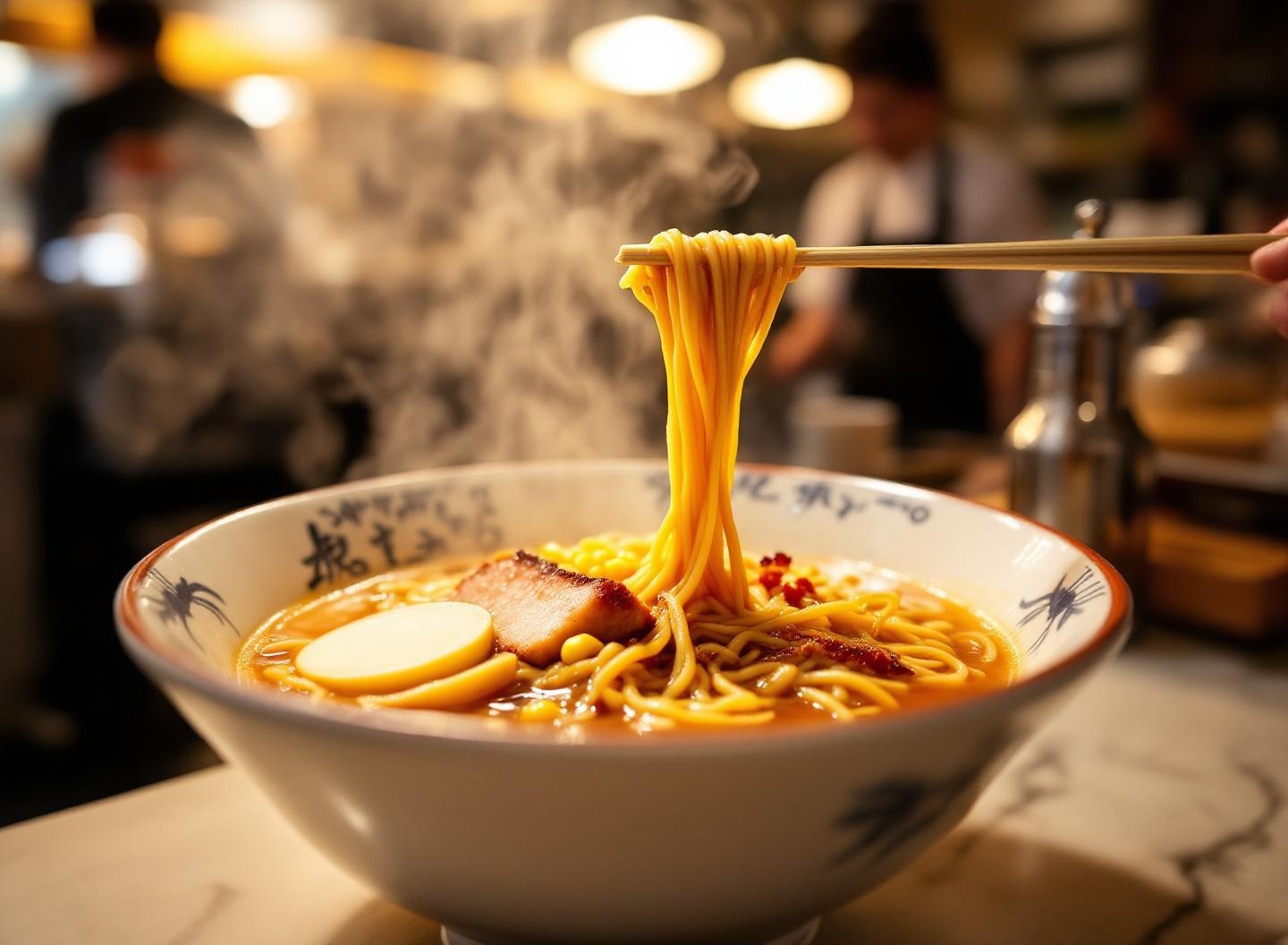
Hokkaido gave Japan miso ramen. While shoyu and shio styles predated it, it was Sapporo’s ramen scene in the 1960s that introduced the rich, fermented soybean paste broth that now dominates the northern style. A properly made Sapporo miso ramen has a deeply savory base — often combined with pork or chicken stock — topped with corn, butter, bamboo shoots, bean sprouts, and thick wavy noodles designed to carry the heavy broth.
Ramen Alley (Ganso Ramen Yokocho) in Susukino, central Sapporo, is the historic birthplace of the city’s ramen scene. This narrow alley of roughly a dozen tiny shops has been operating since 1951. Lines form early — arrive by 6:30 pm to secure a seat without a long wait. Budget around 1,000–1,200 yen per bowl.
Sumire is considered by many ramen obsessives to be the definitive Sapporo miso bowl. The broth is thick, aromatic, and finished with a disc of pork fat that melts slowly into the soup. Three locations in Sapporo, with the Susukino branch being most convenient. Expect to wait 20–40 minutes at peak hours. Cost: around 1,100 yen.
Ebisoba Ichigen specializes in a lighter but complex shrimp-based broth and draws consistent queues near Sapporo Station. Bowls run 1,000–1,300 yen. Shio (salt) and miso versions both available.
Asahikawa ramen, found in Hokkaido’s second-largest city 90 minutes north of Sapporo by express train, deserves its own mention. Asahikawa-style uses a double-dashi broth of pork and seafood, typically soy-based, topped with a thin layer of lard to trap the heat. The result is an almost silky, deeply savory bowl. Hachiya and Aoba are the two names most locals will point you toward, both near Asahikawa Station. Bowls cost 900–1,100 yen.
Fresh Seafood
Hokkaido’s coastline produces some of the finest seafood in the world. Cold northern waters yield sea urchin (uni), king crab, snow crab, hairy crab, salmon, scallops, squid, and ikura (salmon roe) in quantities and qualities rarely matched elsewhere.
Nijo Market (Nijo Ichiba), a short walk from Sapporo’s Odori Station, is a working wholesale market that welcomes tourists. Stalls here sell live seafood alongside prepared donburi bowls. The kaisendon (seafood rice bowl) is the thing to order — a mound of rice topped with whatever is freshest that morning. Combinations of uni, ikura, and crab over rice run 2,500–4,500 yen depending on the topping choices. The market opens at 6 am and most food stalls wind down by early afternoon.
Otaru, 35 minutes from Sapporo by train (740 yen), has a canal district that functions partly as a tourist draw and partly as a serious seafood destination. The covered market near Otaru Station sells fresh scallops, crab, and urchin at competitive prices. Grilled scallops on the street run 400–600 yen each. Sushi restaurants in Otaru use fish landed the same day — omakase sets run 3,000–8,000 yen at mid-range counters.
Uni (sea urchin) from Hokkaido is widely considered Japan’s best. The two main varieties are murasaki uni (purple urchin, slightly briny) and bafun uni (short-spine sea urchin, richer and creamier). Peak season is June through August. Served fresh over rice in a donburi, or as a topping on sushi, expect to pay 1,500–3,000 yen for a quality portion.
Hakodate morning market (Asaichi), adjacent to Hakodate Station in southern Hokkaido, operates daily from around 5 am and serves some of the freshest seafood in Japan. The market is famous for its squid fishing tanks where you can catch your own squid and have it prepared immediately. Squid sashimi set: around 1,500 yen. Kaisendon bowls here run 1,500–3,500 yen and are consistently excellent.
Soup Curry
Soup curry is a Sapporo invention with no real equivalent elsewhere in Japan. Unlike the thick, roux-based Japanese curry found nationwide, Hokkaido soup curry is exactly as described: a thin, aromatic broth loaded with whole roasted vegetables — typically half a roasted chicken leg, large chunks of potato, carrot, bell pepper, and eggplant — with a complex spice base influenced by Southeast Asian and Indian curries. You eat it by scooping rice into the soup spoonful by spoonful, rather than pouring the curry over rice.
The dish was developed in Sapporo in the 1970s and has never really left. Today Sapporo has several hundred soup curry restaurants.
Suage (multiple Sapporo locations) is often listed first by locals for its consistent execution and clean spice balance. Their chicken leg curry runs 1,300–1,600 yen depending on spice level (you choose from 1 to 40+) and rice size. The Kita-ku location near Sapporo Station sees the longest queues.
Garaku, in Susukino, operates a more refined version with a darker, deeper broth. The signature lamb and vegetable curry is excellent. Budget 1,400–1,800 yen. Reservations not taken — arrive before opening.
Magic Spice claims to be the original soup curry restaurant, having opened in 1993. The atmosphere is eccentric (the decor leans heavily into a pseudo-spiritual theme), but the food is genuinely distinctive. Their broth uses an unusually long-simmered base with over 30 spices. Dishes run 1,500–2,200 yen.
Genghis Khan (Jingisukan) Lamb BBQ
Jingisukan is Hokkaido’s answer to yakiniku. Lamb or mutton is grilled at the table over a domed iron grill, with a sweet-savory dipping sauce made from soy, mirin, apple, and garlic. The name references the Mongolian warlord, though the dish itself is entirely Japanese in origin and became popular in Hokkaido because sheep farming was promoted in the region from the early twentieth century.
The Sapporo Beer Garden complex near Higashi Ward runs a massive all-you-can-eat Genghis Khan operation from May through October. The sprawling factory buildings fit hundreds of diners simultaneously. All-you-can-eat sets run around 3,000–4,000 yen per person including draft beer options.
Daruma in Susukino is the institution for serious jingisukan. Operating since 1954, Daruma is tiny (seats around 20), filled with smoke, and serves mutton rather than the milder lamb. The more assertive flavor divides opinion but is the authentic version. Expect a queue — most waits run 30–60 minutes on weekends. Individual servings run 600–900 yen per plate.
Hokkaido Dairy
Hokkaido produces roughly half of Japan’s dairy output, and the quality is exceptional by any standard. The island’s pastureland, cold climate, and relatively low population density allow for a style of dairy farming that produces milk, cream, butter, and cheese that tastes markedly different from the thin, neutral products common elsewhere in Japan.
Soft cream (soft serve ice cream) made with Hokkaido milk is a near-compulsory experience. The milk is sweeter and richer than typical Japanese soft serve, and regional farms each claim their own variation. Furano, in central Hokkaido, is particularly famous for its soft cream, available at farm shops throughout the region. Prices run 300–600 yen per cone. At Biei’s roadside farm stands, the cream has a natural yellow tint from high-fat milk.
LeTAO (from Otaru) produces the region’s most famous cheesecake: the Fromage Double, a two-layer cake of fresh cream cheese and baked fromage. Available at the main store in Otaru’s canal district and at Chitose Airport. A standard cake runs around 1,800 yen.
Royce’ is Hokkaido’s best-known confectionery brand, famous for its nama (fresh) chocolate — thin squares of ganache dusted with cocoa powder that melt immediately on contact. The milk chocolate version is the signature. Available at Sapporo Station, New Chitose Airport, and Royce’ stores throughout the region. A box of 20 pieces costs around 750 yen.
Shiroi Koibito (White Lover), made by Ishiya, is arguably the most famous Hokkaido souvenir: white chocolate sandwiched between langue de chat cookies. Available everywhere, but the Shiroi Koibito Park in Sapporo (the factory itself, open as an attraction, admission 600 yen) is worth visiting for fans.
Yubari Melon
Yubari King melon is the most expensive fruit in Japan, and one of the most consistently remarkable. Grown in the Yubari valley east of Sapporo in carefully controlled greenhouses, each melon is netted by hand, grown to uniform size, and graded by sweetness. At auction, premium pairs can fetch hundreds of thousands of yen. For travelers, single slices are available at Sapporo markets, New Chitose Airport, and Yubari itself for 800–2,000 yen per portion.
The season runs roughly June through August. Outside of peak season, the melon appears as soft cream, juice, and confectionery throughout Hokkaido year-round.
Hokkaido Sweets and Snacks
Beyond the major brands, Hokkaido has a strong regional sweets culture. Hokkaido cheese tarts (from brands like BAKE and Pablo, both with locations at Sapporo Station) are freshly baked with the island’s cream cheese and run 230–400 yen each. Jaga Pokkuru, a potato crisp made from Hokkaido potatoes by Calbee, became so popular it was nearly impossible to find outside Hokkaido for years — it remains a top-selling airport souvenir at around 600 yen per bag.
Practical Tips
Getting to Hokkaido: Fly into New Chitose Airport (CTS), 45 minutes from Sapporo by JR rapid train (1,150 yen). Budget airlines (Peach, Jetstar) fly the Tokyo–Sapporo route from around 5,000–8,000 yen one-way. The Shinkansen will eventually reach Sapporo (under construction as of 2026); current bullet train service ends at Shin-Hakodate-Hokuto, requiring a transfer to limited express.
Getting around: JR Hokkaido covers the main cities. The Hokkaido Rail Pass (5 days: 22,000 yen, 7 days: 24,000 yen) offers good value for visitors covering Sapporo, Asahikawa, Hakodate, and Furano. For rural farm areas, a rental car is essentially required.
Best food seasons: Summer (June–August) for uni, melon, and fresh vegetables. Winter (November–March) for crab, hot ramen, and jingisukan by a warm grill.
Hokkaido Food by Season
| Season | Weather | What’s Best | Crowds |
|---|---|---|---|
| Spring (Mar-May) | Cool, still snowy in early spring | Early asparagus, first-of-season seafood, sakura-viewing izakaya menus | Moderate |
| Summer (Jun-Aug) | Mild and comfortable, Japan’s coolest region | Uni, Yubari melon, soft cream, fresh corn and vegetables | High, especially August |
| Autumn (Sep-Nov) | Crisp, early snow in late November | Salmon and ikura, mushroom dishes, new-season rice | Moderate |
| Winter (Dec-Feb) | Very cold, heavy snow, Sapporo Snow Festival in February | Crab, hot ramen and soup curry, jingisukan, hot sake | High around the Snow Festival |
Planning a Hokkaido Food Trip
Sapporo alone justifies a 2-3 day stay for food: a morning at Nijo Market, an afternoon in Susukino for ramen or jingisukan, and an evening exploring soup curry. Build in at least one day trip — Otaru for canal-side seafood and LeTAO cheesecake, or Hakodate for its morning market and squid fishing tanks — since both are under an hour from Sapporo by train. Furano and Biei, further afield, reward travelers focused on dairy and produce in summer but need a rental car or a dedicated bus day, since public transport there is sparse.
If your itinerary is built around Tokyo and Kansai, see Is Japan Expensive and Japan on a Budget for how a Hokkaido leg affects overall trip costs, and the 7-day itinerary or 10-day itinerary for whether Hokkaido fits your available time at all — it is a genuine detour from the Tokyo-Kyoto-Osaka core route.
Frequently Asked Questions
Is Hokkaido food expensive compared to the rest of Japan? Ramen, soup curry, and jingisukan are priced similarly to Tokyo or Osaka (900-2,200 yen per meal). Premium seafood — uni, crab, high-grade sushi — runs noticeably higher than mainland Japan because of the region’s reputation for quality, but a solid kaisendon bowl at a market stall still costs no more than a mid-range Tokyo dinner. See Japan Travel Budget for national comparison figures.
Do I need a car to eat well in Hokkaido? No, not for Sapporo, Otaru, or Hakodate — all are well served by JR trains and the Hokkaido Rail Pass. A car becomes useful mainly for Furano and Biei’s farm-shop soft cream and produce stands, where public transport is limited.
More tours on Viator
Top-rated experiences with verified reviews, bookable on Viator (a Tripadvisor company).
 Viator
Sapporo Bar Hopping Food Tour
FromUSD 104Check availability → Viator
Otaru Rickshaw Tour
FromUSD 38Check availability → Viator
3hours Nature Guided Tour in Shiretoko Five Lakes
FromUSD 48Check availability → Viator
【Promotion & Private Car】Asahiyama Zoo, Blue Pond, Shirahige Falls, Ningle Terrace (from Sapporo)
FromUSD 425Check availability → Viator
Wagashi traditional japanese sweets class
FromUSD 60Check availability → Viator