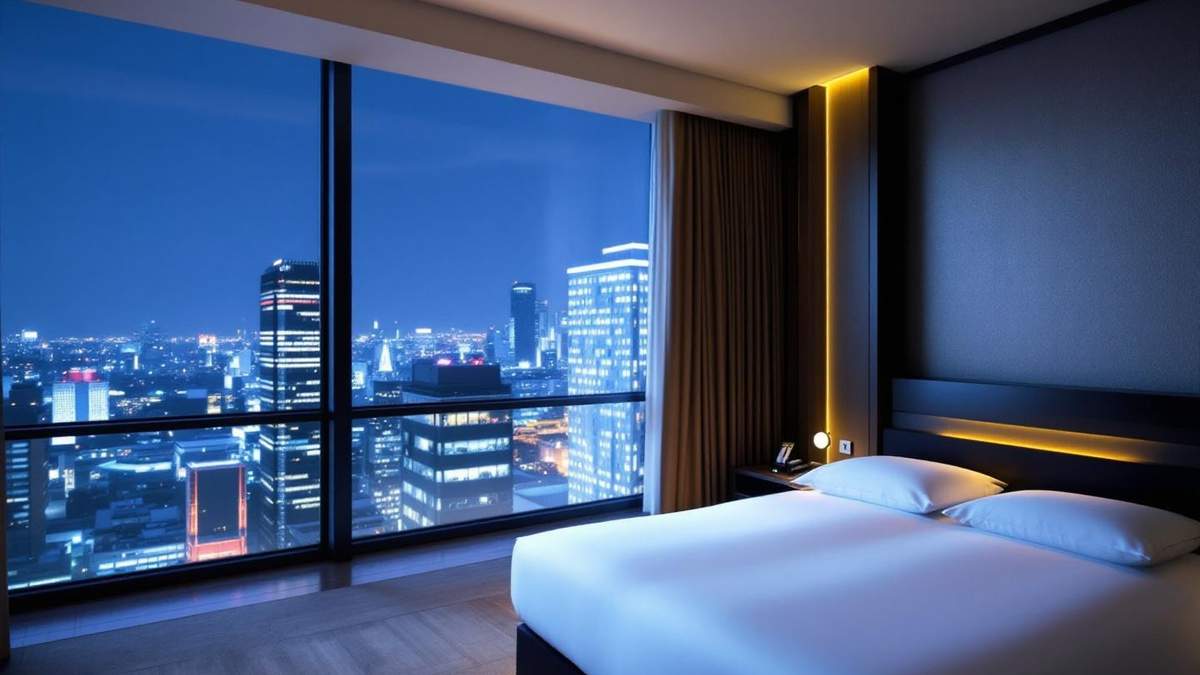
Where to Stay in Tokyo
Last updated: March 2026
Tokyo is not a city with one center. It is a collection of distinct neighborhoods, each with its own character, price level, and transport connections. Where you stay shapes your entire experience of the city — not just in terms of what is walking distance, but in terms of the atmosphere you wake up to each morning.
This guide cuts through the confusion. We cover every major area for accommodation, rank them honestly, and give you everything you need to make the right decision for your trip.
The Quick Answer: Which Area is Best?
First-time visitors: Shinjuku or Shibuya Traditional atmosphere seekers: Asakusa Business travelers or luxury seekers: Ginza or Tokyo Station area Budget travelers: Ueno or Ikebukuro Nightlife and party-focused: Roppongi or Shibuya Families: Shinjuku or Ueno
Now let us go into detail.
Shinjuku
Shinjuku is the single best base for most first-time visitors to Tokyo, and it is not close. The reasons are straightforward: it has the best public transport hub in the city (Shinjuku Station is the world’s busiest station by passenger volume), an enormous range of hotels across every price point, outstanding food and nightlife in every direction, and extremely fast access to all major areas.
What Shinjuku Offers
From Shinjuku, you can reach Shibuya in 5 minutes, Harajuku in 10 minutes, Akihabara in 15 minutes, Asakusa in 30 minutes, and Narita Airport in 85 minutes — see the Narita to Tokyo guide for all airport transfer options. The JR Yamanote Line, multiple Keio and Odakyu lines, the Tokyo Metro, and the Toei subway all converge here. You are never stranded.
The neighborhood itself delivers an enormous amount. Kabukicho is Tokyo’s most famous entertainment district — not just red lights, but packed with restaurants, bars, arcades, karaoke, and the Godzilla head looming above the Toho Cinema complex. Shinjuku Golden Gai is a maze of tiny bars crammed into alleyways, each holding 8–12 people, some of the most atmospheric drinking you will do anywhere in the world. Omoide Yokocho (Memory Lane) is a strip of smoky yakitori stalls under the railway tracks. Shinjuku Gyoen is one of Tokyo’s best parks. Isetan department store has a legendary food basement. For what to do in each neighborhood, see things to do in Tokyo.
Accommodation in Shinjuku
The range is genuinely impressive. Budget hostels like Khaosan Tokyo Ninja or Ace Inn start around 3,000–4,500 yen per person. Business hotels (Dormy Inn, Smile Hotel, Super Hotel) run 7,000–14,000 yen per night for a single room. Mid-range options like the Keio Plaza Hotel or Hilton Tokyo start around 18,000–30,000 yen. The Park Hyatt Tokyo (home of Lost in Translation) sits at the upper end at 60,000–100,000 yen per night, with its bar on the 52nd floor offering one of Tokyo’s great views.
West Shinjuku has most of the business and luxury hotels. East Shinjuku, near Kabukicho, has more budget-to-mid options and is closer to the food and nightlife.
Who Should Stay in Shinjuku
Anyone on their first trip to Tokyo. Solo travelers who want to be in the middle of everything. People who want flexibility — the ability to decide on the day where they are going. Those who want an enormous choice of restaurants right outside the door.
Typical price range: 7,000–30,000 yen per night (all categories available)
Shibuya
Shibuya is younger, trendier, and more energetic than Shinjuku. It is the epicenter of Japanese youth culture, fashion, and nightlife. Shibuya Crossing — the famous scramble crossing with hundreds of people crossing from all directions simultaneously — is here.
What Shibuya Offers
Shibuya Station is also a major hub, though not quite as dominant as Shinjuku. You have direct access to Harajuku (one stop north on the Yamanote Line), easy connections to Ginza, and the Tokyu Toyoko Line takes you directly to Yokohama. The area around the station has been massively redeveloped over the past decade — Scramble Square, Shibuya Stream, and the Hikarie building have transformed it into a gleaming vertical district.
For shopping: Shibuya 109 (fast fashion), the endless boutiques of Omotesando and Cat Street, and the Daikanyama and Nakameguro neighborhoods (both walkable — about 15–20 minutes south) offer some of the most enjoyable browsing in the city. Daikanyama Tsutaya Books is one of the world’s great bookstores.
Nightlife: Shibuya has excellent bars and clubs. The area around Dogenzaka is particularly dense with options. Daikanyama and Nakameguro both have fantastic cocktail bars and restaurants.
Accommodation in Shibuya
Shibuya has fewer budget options than Shinjuku and the area immediately around the station is dominated by larger hotels. The Shibuya Excel Hotel Tokyu, Cerulean Tower Tokyu Hotel, and Dormy Inn Premium Shibuya Jingumae are solid mid-range picks. The Trunk Hotel is one of Tokyo’s best boutique hotels. Expect 10,000–25,000 yen for mid-range doubles.
For slightly better value, staying in the Daikanyama or Nakameguro micro-neighborhoods (both connected by the Tokyu lines) gives you a quieter, more residential atmosphere while remaining extremely well-connected.
Who Should Stay in Shibuya
Younger travelers, fashion and pop culture enthusiasts, those who prioritize nightlife, and anyone who plans to spend significant time in the western side of the Yamanote Line loop (Harajuku, Omotesando, Shibuya, Daikanyama).
Typical price range: 10,000–35,000 yen per night
Asakusa
Asakusa is Tokyo’s most traditional neighborhood — a glimpse of what Tokyo looked and felt like before the modern era. Senso-ji Temple, the city’s oldest and most visited, anchors the district. The area around it is full of rickshaws, craft shops, traditional snacks, and old-fashioned shotengai (shopping streets).
What Asakusa Offers
The atmosphere here is genuinely different from the rest of Tokyo. There are wooden buildings, narrow lanes, the smell of incense from the temple, and a sense that tourism and tradition have coexisted here for many decades. The Nakamise shopping arcade leading to Senso-ji sells everything from quality lacquerware and ceramics to tourist-grade toys — worth navigating to find the genuine craft shops tucked behind it.
Asakusa is also adjacent to Ueno (walkable or one subway stop), which means easy access to Tokyo National Museum, Ueno Zoo, and the multiple other museums clustered in Ueno Park.
The downside is transport. Asakusa is served by the Tobu Skytree Line and the Tokyo Metro Ginza Line and Asakusa Line — not as comprehensive as Shinjuku or Shibuya. Getting to Shibuya or Shinjuku takes 30–40 minutes.
Accommodation in Asakusa
Asakusa has excellent options, particularly for those seeking a more traditional aesthetic. Ryokan (traditional Japanese inns) are more available here than in other areas. The Asakusa View Hotel is the most prominent large hotel. For capsule hotels, nine hours Asakusa is excellent. Budget guesthouses are plentiful and often atmospheric. Mid-range business hotels are well-priced here — you get more space for your money than in Shinjuku.
Rates: budget guesthouses 4,000–8,000 yen per person, business hotels 8,000–15,000 yen, ryokan 15,000–30,000 yen per person including breakfast.
Who Should Stay in Asakusa
Those on a return trip who have seen the standard tourist circuit and want to experience Tokyo from a different perspective. History and culture enthusiasts. People visiting Tokyo Sky Tree (directly accessible from Asakusa). Travelers who prioritize atmosphere over convenience. Those who want a ryokan experience in central Tokyo.
Typical price range: 6,000–20,000 yen per night
Ueno
Ueno sits between Asakusa and Akihabara, anchored by Ueno Park, which contains an impressive concentration of Tokyo’s best museums: Tokyo National Museum, the National Museum of Nature and Science, the National Museum of Western Art, and the Tokyo Metropolitan Art Museum. It is also the traditional gateway for the Tohoku shinkansen, meaning many long-distance travelers pass through.
What Ueno Offers
Ueno is one of Tokyo’s most affordable accommodation areas, particularly around Uguisudani and the backstreets adjacent to the station. Budget and business hotels cluster thickly here. The Ameyoko market — a packed outdoor market along the old rail tracks — is one of Tokyo’s most energetic street-level experiences, particularly for snacks and discount goods. The neighborhood has a slightly rougher, more working-class character than Shinjuku or Shibuya, which many travelers find refreshing.
Transport connections are good: JR Yamanote Line, Keihin-Tohoku Line, and multiple Tokyo Metro lines. Akihabara is two stops south (5 minutes).
Accommodation in Ueno
Ueno is the best area in central Tokyo for budget and lower mid-range travelers. Business hotels consistently run 6,000–11,000 yen for singles. The Ueno area contains multiple APA Hotels (reliable, compact, good value), and several hostels in the 2,500–4,500 yen per person range.
Who Should Stay in Ueno
Budget-conscious travelers. Museum enthusiasts. People arriving from northern Japan by shinkansen. Those who want central Tokyo access without central Tokyo prices.
Typical price range: 5,000–14,000 yen per night
Ginza
Ginza is Tokyo’s most upscale shopping and dining district — Japan’s answer to the Champs-Elysees or 5th Avenue, but more concentrated and arguably more refined. International luxury brands, Japanese haute cuisine, and understated elegance define the area.
What Ginza Offers
Ginza is quieter than Shinjuku and Shibuya, which is part of its appeal. The streets are wide, the buildings are sleek, and the energy is more adult and refined. On weekends, Chuo-dori becomes a pedestrian promenade. The Tsukiji outer market (the restaurant-and-food-shop area adjacent to the old Tsukiji market) is 10 minutes’ walk.
Transport: Ginza Station serves multiple Metro lines and is well-connected. Tokyo Station is one stop away, offering shinkansen access.
Accommodation in Ginza
Ginza is primarily mid-to-luxury territory. The Millennium Mitsui Garden Hotel, Dormy Inn Ginza, and various Mitsui Garden Hotels offer solid mid-range options at 12,000–25,000 yen. The Conrad Tokyo, The Peninsula Tokyo, and The Ritz-Carlton Tokyo (in nearby Roppongi) represent the top tier at 60,000–150,000 yen per night.
Who Should Stay in Ginza
Luxury travelers. Foodies who want proximity to Tsukiji. Business travelers. Those who prefer a quieter, more sophisticated atmosphere. Anyone with a strong shopping agenda in the luxury bracket.
Typical price range: 12,000–80,000+ yen per night
Tokyo Station Area (Marunouchi, Nihonbashi)
Staying near Tokyo Station is primarily practical — it is the central hub for the shinkansen network and an excellent base if you are doing day trips (Kamakura, Nikko, Yokohama, or travel to Kyoto and Osaka). The Marunouchi area is a modern, rather corporate neighborhood of gleaming office towers, but it delivers what it promises: convenience and efficiency.
Accommodation Near Tokyo Station
The Palace Hotel Tokyo and the Marunouchi Hotel are the standout properties — beautiful, with views of the Imperial Palace Gardens. Business hotels cluster around the station at 10,000–18,000 yen. The station itself (designed by the original architect in the early 20th century) is one of Tokyo’s most beautiful buildings.
Who Should Stay Here
Day-trippers and those planning significant shinkansen travel. Business travelers. Those who value a very central, neutral base without the sensory intensity of Shinjuku or Shibuya.
Typical price range: 10,000–50,000 yen per night
Ikebukuro
Ikebukuro is the northern counterpart to Shibuya — a major commercial hub with two enormous department stores (Seibu and Tobu facing each other across the station), Sunshine City shopping complex, and dense restaurant and entertainment options. It is generally more affordable than Shinjuku and popular with both domestic tourists and foreign residents.
What Ikebukuro Offers
Ikebukuro has a strong anime and gaming culture scene, particularly on the east side. The west side is more restaurant-focused. Prices are notably lower than Shinjuku for comparable quality. The JR Yamanote Line makes Shinjuku a direct 9-minute journey.
Who Should Stay in Ikebukuro
Budget-conscious travelers who want central access without central prices. Anime and gaming enthusiasts. Those who prefer a neighborhood that is slightly less touristy than Shinjuku.
Typical price range: 6,000–15,000 yen per night
Roppongi
Roppongi has a dual identity. By day, it is home to two of Tokyo’s best art museums (Mori Art Museum and the National Art Center) and some of the city’s finest dining. By night, it is the foreigners’ nightlife district — loud, international, and very late. It is also home to many foreign embassies.
Who Should Stay in Roppongi
Art lovers and museum enthusiasts. Those who want high-end dining options on their doorstep. Night owls. Travelers who find the Japanese-oriented entertainment districts less navigable. Not ideal as a sole base — it is somewhat removed from the main tourist circuit.
Typical price range: 15,000–60,000 yen per night
Accommodation Types in Tokyo
Business Hotels
The backbone of mid-range accommodation in Japan. Rooms are small by Western standards — typically 14–18 square meters — but are efficiently designed, consistently clean, and offer good amenities. Most include a tiny bathroom unit (shower, toilet, sink as one pre-fabricated module), a desk, TV, yukata robe, and complimentary toiletries.
Key chains: Dormy Inn (consistently excellent, good breakfast options), APA Hotel (ubiquitous, no-frills, reliable), Toyoko Inn (budget tier, often has breakfast included), Super Hotel (excellent value, environmental focus), Mitsui Garden Hotels (slightly more refined, mid-range), Washington Hotels (solid mid-range).
Price: 7,000–18,000 yen per night for a single room.
Capsule Hotels
Compact sleeping pods stacked in rows, with shared bathroom facilities. Modern capsule hotels have improved enormously — many now offer private pods with lighting controls, USB charging, small TV screens, and comfortable bedding. They are not claustrophobic in the way early versions were. Nine Hours is the best chain (sleek, design-led). First Cabin offers first-class airline seat-style capsules with more space.
Capsule hotels are male-only, female-only, or mixed (with separate floors for each gender). They are excellent for solo travelers on a tight budget or for a one-night stopover.
Price: 3,000–5,500 yen per person per night.
Hostels
Tokyo has a strong hostel scene with excellent social hostels and private-room options. Many are boutique-designed with thoughtful common areas. Khaosan Tokyo hostels (multiple locations), Nui Hostel in Asakusa, and Grids Akihabara are well-regarded.
Price: Dorm beds 2,500–4,500 yen, private rooms 7,000–14,000 yen.
Ryokan
Traditional Japanese inns with tatami-floored rooms, futon bedding, communal or private baths (onsen if the ryokan has one), and meals usually included (especially at higher-end establishments). Staying at a ryokan in Tokyo — while not as atmospheric as staying in a rural onsen town — is a genuine experience and an excellent introduction to traditional Japanese hospitality (omotenashi).
For in-city ryokan: Asakusa and some neighborhoods near temples or parks have authentic options. Expect 15,000–35,000 yen per person including dinner and breakfast at a traditional inn.
Luxury Hotels
Tokyo competes at the very top tier of global luxury hospitality. The Peninsula, Aman Tokyo, Park Hyatt, Conrad, Ritz-Carlton, Mandarin Oriental, and Andaz are among the options. Rates typically run 50,000–150,000+ yen per night, but service levels and facilities justify the category. The Aman Tokyo is widely considered one of the finest urban hotels in the world.
Airbnb and Apartment Rentals
Legal short-term rentals in Japan require hosts to be licensed (minpaku registration). The inventory is smaller than in other major cities, but available. Apartment rentals are particularly useful for families or groups of four or more. Booking through Airbnb, VRBO, or Japan-specific platforms like Sakura House gives access to private apartments that offer more space and the ability to cook — a significant saving.
When to Book and How Far in Advance
Tokyo accommodation sells out much faster than most visitors expect, particularly during cherry blossom season (late March to early April), Golden Week (late April to early May), and autumn foliage season (November). For these periods, book 3–6 months in advance for any popular option.
Outside peak seasons, 4–6 weeks is usually sufficient for mid-range options. Budget hostels and very popular hotels should still be booked further ahead.
Booking platforms: Booking.com and Agoda tend to have the best inventory and prices for Japan. Japanese sites like Jalan and Rakuten Travel sometimes have exclusive deals and better prices for Japanese domestic hotels, but the English interface is limited. The hotel’s own website often matches or beats third-party prices and may offer free cancellation.
Budget Guide by Area
For a single room (business hotel standard) per night:
- Ueno / Ikebukuro: 6,000–12,000 yen
- Asakusa: 7,000–15,000 yen
- Shinjuku: 8,000–18,000 yen
- Shibuya: 10,000–20,000 yen
- Tokyo Station area: 10,000–22,000 yen
- Ginza: 12,000–30,000 yen
- Roppongi: 15,000–40,000 yen
Tips for Booking Tokyo Accommodation
Read the room size carefully. Japanese hotel room sizes are small by Western standards. 16 square meters (172 sq ft) is a standard double. If you need space, filter by “semi-double” or “double” rather than “single,” or look specifically for “superior” or “deluxe” rooms.
Check breakfast inclusion. Many Japanese business hotels offer excellent Japanese or Western breakfast sets for 1,000–1,500 yen extra. At chains like Dormy Inn, the breakfast is famous enough to be a reason to choose the hotel.
Location within the neighborhood matters. “Shinjuku hotel” can mean a 2-minute walk from Shinjuku Station or a 15-minute walk. Check the pin on the map carefully, particularly relative to the station you will use most.
Noise levels. Rooms facing the street in entertainment districts (Shinjuku east side, Roppongi) can be noisy until 3–4 AM. If you are a light sleeper, request an upper floor room facing away from the street, or look for hotels set back slightly from the main roads.
Single traveler surcharges. Many Japanese hotels are priced per room, not per person. Solo travelers often get excellent value at business hotels — paying the full room price but getting the whole room.
The single most important piece of advice: do not sacrifice location for price. Tokyo’s train system is excellent, but a 30-minute commute each way from a remote hotel adds up to hours of lost time over a week. Stay close to a major station, even if it means a slightly smaller room or a slightly higher price.