Best Day Trips from Tokyo
Last updated: March 2026
One of Tokyo’s underappreciated advantages as a base is the extraordinary range of day trips from Tokyo available within 90 minutes or less. Mountains, ancient shrines, feudal castle towns, volcanic landscapes, beaches, and traditional seaside villages are all accessible on a round-trip from central Tokyo in a single day. The dense rail network makes most of these trips easy to plan independently without a car.
This guide covers ten of the best day trips from Tokyo, ranked roughly by overall quality for the average visitor, with specific transport instructions, costs, and suggested itineraries.
1. Hakone
Distance from Tokyo: 85–90 km southwest Journey time: 85 minutes from Shinjuku (Romancecar express) Best for: Mount Fuji views, hot springs, art, mountain landscapes Recommended time: Full day, or overnight
Hakone is Tokyo’s most popular and most rewarding day trip — a volcanic mountain resort area that combines active geothermal landscapes, world-class contemporary art, hot-spring bathing, and, on clear days, the most accessible view of Mount Fuji available from the Tokyo region.
The Hakone Open Air Museum is the primary art destination: 70,000 square meters of outdoor sculpture park with works by Picasso, Rodin, Henry Moore, Giacometti, and major Japanese artists. The Picasso Pavilion alone houses more than 300 works. A separate ¥1,600 entry fee gets you into the Pola Museum of Art, which holds Monet, Renoir, and Cézanne in a building designed to minimize its visual impact on the forested hillside.
The Owakudani volcanic valley is the area’s most dramatic geothermal landscape — a steaming, sulfur-yellow valley created in a 3,000-year-old eruption where visitors buy kuro-tamago (eggs boiled black in the sulfurous springs). Access is via the Hakone Ropeway from Sounzan. On clear days — most reliably in October through December and February through March — Mount Fuji fills the horizon from the ropeway stations.
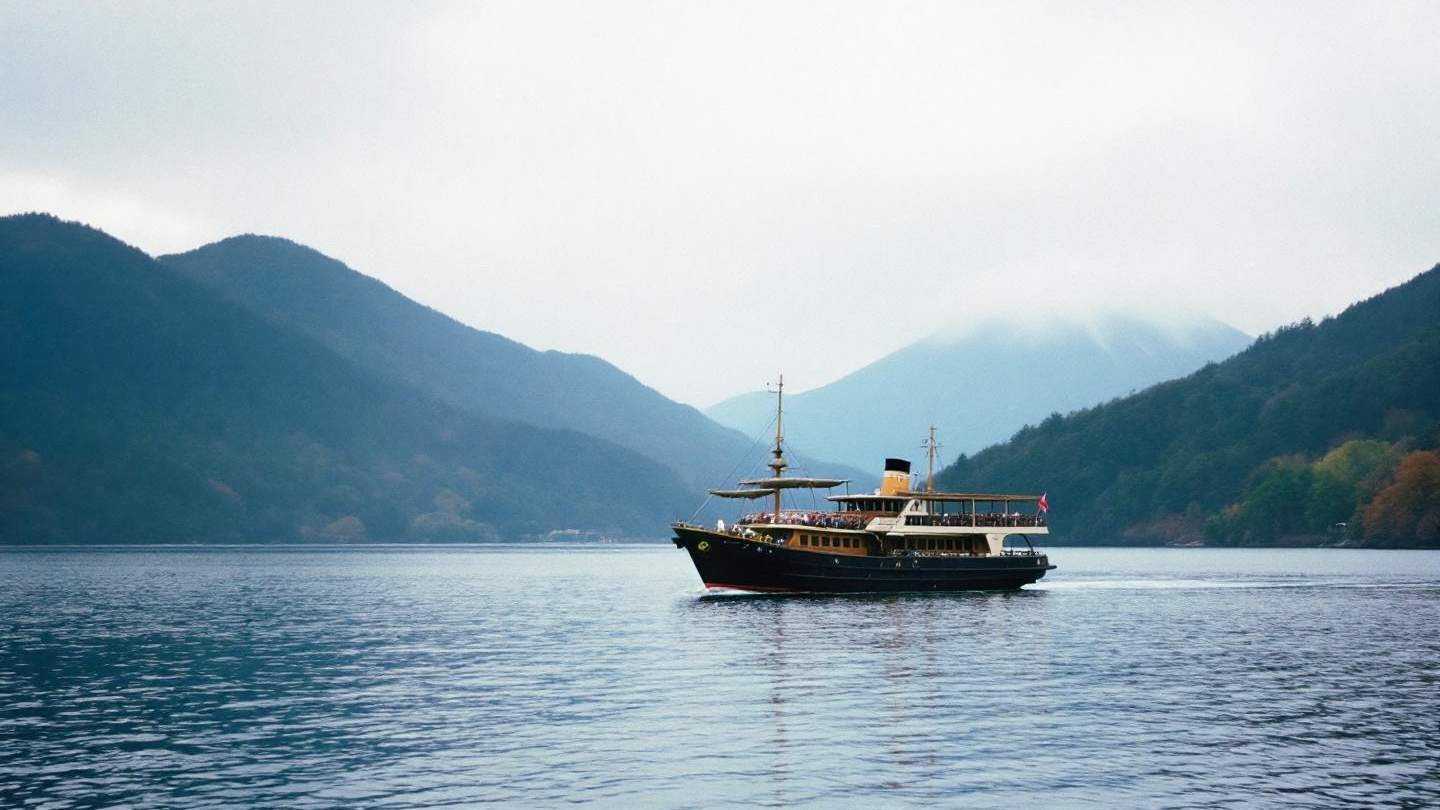
The loop circuit through Hakone combines the Odakyu Romancecar limited express from Shinjuku to Hakone-Yumoto, the Hakone Tozan switchback railway up to Gora, the Hakone Tozan cable car to Sounzan, the Hakone Ropeway over Owakudani to Togendai, and the Hakone pirate boat (Hakone Sightseeing Cruise) across Lake Ashi to Hakonemachi, then bus back to Hakone-Yumoto. The Hakone Freepass covers all of these after your initial train from Shinjuku.
Transport and cost:
- Romancecar from Shinjuku: ¥2,470 (reserved seat supplement applies)
- Hakone Freepass (2-day): ¥6,100 from Shinjuku (covers all Hakone transit)
- Hakone Open Air Museum: ¥1,600 adults
- Pola Museum of Art: ¥1,800 adults
Itinerary suggestion: Leave Shinjuku by 7:30am. Hakone-Yumoto by 9am. Hakone Tozan railway to Miyanoshita (coffee at Fujiya Hotel, Japan’s oldest Western-style hotel, for the atmosphere). Continue to Gora and the Open Air Museum. Cable car and ropeway to Owakudani. Boat across Lake Ashi to Hakonemachi and the red torii gate of Hakone Shrine, visible from the water. Return bus to Hakone-Yumoto. Optional: soak in a public hot spring bath before the return train.
2. Nikko
Distance from Tokyo: 140 km north Journey time: 2 hours from Shinjuku (via Tobu Nikko Line limited express); 1 hour 50 minutes from Ueno (JR Tohoku Shinkansen to Utsunomiya, then local) Best for: Elaborate shrine complex, mountain scenery, waterfalls, autumn foliage Recommended time: Full day; early departure essential
Nikko contains one of Japan’s most extraordinary historical complexes. The Toshogu Shrine, built in the early 17th century to enshrine Tokugawa Ieyasu (founder of the Edo shogunate), is everything Japanese shrine architecture is not usually: ornate, polychrome, excessive, and intentionally awe-inspiring. The contrast with the restrained aesthetic of most Japanese sacred sites is striking and deliberate — Toshogu was built to demonstrate the power of the Tokugawa dynasty to anyone who visited.
The complex includes 42 buildings designated as National Treasures or Important Cultural Properties, spread across a cedar-forested hillside. The Yomeimon Gate — covered in over 500 carvings of animals, people, and mythological creatures — is the most famous single element. The Nemuri-neko (sleeping cat) carving by Hidari Jingoro is famous enough to have its own queue.
Beyond Toshogu, the Nikko Futarasan Shrine (older than Toshogu) and Rinno-ji temple complex (with its three large golden Buddha statues) fill the same area. The Shin-kyo Bridge, a vermilion lacquered bridge over the Daiya River, is one of the most photographed spots.
Further afield — requiring either a bus or taxi — Kegon Falls is one of Japan’s three great waterfalls at 97 meters, accessible via an elevator down the cliff face. Lake Chuzenji sits above the falls and offers mountain scenery and hiking.
Transport and cost:
- Tobu Nikko Line from Asakusa: ¥1,360 (local) or ¥2,720 (Spacia limited express)
- Nikko World Heritage Pass: ¥1,000 (covers bus between sights)
- Toshogu Shrine: ¥1,300 adults
- Rinno-ji temple: ¥400
- Futarasan Shrine: ¥200
- Kegon Falls elevator: ¥570
Itinerary suggestion: Take the 6:30am Spacia express from Asakusa. Arrive by 8:45am before tour groups. Shin-kyo Bridge, then up to the main shrine complex. Spend 3 hours in the Toshogu area. Bus to Chuzenji and Kegon Falls after lunch. Return bus to Nikko Station for 4:30–5pm train.
Best seasons: Late April to May (fresh green leaves). Mid-October to mid-November (spectacular cedar forest autumn colors). Avoid August (very crowded) and rainy season in June.
3. Kamakura
Distance from Tokyo: 50 km southwest Journey time: 55 minutes from Shinjuku (JR Shonan-Shinjuku Line); 55 minutes from Tokyo Station Best for: Great Buddha, Zen temples, coastal walking, seaside towns Recommended time: Full day; can combine with Enoshima
Kamakura was Japan’s de facto capital from 1185 to 1333, and the city retains an extraordinary concentration of temples and shrines from that period in a setting of wooded hills and Pacific coast. The Great Buddha (Kotoku-in Daibutsu) — a 13-meter bronze Amida Buddha completed in 1252 — is Japan’s most famous outdoor statue and one of its most powerful.
The Zen temples are Kamakura’s true draw for repeat visitors. Engaku-ji and Kencho-ji are two of Japan’s five great Rinzai Zen temples, both open to visitors, with excellent gardens and sub-temples scattered across their extensive grounds. Zuisen-ji has a medieval garden. Hokoku-ji is the bamboo temple — a grove of 2,000 matake bamboo visible from a garden path that takes about 20 minutes to walk.
The Daibutsu Hiking Course connects the Inari Shrine near Kamakura Station to the Great Buddha at Kotoku-in through forested trails — about 3 kilometers and an hour of easy walking that avoids the main roads entirely and passes through several small shrines along the ridge.
Kamakura’s beach town character is equally appealing: Yuigahama and Zaimokuza beaches have a relaxed summer culture, and the main street Komachi-dori is a pleasant pedestrian shopping lane with traditional sweets, small restaurants, and craft shops.
Transport and cost:
- JR Shonan-Shinjuku Line from Shinjuku: ¥940
- Kotoku-in Great Buddha: ¥300 adults (interior: ¥20 extra)
- Engaku-ji: ¥500
- Kencho-ji: ¥500
- Hokoku-ji bamboo garden: ¥400 (includes matcha)
Itinerary suggestion: Leave Shinjuku at 7:30am. Arrive Kita-Kamakura Station (one stop before Kamakura) and start at Engaku-ji and Kencho-ji in the morning. Walk to Kamakura Station via Komachi-dori for lunch. Afternoon: Great Buddha, then Hase-dera temple complex (excellent garden, coastal views, cave of 1,000 Kannon statues). Return from Kamakura Station.
4. Kawagoe (Little Edo)
Distance from Tokyo: 35 km northwest Journey time: 30–40 minutes from Ikebukuro (Tobu Tojo Line or Seibu Shinjuku Line) Best for: Preserved Edo-period architecture, sweet potatoes, traditional culture Recommended time: Half day or full day
Kawagoe earned the nickname “Little Edo” for its remarkably preserved kura-zukuri (clay-walled storehouse) architecture along the main Ichibangai street. About 30 clay warehouses from the Edo period survive, their distinctive thick walls and black-tiled roofs creating a townscape unlike anything in Tokyo.
The Toki no Kane (Bell Tower) has rung on the hour since the 17th century. The Kashiya Yokocho (Candy Alley) is a narrow lane of small traditional sweet shops selling sugar candy, potato chips, and sesame snacks that have been produced there for generations. Kawagoe is also famous for satsumaimo (sweet potatoes) in every form — roasted whole, as soft-serve ice cream, as steamed cakes, as chips.
The Kitain temple complex contains five 17th-century Edo Castle palace rooms transplanted here after a fire — the only remaining structures from the original Edo Castle — and 540 stone statues of disciples of Buddha in the grounds.
Transport and cost:
- Tobu Tojo Line from Ikebukuro: ¥480
- Kitain temple: ¥400 adults
- Most shops and streets: free
Best time to visit: Weekday mornings are peaceful. Weekends become crowded. The October Kawagoe Festival features elaborate festival floats in a tradition dating to 1648.
5. Yokohama
Distance from Tokyo: 30 km south Journey time: 25 minutes from Shibuya (Tokyu Toyoko Line); 30 minutes from Shinjuku (JR Shonan-Shinjuku Line) Best for: Chinatown, harbor, Western architecture, waterfront Recommended time: Full day
Yokohama is Japan’s second-largest city, and its historical role as Japan’s main port for Western trade (from 1859 onward) created an urban character distinct from anywhere else in the country. The Yamashita Park waterfront, Yokohama’s Chinatown (the largest in Japan and one of the most vibrant in Asia), the preserved Western-style buildings of the Kannai district, and the striking Minato Mirai 21 harbor redevelopment all make Yokohama a full-day destination.
Chinatown centers on Kantei-byo, a Chinese shrine dating to 1873, and the surrounding streets are packed with restaurants, buns (nikuman), and shops. Weekend lunch lines at the best dumpling and Cantonese restaurants extend onto the street — arrive before noon or after 2pm.
The Cup Noodles Museum in the Minato Mirai area tells the story of instant noodles (invented in Yokohama) and allows visitors to design their own cup noodle label. It is unexpectedly interesting. The adjacent Yokohama Red Brick Warehouse hosts markets and events throughout the year.
Transport and cost:
- Tokyu Toyoko Line from Shibuya to Yokohama: ¥290
- Cup Noodles Museum: ¥500 adults
- Yokohama Landmark Tower Sky Garden: ¥1,000 adults
- Most waterfront areas: free
6. Enoshima
Distance from Tokyo: 50 km south Journey time: 60–70 minutes from Shinjuku (Odakyu Enoshima Limited Express) Best for: Sea caves, island atmosphere, seafood, ocean views Recommended time: Half day; combine with Kamakura
Enoshima is a small island connected to the mainland by a pedestrian bridge, famous for its unusual combination of Shinto shrines, sea caves, a lighthouse (now a viewing tower), and excellent seafood. The island rises steeply from the bridge entrance up through covered shopping arcades (the Enoshima Benzaiten Nakamise-dori) selling shirasu (small whitebait), dried squid, and shell jewelry.
The Enoshima Shrine complex occupies three separate shrine buildings on the way up the island. The Enoshima Sea Candle lighthouse tower offers views across Sagami Bay toward Mount Fuji. At the far end of the island, the Iwaya Caves descend 152 meters into the island’s volcanic rock base.
The combination of Enoshima and Kamakura on a single day is very popular and very doable: take the Enoshima Electric Railway (Enoden) between the two. The Enoden is a narrow-gauge single-track railway that runs along the coast and through residential neighborhoods barely wider than the train itself — the ride is an experience in itself.
Transport and cost:
- Odakyu Enoshima-Kamakura Freepass from Shinjuku: ¥1,640 (covers all transport)
- Enoshima Shrine: ¥200
- Iwaya Caves: ¥500
- Sea Candle: ¥500
7. Mount Takao (Takao-san)
Distance from Tokyo: 45 km west Journey time: 50 minutes from Shinjuku (Keio Line Ltd. Express) Best for: Hiking, accessible nature, mountain temple, Mount Fuji views Recommended time: Half day
Mount Takao is 599 meters high — not imposing by alpine standards — but its accessibility from central Tokyo, its well-maintained trails, its ancient mountain temple (Yakuo-in), and its reputation for clear Mount Fuji views on autumn days make it one of the most visited mountains in the world by annual climber count.
Eight numbered trails provide routes of varying difficulty. Trail 1 (1.9 km, mostly paved) is the main approach up the mountain and passes Yakuo-in temple at the summit approach. Trail 6 follows a river and offers a more natural hiking experience without the cable car crowds. Trail 4 is a suspended cedar bridge route. All trails converge at or near the summit.
Mount Fuji views are best from October through February when the air is clearest. The summit has an observation area on the south side with an unobstructed sightline. The autumn foliage (mid-November to early December) on the slopes is excellent.
The Takao 599 Museum at the base provides context on the mountain’s ecology and is free to enter. The cable car and chair lift options make the lower portion accessible for those with limited mobility.
Transport and cost:
- Keio Line from Shinjuku to Takaosanguchi: ¥390
- Cable car (one way): ¥490 adults
- Chair lift (one way): ¥490 adults
- Summit trails: free
Itinerary suggestion: Leave Shinjuku at 8am. Take Trail 6 up (approximately 2 hours with stops). Visit Yakuo-in temple. Summit views. Descend on Trail 1 or cable car. Lunch of soba (the local specialty) at one of the restaurants near the mountain base.
8. Fuji Five Lakes (Fujigoko)
Distance from Tokyo: 95–110 km west Journey time: 110–130 minutes from Shinjuku (Fujikyuko Line) Best for: Mount Fuji close-up views, Fuji-Q Highland, lake scenery Recommended time: Full day
The Fuji Five Lakes region sits at the base of Mount Fuji and provides the closest and most dramatic views of the mountain available by public transport from Tokyo. Lake Kawaguchiko is the most accessible and most visited, with wide views across the lake to Fuji reflected in the water on calm mornings.
Chureito Pagoda — a five-story pagoda on a hillside above Fujiyoshida city — is one of Japan’s most photographed images: the vermilion pagoda with Mount Fuji rising behind it. It requires a climb of 398 steps from the base shrine. Cherry blossom season (late April) and autumn foliage (November) create the most celebrated compositions.
Fuji-Q Highland amusement park, adjacent to Fujiyoshida Station, contains several roller coasters that held world records at various points: Fujiyama, Eejanaika, Do-Dodonpa. The rides are secondary to the view from the park of Mount Fuji rising directly above the roller coaster tracks.
For those wanting to get closer to the mountain without climbing, the Fuji Subaru Line 5th Station (accessible by bus from Kawaguchiko Station) sits at 2,305 meters and is surrounded by mountain scenery. The buses run from late April through mid-December.
Transport and cost:
- Fujikyuko Bus from Shinjuku Expressway Bus Terminal: ¥2,000–¥2,500 (approximately 2 hours; reserve in advance at Shinjuku Bus Terminal)
- Chureito Pagoda: free (but requires stair climb)
- Fuji-Q Highland: entry from ¥2,200 (rides extra or all-day pass ¥6,800)
- Fuji Subaru Line 5th Station bus: ¥1,570 round trip from Kawaguchiko Station
9. Chichibu
Distance from Tokyo: 70 km northwest Journey time: 80 minutes from Ikebukuro (Seibu Chichibu Limited Express) Best for: Rural Japan, SL steam train, wine, winter ryokan visits Recommended time: Full day
Chichibu is one of the most overlooked destinations in the Tokyo day-trip circuit. It is a rural valley in the mountains of Saitama Prefecture, ringed by forested peaks and containing a sequence of traditional temples, a famous chrysanthemum fabric weaving tradition, a surprisingly good winery, and one of Japan’s most atmospheric steam locomotive train routes.
The Chichibunomiya Shrine is a major Shinto pilgrimage site. The 34-temple Chichibu Pilgrimage circuit — a loop of smaller shrines and temples spread across the valley — is typically walked over multiple days by pilgrims but can be sampled at any individual site.
The Seibu Railway’s Red Arrow limited express from Ikebukuro to Seibu Chichibu Station is comfortable and efficient. From there, the Chichibu Railway (a separate line) connects to Mitsumineguchi and Hiratsuka stations. The Paleo Express steam locomotive (running on certain weekends on the Chichibu Railway) is worth timing your visit around.
Transport and cost:
- Seibu Red Arrow from Ikebukuro: ¥1,510 (includes limited express supplement)
- Chichibu Shrine: free
- Local ryokan dinner (day-trip early dinner option): from ¥6,000
Best seasons: November (Chichibu Night Festival, a major fire festival with fireworks and traditional floats, is one of Japan’s three great dashi festivals). Winter for snow scenery. Spring for plum and cherry blossoms.
10. Nagatoro
Distance from Tokyo: 80 km northwest Journey time: 80 minutes from Ueno (Takasaki Line to Kumagaya, then Chichibu Railway) Best for: River gorge, rock formations, rafting, rural scenery Recommended time: Full day
Nagatoro is a river gorge in the Arakawa River valley, famous for its unusual rock formations (a designated natural monument called Hitsujigawa Erosion), old-school river rafting on flat-bottomed boats, and hiking on the Hodo ridge above the gorge. It is one of the most overtly scenic natural areas accessible from Tokyo and receives a fraction of the visitors of Nikko or Hakone.
The raftsmen (funako) who pole visitors along the gorge have been doing so in the same manner for centuries. The 3.5-kilometer float takes approximately 30 minutes and passes through the most dramatic rock sections. It costs around ¥1,700–¥2,500 per person depending on season.
The hike along the Hodo ridge offers views down into the gorge and across the Chichibu mountains. The Taiyoin Shrine at the top of the main hiking trail is a smaller, less crowded analog to Nikko’s shrines.
Transport and cost:
- Train from Ueno to Nagatoro: approximately ¥1,520
- Nagatoro rafting: ¥1,700–¥2,500 per person
- Hodo ridge hiking: free
Practical Notes for Tokyo Day Trips
The IC Card advantage. Loading ¥5,000–¥10,000 onto a Suica or Pasmo IC card covers most transportation seamlessly — the card works on JR, private railways, subways, and most bus routes. Exceptions include some express supplement trains (Romancecar, Spacia, Red Arrow) which require either separate tickets or IC card payment at the gate with a reserved-seat supplement.
Timed departure matters. For popular destinations like Hakone and Nikko, leaving central Tokyo by 7–8am means arriving before the morning tour buses from other hotels. The first 90 minutes at any destination are typically the least crowded.
Japan Rail Pass considerations. The JR Pass covers Shinkansen access to Utsunomiya (for Nikko) and Yokohama (via Shonan-Shinjuku Line), but does not cover the Odakyu Line (Hakone), Tobu Line (Nikko express), Fujikyuko Line (Fuji Five Lakes), or Seibu Line (Chichibu). Area passes offered by private railways — like the Hakone Freepass or Nikko All Area Pass — often offer better value than individual tickets.
Weather and Mt. Fuji visibility. Views of Mount Fuji are not guaranteed and depend entirely on atmospheric clarity. The most reliable viewing months are October, November, February, and March. Summer (June–September) sees the mountain obscured by haze and cloud on most days. Check the Fujisan Navi forecasting service the night before if Fuji views are a priority.
Combining two destinations. Several destinations pair well: Kamakura and Enoshima (Enoden railway connects them), Yokohama and Kamakura (same railway line from Tokyo), Hakone and Fuji Five Lakes (highway bus connects them). These combinations require early starts and efficient movement but are very doable in a single day.