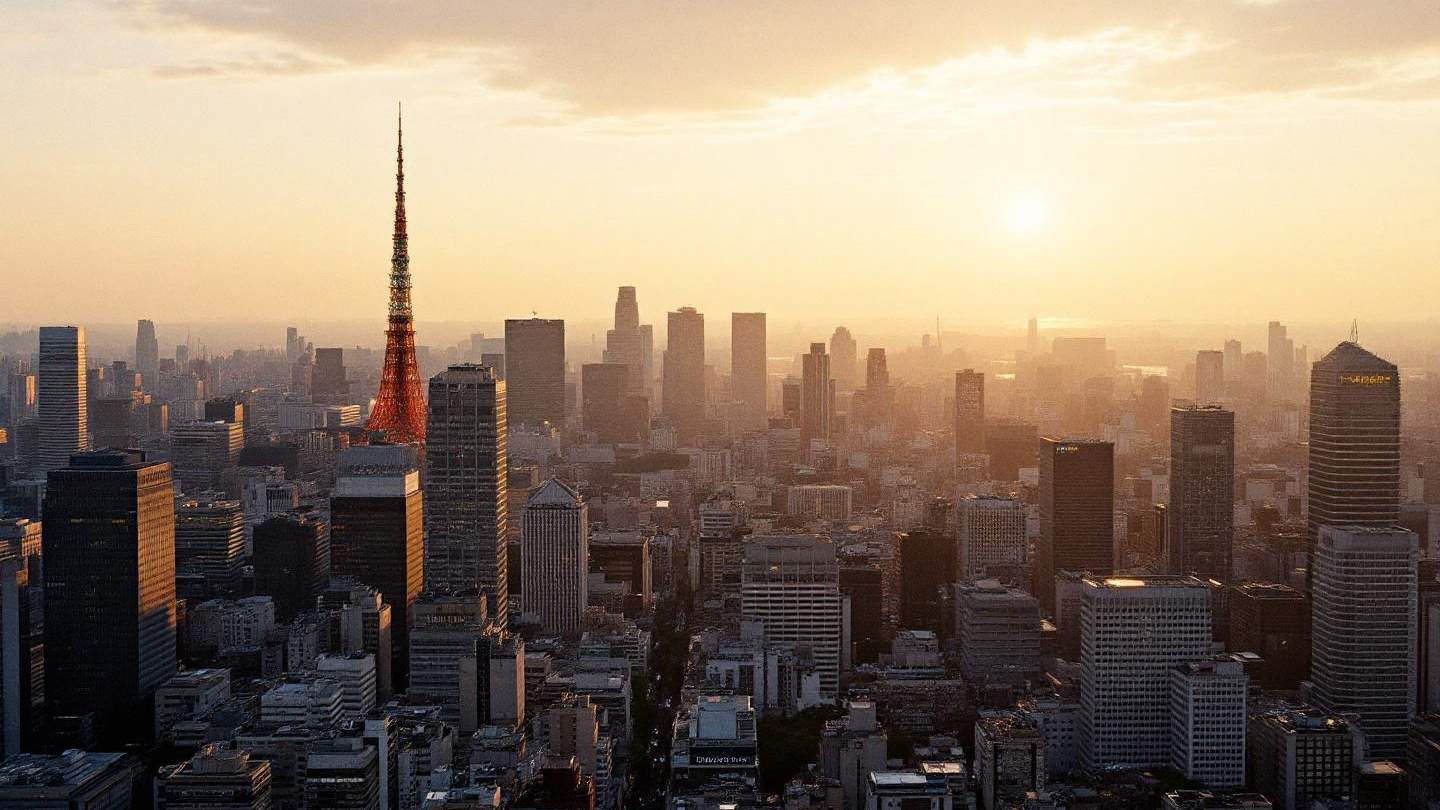
Tokyo
Best things to do, neighborhoods to explore, where to stay, how to get around, and practical tips for visiting Tokyo.
Quick Facts
- Best For
- First-timers, Foodies, Culture
- Days Needed
- 3–5 days
- Best Season
- Spring & Autumn
- Airport
- Narita (NRT) / Haneda (HND)
- Getting Around
- Metro & JR trains
- Budget (per day)
- ¥8,000–¥25,000
Tokyo at a Glance
| Category | Details |
|---|---|
| Best For | First-timers, foodies, culture, shopping, nightlife |
| Recommended Stay | 3–5 days minimum |
| Best Seasons | Late March–May (cherry blossoms), October–November (autumn foliage) |
| Daily Budget | ¥8,000–¥25,000 per person |
| Airport | Narita (NRT) — 60–90 min to city; Haneda (HND) — 30–40 min |
| Getting Around | IC card (Suica/Pasmo) covers all trains, subways, and buses |
| Language | English signage throughout; basic Japanese phrases warmly received |
| Tipping | Never — not part of Japanese culture |
Why Visit Tokyo
Tokyo is one of the world’s great cities — not just by size, but by the staggering density of things worth doing. On a single street in Shinjuku you can eat at a Michelin-starred counter restaurant, duck into a century-old yakitori alley, watch a DJ perform in a basement bar, and then walk ten minutes to a hilltop shrine at 2 AM in perfect safety. No other city on earth offers this particular combination of extremes in such close proximity.
What makes Tokyo perpetually interesting is the absence of a single identity. Asakusa feels like a different city from Harajuku. Yanaka feels nothing like Shibuya. Roppongi operates in a different register from Shimokitazawa. Each ward, each neighborhood, sometimes each street has its own personality, its own regulars, its own reasons to exist. You can return to Tokyo five times and still feel like you haven’t scratched the surface.
The food situation alone is enough to justify the trip. Tokyo has more Michelin stars than any other city on the planet — but the real revelation for most visitors is that extraordinary food exists at every price point. A bowl of ramen eaten standing at a counter for ¥800 at midnight can be just as memorable as a ¥30,000 omakase. Tokyo takes the craft of feeding people seriously at every level, and that extends from three-star French restaurants down to the onigiri at your nearest 7-Eleven. Explore the full picture in our Tokyo food guide.
Then there’s the infrastructure. The train system carries 40 million passengers a day and runs to the second. The streets are immaculately clean without a visible army of sanitation workers. Convenience stores operate with the reliability of Swiss watches. Getting lost in Tokyo is nearly impossible with a phone, and even without one, someone will always help you find your way. For first-time visitors to Japan, this reliability removes the anxiety that can accompany travel to unfamiliar places, and lets you focus entirely on exploration.
Tokyo is also, contrary to expectation, an extremely affordable city if you eat and move like a local. Lunch sets at good restaurants run ¥900–¥1,500. A day on the metro costs ¥400–¥600. A bed in a well-run guesthouse starts around ¥3,500. The city’s reputation for expense is mostly a function of people booking Western-style hotels and eating at tourist-facing restaurants. For a full breakdown, see our Japan travel budget guide.
How Many Days Do You Need?
3 days — the minimum viable visit. Three full days lets you hit the non-negotiable neighborhoods: a day for Asakusa and Ueno, a day for Shinjuku and Harajuku, a day for Shibuya and Shimokitazawa or Akihabara. You’ll leave with a solid impression of the city but a clear sense of everything you missed. See our 7-day Japan itinerary if you’re planning the classic first-timer route.
5 days — the sweet spot for first-timers. With five days you can move at a human pace, eat properly (three meals a day, with intention), take one day trip, and spend an afternoon somewhere off the main tourist circuit — Yanaka, Nakameguro, Koenji, or Kagurazaka. This is the minimum we’d recommend for anyone flying in from outside Asia.
7 days or more — for those who want depth. A week in Tokyo is not too long. You can now take two day trips, explore neighborhoods like Togoshi Ginza (Japan’s longest shopping street), visit Hamarikyu Gardens, spend a morning at Tsukiji Outer Market, catch a sumo tournament if timing allows, visit teamLab in Odaiba, and start to understand how the different layers of the city fit together. Seven days in Tokyo will leave you with a list of things you still want to do next time.
Best Neighborhoods Comparison
| Neighborhood | Best For | Vibe | Budget Level |
|---|---|---|---|
| Shinjuku | First-timers, nightlife, transit hub | Neon-lit, always-on | All budgets |
| Shibuya | Fashion, young energy, Scramble Crossing | Trendy, commercial | Mid–high |
| Asakusa | Traditional atmosphere, temples, culture | Old Tokyo feel | Budget–mid |
| Harajuku | Street fashion, Meiji Shrine, luxury shopping | Youth culture | Mid–high |
| Akihabara | Electronics, anime, gaming | Subculture-dense | All budgets |
| Shimokitazawa | Vintage, live music, indie cafes | Creative, unhurried | Budget–mid |
| Yanaka | Traditional streets, local life, cats | Quiet, historical | Budget |
| Ginza | Luxury shopping, top restaurants | Upscale, polished | High |
Neighborhoods in Detail
Shinjuku
Shinjuku is the engine room of Tokyo. The station — the world’s busiest, with over 3.5 million passengers daily — connects more train lines than most countries have in total. The area surrounding it packs in more variety than most cities manage across their entire footprint.
Golden Gai is a pocket-sized neighborhood of roughly 200 tiny bars crammed into six narrow alleys east of the station. Each bar seats between five and twelve people. Many have cover charges (¥500–¥1,000) and a personality defined entirely by the owner — one might be a blues bar run by a former musician, the next a cinema-themed bar with film posters floor to ceiling. Golden Gai should be visited after 9 PM, when the alleys fill up and you can drift from bar to bar. The best approach is to wander until a menu or a face draws you in.
Omoide Yokocho (Memory Lane) runs under the train tracks just west of the station and has been serving grilled skewers, offal, and cold beer since the postwar period. The smoke from the tiny grills hangs in the air. It’s cramped, it’s loud, it’s genuinely atmospheric. Most stalls serve yakitori, gyutan (grilled tongue), and grilled vegetables for ¥200–¥400 per skewer. This is not tourist theater — the regulars are real and the food is excellent.
Kabukicho is Tokyo’s largest entertainment district, a dense grid of hostess bars, karaoke complexes, cinemas, and restaurants that never fully closes. It has a reputation that slightly overstates its menace — it’s noisy and bright and full of people having fun. The Robot Restaurant (now operating as a spectacle venue) is here, as is Toho Cinema where a giant Godzilla head peers from the rooftop. The recently developed Kabukicho Tower brings new hotel and dining options into the mix.
Tokyo Metropolitan Government Building offers two free observation decks on the 45th floor, open until 10:30 PM (south deck) and 11 PM (north deck) on most nights. The views over the city are legitimately extraordinary, and unlike the paid observatories in Shibuya and Roppongi, this one costs nothing. Take the west exit from Shinjuku Station and walk ten minutes.
Shinjuku Gyoen is a 58-hectare national garden that functions as the city’s best picnic ground. The garden combines French formal, English landscape, and Japanese garden styles into a coherent whole. During cherry blossom season (late March to early April), it’s one of the finest spots in Tokyo — entry is ¥500 and alcohol is not permitted, which keeps the atmosphere calm and family-friendly. Outside of sakura season it’s still worth an hour for anyone who needs a break from urban density.
Shibuya
The Shibuya Scramble Crossing — where up to 3,000 people cross simultaneously when the lights change — is one of those rare tourist attractions that genuinely lives up to its reputation. The best view is from above: Starbucks on the second floor of the Q-Front building gives a free vantage point, or pay ¥2,000 for the rooftop terrace at Shibuya Sky (book in advance — it fills up). From above, the crossing looks like a living organism reorganizing itself every 90 seconds.
Miyashita Park is a linear park built above a shopping complex along the Shibuya River. The upper level has a skate park, a bouldering wall, a rooftop hotel, and enough cafes and restaurants to spend half a day. It’s an interesting model of urban regeneration and gives Shibuya a calmer, more livable dimension beyond the scramble.
Shibuya Sky occupies the rooftop of Scramble Square, the newest and tallest building in the district. The open-air observation deck sits at 229 meters. Tickets are ¥2,000 and need to be booked in advance online. Sunset is the prime time, but on clear days the view stretches to Mount Fuji.
Center-gai is the pedestrianized street that cuts through the heart of Shibuya, lined with fast fashion, game centers, karaoke, and cheap restaurants. It’s where Tokyo teenagers spend their weekends and where you can find some of the city’s best-value set lunches — ¥800–¥1,200 for a full meal at a dozen different restaurants within a few hundred meters.
Nonbei Yokocho (Drunkard’s Alley) is a small alley near Shibuya Station with a handful of atmospheric small bars, each seating under twenty people. Less famous than Golden Gai and worth it for exactly that reason. The bars here are generally cocktail and wine focused, catering to an older crowd.
Asakusa
Asakusa is the most visibly traditional part of central Tokyo. Senso-ji temple — founded in 645 AD, making it older than Japan’s written history in many respects — dominates the district, but the neighborhood has depth beyond the main tourist drag.
Senso-ji is best experienced before 8 AM or after 8 PM, when the Nakamise shopping arcade thins out and the temple grounds take on a proper atmospheric weight. The giant red lantern at Kaminarimon (Thunder Gate) is the most photographed object in the neighborhood. Behind it, Nakamise-dori sells traditional snacks (ningyo-yaki, senbei, ningyoyaki rice crackers) and souvenir items at tourist prices — buy food here, but save serious shopping for side streets. Admission to the main hall is free.
Nakamise shopping street stretches 250 meters from Kaminarimon to the temple proper. The stalls on either side sell everything from cheap fans and chopsticks to handmade combs and high-quality lacquerware. Skip the mass-produced items and look for the shops selling real craft goods — they’re here if you look.
The Sumida River walk north and south of Asakusa is one of Tokyo’s most pleasant strolls. Heading south toward Tokyo Skytree takes about 20 minutes on foot and passes under several bridges with photogenic views in both directions. Skytree itself (634 meters, the world’s second-tallest structure) has two observation decks — the Tembo Deck at 350 meters (¥2,100) and the Tembo Galleria at 450 meters (additional ¥1,000). Booking in advance saves queuing.
Kappabashi is the street of restaurant supply shops a ten-minute walk west of Senso-ji. Over 170 stores sell professional kitchen equipment, ceramics, lacquerware, knives, and the famous plastic food models used in restaurant windows. It’s a great place to buy Japanese kitchen knives (budget ¥5,000–¥30,000 depending on quality) and ceramics. Most shops open around 10 AM.
Harajuku
Takeshita Street is a 350-meter pedestrianized alley packed wall to wall with fashion boutiques, crepe stands, sweet shops, and things that defy easy categorization. It’s extremely crowded on weekends, extremely loud at all times, and genuinely fascinating as a window into what Japanese youth decide to wear when left entirely to their own devices. Crepes are the street food of choice here — expect queues of 10–20 minutes at the popular stands (¥500–¥700).
Cat Street runs from Harajuku to Omotesando and represents the more relaxed, curated end of Tokyo street fashion. Independent boutiques, small cafes, vintage clothing stores, and a handful of interesting galleries line a pleasant walking route. Less crowded than Takeshita, more interesting for adult shoppers.
Omotesando is Tokyo’s answer to the Champs-Elysees — a tree-lined boulevard of flagship stores from every major luxury brand. The architecture is as interesting as the shopping: Prada’s latticed glass building, the Omotesando Hills shopping complex by Tadao Ando, and Louis Vuitton’s stacked glass facade are all worth examining even if you’re not buying. The side streets and basement levels contain excellent independent restaurants and coffee shops.
Meiji Shrine is reached through a forested path that starts about five minutes walk from Harajuku Station and feels like entering a different world. The shrine itself is dedicated to Emperor Meiji and Empress Shoken, who oversaw Japan’s modernization in the late 19th century. The forested grounds cover 70 hectares — a remarkable wilderness in the middle of one of the world’s most dense cities. Entry is free, though donations are welcome. Arrive on Sunday morning to see traditional wedding processions.
Akihabara
Akihabara has been Japan’s electronics district since the postwar period, when spare radio parts were sold from street stalls. Today it functions as the global headquarters of anime, manga, and gaming subculture, though serious electronics shopping is still possible alongside everything else.
The multi-story electronics megastores — Yodobashi Camera, Sofmap, BIC Camera — sell everything from cameras and laptops to obscure components, generally at prices competitive with online retailers. The floors dedicated to audio equipment, in particular, are worth browsing even without intent to buy.
Maid cafes are a distinctly Akihabara experience — cafes where the staff dress as maids from anime and address customers as “masters” (or “princesses” for female visitors). The food is secondary; you’re paying for the performance. Entry plus a drink typically costs ¥1,500–¥2,500. Maidreamin and @home cafe are two of the larger, more tourist-friendly options. Treat it as theater — which is exactly what it is.
Retro arcades in Akihabara are some of the best in Japan. Super Potato on Chuo Dori has five floors of retro games and vintage consoles, with a genuine arcade in the upper floors where you can play original arcade cabinets. Taito Station and Sega’s various arcades offer crane games, rhythm games, and fighting game setups that attract serious regulars. Budget ¥1,000–¥2,000 for a couple of hours of play.
The streets of Akihabara also host some of Tokyo’s best bargain shopping in used anime merchandise, figures, manga, and trading cards. Check the upper floors of buildings on Chuo Dori and the smaller arcades in side streets for the best selection.
Ueno
Ueno functions as Tokyo’s museum district, clustered around one of the city’s largest parks. The concentration of major cultural institutions makes it an efficient stop for anyone with limited time.
Tokyo National Museum (¥1,000 general admission) is Japan’s largest museum, with a collection of over 110,000 objects covering Japanese art and archaeology from prehistoric times to the Edo period. The Japanese Gallery in the Hon-kan building is where to start. Allow at least two hours.
Ueno Park is at its best during cherry blossom season (late March to early April), when the central avenue becomes one of the most photographed hanami spots in Japan. At other times it’s a pleasant public park with several smaller galleries, a small zoo, Shinobazu Pond (which turns purple with lotus flowers in August), and a steady stream of street performers and food vendors.
Ameyoko Market runs along the elevated JR tracks south of Ueno Station. The market started as a black market in the postwar period (the name is derived from “America-ya,” a reference to the American goods sold here) and has since evolved into a bustling street of fishmongers, vegetable sellers, discount cosmetics shops, and snack stalls. It’s at its most atmospheric on weekday mornings, when professional buyers come for the fish. Try the fresh crab legs, grilled squid, and various fried snacks sold from stalls — budget ¥500–¥1,000 for a proper eat-around.
Ginza
Ginza is Tokyo’s most prestigious shopping district, a grid of wide boulevards lined with flagship stores from Cartier, Chanel, Gucci, and every major luxury brand. On Saturdays and Sundays from noon to 5 or 6 PM, the central Chuo-dori is closed to traffic and becomes a pedestrian street, which transforms the atmosphere considerably.
Beyond the luxury brands, Ginza has excellent art galleries, high-end department stores (Mitsukoshi and Matsuya) with exceptional food halls in their basement levels, and a concentration of mid-to-high-end restaurants per square meter that rivals anywhere in the city.
Tsukiji Outer Market is a ten-minute walk south of Ginza. The famous inner wholesale market moved to Toyosu in 2018, but the outer market — the rows of small stalls and restaurants surrounding it — remains active and excellent. Come before 10 AM for the freshest sushi, tamagoyaki (sweet rolled omelette), and shellfish. A sushi breakfast at one of the counter restaurants here (¥1,500–¥3,000) is a Tokyo experience worth making time for.
Yanaka
Yanaka is the neighborhood to visit when you’ve had enough of modernity. It escaped major bombing in World War II and survived the postwar redevelopment that flattened much of old Tokyo, leaving behind a network of narrow lanes, wooden shopfronts, family-run businesses, and a cemetery that local cats have colonized as their own domain.
Yanaka Ginza is the main shopping street — a 175-meter covered arcade of butchers, tofu shops, fishmongers, sweet shops, and small restaurants. It’s a working local street that happens to be charming, not a recreation of one. Grab a croquette (¥100) from the butcher, a sweet from one of the wagashi shops, and walk the surrounding lanes.
The Yanaka Cemetery is worth a wander — it’s a public park as much as a burial site, with large trees providing shade and the famous resident cats sunning themselves on tombstones. The central path becomes one of Tokyo’s more unusual cherry blossom spots in spring.
Shimokitazawa
Shimokitazawa is where Tokyo’s creative class lives. The neighborhood is built around a tangle of narrow streets (too narrow for most cars) packed with vintage clothing stores, independent coffee shops, small live music venues, theater spaces, used bookshops, and cafes that don’t look like anything you’ve seen on Instagram.
The vintage clothing scene here is exceptional. Stores like Flash Back, Flamingo, and a dozen smaller shops carry everything from 1960s Americana to Japanese streetwear from the 1990s. Budget ¥1,000–¥5,000 for a good find. The music venues — Shelter, Moshimo, Garden — program indie rock, jazz, and folk most evenings.
Getting here is easy: take the Odakyu Line from Shinjuku to Shimokitazawa (10 minutes, ¥150). Plan for an afternoon into evening — the neighborhood gets noticeably livelier after sunset.
Odaiba
Odaiba is an artificial island in Tokyo Bay accessible by the Yurikamome monorail from Shimbashi. It has a different scale from the rest of Tokyo — wider streets, more space between buildings, and dramatic views back toward the city skyline and Rainbow Bridge.
teamLab Borderless is the main draw: a digital art museum where large-scale immersive installations fill entire rooms and flow between spaces. It’s genuinely unlike anything else and worth the ¥3,200 admission. Book well in advance, especially on weekends.
The Gundam statue outside DiverCity Mall — a life-size (18-meter) replica of the RX-78-2 Gundam — is free to see and genuinely impressive in person. The mall also has a good selection of Gundam and anime merchandise.
Odaiba’s waterfront at night, with the illuminated Rainbow Bridge and city skyline reflected in the bay, is one of Tokyo’s best free views.
Roppongi
Roppongi has a reputation as Tokyo’s expat party district, which is accurate but incomplete. The area also contains two of Tokyo’s best museums and one of its most dramatic observation decks.
Mori Art Museum occupies the 52nd and 53rd floors of Mori Tower, with an adjacent observation deck (Tokyo City View) at 250 meters. Admission covers both museum and observation deck (¥2,000). The museum programs are consistently interesting — contemporary art from Japanese and international artists with a curatorial vision that doesn’t play it safe.
The National Art Center and Suntory Museum of Art complete what’s marketed as the “Art Triangle Roppongi” — three major museum spaces within a 10-minute walk of each other. If art is your thing, Roppongi warrants a half day minimum.
The club and bar scene in Roppongi is real and international in character. Clubs like V2 Tokyo and Muse attract a mixed Japanese and foreign crowd. Entry is typically ¥2,000–¥3,000 with a drink included. Things don’t get interesting until 1 AM.
Tokyo’s Food Scene
Tokyo’s food culture is one of the most serious and diverse on the planet. The following is a neighborhood-by-neighborhood orientation.
Ramen is everywhere and endlessly variable. Ichiran (multiple locations, Shinjuku and elsewhere) is famous for its solo dining booths and tonkotsu ramen (¥1,000). Fuunji in Shinjuku makes one of the best tsukemen (dipping ramen) in the city. Afuri in Harajuku specializes in yuzu-flavored light broths. For research, the Shin-Yokohama Ramen Museum (30 min from Shinjuku) collects regional ramen styles from across Japan.
Sushi spans every price category. At the accessible end, kaiten-zushi (conveyor belt sushi) chains like Sushiro and Kura Sushi serve plates at ¥110–¥220. For an intermediate experience, standing sushi bars (tachigui sushi) in Tsukiji Outer Market serve excellent individual pieces for ¥150–¥400. At the high end, Ginza and Roppongi have concentration of omakase counters starting around ¥15,000 and extending well past ¥50,000.
Yakitori is best in the alleys under the train tracks. Yurakucho’s yakitori alley (beneath the JR tracks between Yurakucho and Shimbashi stations) has been operating since the postwar period — dozens of tiny restaurants serving skewered chicken over charcoal. Budget ¥2,000–¥3,500 including drinks.
Izakayas are Japan’s version of a gastropub — shared small plates and cold beer in a convivial atmosphere. Chains like Torikizoku (almost everything ¥300) and Watami exist alongside excellent independent izakayas in Shibuya, Shinjuku, and Nakameguro. A good izakaya dinner runs ¥2,500–¥4,000 per person.
Depachika (department store basement food halls) are among the most spectacular food environments in the world. Isetan in Shinjuku, Takashimaya in Shinjuku, and Mitsukoshi in Ginza all have basement levels selling prepared foods, sweets, bento boxes, and specialty items from across Japan. An hour wandering a depachika is both education and entertainment. Buy an onigiri or bento box for ¥400–¥800 and call it lunch.
Street food is concentrated in specific areas: Asakusa’s Nakamise for traditional snacks, Harajuku’s Takeshita for crepes and rainbow cotton candy, Asakusa’s side streets for ningyo-yaki (small cakes filled with red bean paste, ¥200–¥300 per pack), and Ameyoko for fresh seafood.
Day Trips from Tokyo
For the full list with transport details, timings, and itinerary suggestions, see our Tokyo day trips guide.
Hakone (90 min by Romancecar from Shinjuku, ¥2,470): Hot spring resort town at the foot of Mount Fuji, with mountain railways, a lake, an open-air sculpture museum, and the possibility of seeing Fuji on clear days. The Hakone Free Pass (¥5,000–¥6,000 depending on route) covers nearly all transport within the area.
Kamakura (60 min from Tokyo Station or Shinjuku via Yokosuka/Shonan-Shinjuku Line, ¥940): 13th-century capital with the Great Buddha (15-meter bronze statue, ¥300 to enter grounds), Hase-dera temple, Tsurugaoka Hachimangu shrine, and excellent hiking trails between temples. Easily done in a full day.
Nikko (2 hours from Asakusa on Tobu Limited Express, ¥1,360): The ornate mausoleum of Tokugawa Ieyasu and the surrounding mountain complex — UNESCO World Heritage listed. Best in autumn when the surrounding forests turn.
Kawagoe (40 min from Ikebukuro on Tobu Tojo Line, ¥480): Called “Little Edo” for its preserved Edo-period warehouse district and candy street. Easy half-day trip.
Yokohama (25–30 min from Shibuya or Shinjuku on various lines, ¥350–¥500): Japan’s second city has an excellent Chinatown, a waterfront district (Minato Mirai), and the Cup Noodles Museum. Good for an afternoon addition to a Tokyo trip.
Getting to Tokyo
For a comprehensive breakdown of every option — trains, buses, and what to avoid — see our Narita to Tokyo transport guide.
From Narita Airport (NRT)
Narita is 60–80 kilometers from central Tokyo, and the journey requires planning.
The Narita Express (N’EX) is the fastest and most convenient option for most visitors. It runs direct to Tokyo Station in 60 minutes (¥3,250), continuing to Shinjuku (80 min), Shibuya, and Yokohama. A round-trip discount pass is available for ¥5,000 and is worth buying at the airport. Luggage goes in the overhead rack rather than a separate car.
The Keisei Skyliner is the fastest train to the city center, reaching Nippori in 41 minutes and Ueno in 44 minutes (¥2,520). A combined Skyliner + 48-hour metro ticket costs ¥3,400 and is good value. The Skyliner is preferable if you’re staying in east Tokyo (Asakusa, Ueno, Akihabara).
The Keisei Access Express is the budget option at ¥1,270 to Asakusa, taking about 60 minutes. It runs on the same tracks as the Skyliner but stops more often.
Limousine buses run to major hotels and districts (¥3,200 from Narita) and can be convenient if you have heavy luggage and are staying in a specific hotel, but traffic can make journey times unpredictable.
From Haneda Airport (HND)
Haneda is close to the city center — most visitors reach their hotel within 30–40 minutes.
The Tokyo Monorail (¥500) reaches Hamamatsucho Station in 13 minutes, connecting to the JR Yamanote Line. The Keikyu Line (¥300) reaches Shinagawa in 11 minutes, also connecting to the Yamanote Line. Both are simple and cheap.
A taxi from Haneda to central Tokyo costs around ¥5,000–¥7,000 and is a reasonable option late at night or with heavy luggage.
Getting Around
For a beginner’s explanation of how Japan’s train system works, see our guide to using trains in Japan. For long-distance trips between cities, check whether the JR Pass makes sense for your route.
Transport Costs
| Journey | Method | Cost | Time |
|---|---|---|---|
| Narita Airport → Tokyo Station | Narita Express (N’EX) | ¥3,250 | 60 min |
| Narita Airport → Ueno | Keisei Skyliner | ¥2,520 | 44 min |
| Haneda Airport → Shinagawa | Keikyu Line | ¥300 | 11 min |
| Shinjuku → Shibuya | Yamanote Line | ¥160 | 6 min |
| Shinjuku → Asakusa | Metro (1 transfer) | ¥220 | 30 min |
| Tokyo → Kyoto | Shinkansen Hikari | ¥13,910 | 2h 40min |
| Shinjuku → Hakone-Yumoto | Odakyu Romancecar | ¥2,470 + ¥910 surcharge | 85 min |
| 24-hour Metro Pass | Unlimited Tokyo Metro | ¥600 | — |
The Rail Network
Tokyo’s rail network combines five overlapping systems: JR lines, Tokyo Metro, Toei Subway, private lines (Tokyu, Odakyu, Keio, Seibu, Tobu), and the Yurikamome monorail. Understanding the structure helps, but in practice, Google Maps handles routing seamlessly for any journey.
The Yamanote Line is the backbone for most visitors — a JR loop line connecting Tokyo Station, Akihabara, Ueno, Nippori, Ikebukuro, Shinjuku, Harajuku, Shibuya, Osaki, and Shinagawa. One loop takes about an hour. It runs every 2–4 minutes during peak times.
Tokyo Metro (nine lines) covers the interior of the city with deep penetration into residential neighborhoods. A single Metro fare is ¥180–¥320. A 24-hour unlimited Metro pass costs ¥600 and is worth buying if you’re making more than three or four Metro journeys in a day.
Toei Subway (four lines) supplements the Metro network and is covered by the same unlimited passes.
IC Cards
Get a Suica or Pasmo card immediately upon arrival — either at the airport vending machines or added to iPhone/Apple Watch via the Wallet app (Suica only). Load ¥2,000–¥3,000 to start. IC cards work on every train system in Tokyo, on city buses, and at most convenience stores, vending machines, and many restaurants. They are the single most useful item for navigating Tokyo. Read more in our guide to Japan’s trains.
Practical Transit Tips
- Avoid trains between 7:30–9:30 AM on weekdays. Trains are extremely crowded and the experience is unpleasant.
- Last trains run roughly midnight to 1 AM depending on the line. Confirm last train times if you’re out late.
- Taxis are available 24/7, start at ¥500–¥730 flag fall, and are metered. They are clean, reliable, and drivers are professional. Nighttime surcharges apply after 10 PM.
- Google Maps is accurate to within one minute for transit in Tokyo. Download offline maps for the areas you’re visiting.
- Most station exits are labeled with a compass direction and nearby landmarks. Learn to read these to save time above ground.
Best Time to Visit
Spring (late March to early May) is peak season for a reason. Cherry blossoms typically peak in late March to early April in Tokyo, lasting about two weeks. Shinjuku Gyoen, Ueno Park, Chidorigafuchi moat, and Meguro River are the most atmospheric spots. Temperatures are comfortable (10–18°C). Accommodation prices surge during this period — book three to six months in advance.
Autumn (October to mid-November) is many long-time visitors’ preferred season. Autumn foliage (koyo) peaks in mid-November in Tokyo. Temperatures are ideal (15–22°C in October, cooling through November). Clear skies and lower humidity. Spring crowds are gone. Good availability on accommodation.
Summer (June to September) brings heat (30–36°C), humidity, and the rainy season (June to mid-July). What compensates: summer festivals (matsuri), spectacular fireworks displays (Sumida River Fireworks in July is one of Japan’s biggest), and a general festive energy. Dress lightly, carry a small towel, and embrace the perspiration.
Winter (December to February) is Tokyo’s underrated season. Cold (5–12°C) but generally dry and often brilliantly clear, with views to Mount Fuji from elevated spots. Fewer tourists, reasonable accommodation prices, and excellent winter food — hot pot (nabe), grilled dishes, sake. Christmas illuminations in Omotesando, Shiodome, and Marunouchi are extravagant.
Practical Tips
Cash. Japan remains predominantly cash-based outside of urban chain stores and hotels. Carry ¥10,000–¥20,000 at any given time. 7-Eleven ATMs reliably accept foreign cards (Visa, Mastercard, Maestro) 24 hours a day. Japan Post ATMs also accept most foreign cards.
IC card. Get a Suica or Pasmo card at the airport. Load ¥3,000 to start. Top up at any station vending machine or convenience store.
SIM card or pocket Wi-Fi. Buy a data SIM at the airport (IIJmio, Mobal, and others sell at Narita and Haneda arrivals). Most international numbers can buy a tourist SIM. Alternatively, rent a pocket Wi-Fi device. Without data connectivity Tokyo navigation becomes significantly harder.
Apps to download. Google Maps (offline map of Tokyo), Hyperdia or Jorudan (train route planning with fare calculation), Google Translate (camera mode works on Japanese menus), and Tabelog (Japanese restaurant ratings) are the essential four.
Coin lockers. All major stations have coin lockers ranging from small (¥300) to large enough for a 28-inch suitcase (¥700–¥1,000). Pay by IC card at most modern lockers. Drop your bags before exploring and walk unencumbered. The lockers at Asakusa and Shinjuku stations fill up early on weekends — arrive before 10 AM.
Luggage forwarding (takuhaibin). One of Japan’s finest services. At any convenience store or hotel, you can send luggage to your next hotel for ¥1,500–¥2,000 per bag. It arrives the next day. This is extremely useful if you’re moving from Tokyo to Kyoto and don’t want to haul bags on the Shinkansen.
Language. English signage has improved dramatically in recent years. Train stations, airports, and major tourist areas have bilingual (often quadrilingual) signage. Most convenience store staff can handle a simple transaction without verbal communication. Basic Japanese phrases — arigatou gozaimasu (thank you), sumimasen (excuse me), ikura desu ka (how much is it?) — are warmly received. Google Translate’s camera mode handles menus with reasonable accuracy.
Tipping. Don’t. Not at restaurants, not in taxis, not at hotels. Tipping is not part of Japanese service culture and can cause confusion.
Etiquette reminders. Eat and drink while walking only in specific street food contexts (Takeshita, Nakamise). Do not talk on your phone on trains (put calls on hold, use text). Stand on the correct side of escalators (left in Tokyo, right in Osaka). Bow slightly when thanked. Our Japan etiquette guide covers the full set of rules and cultural norms.
Where to Stay
For detailed hotel recommendations and neighborhood breakdowns, see our Tokyo where to stay guide. Planning a longer first trip to Japan? Our 7-day itinerary includes accommodation suggestions for every stop on the Golden Route. You can also compare Kyoto or Osaka as alternative Kansai bases if you’re covering multiple cities.
Shinjuku is the most practical base for first-timers — central, connected by every major rail line, with enormous choice from capsule hotels (¥3,500) to luxury options. Stay on the west side for quieter streets, east side for more dining and nightlife proximity.
Shibuya and Harajuku suits travelers who want proximity to fashion, upscale dining, and the main sightseeing loop. Slightly more expensive than Shinjuku on average.
Asakusa is the right choice for travelers who want traditional atmosphere, low noise after 10 PM, and proximity to eastern Tokyo sights. Good value accommodation is more abundant here than in Shinjuku or Shibuya.
Akihabara and Ueno offers budget-friendly options and excellent connectivity via Yamanote Line and Keisei Line.
Ginza and Marunouchi is Tokyo’s most expensive accommodation area — appropriate for those who want luxury hotels (Park Hyatt, the Okura, Aman Tokyo) with central access.
Shimokitazawa and Nakameguro suits repeat visitors and those prioritizing neighborhood character over convenience — less connected by major lines, but immersive in a way that central hotels can’t match.
Budget capsule hotels: ¥3,500–¥6,000. Business hotels (APA, Dormy Inn, Toyoko Inn): ¥7,000–¥14,000. Mid-range: ¥15,000–¥35,000. Luxury: ¥40,000 and up.