Where to Stay in Osaka
Last updated: March 2026
Osaka is a more compact and navigable city than Tokyo, which means the difference between staying in different neighborhoods is less dramatic — but it still matters. The city splits into two primary zones: Kita (the northern area around Osaka Station and Umeda) and Minami (the southern area centered on Namba and Dotonbori). These two zones have different characters, different transport advantages, and different accommodation price ranges. The area between and around them contains more options than most visitors realize.
Choosing where to stay in Osaka comes down to three factors: what you want to do in the evenings, whether you are treating Osaka as your base for regional travel, and how much you want to spend. This guide breaks down every significant area honestly.
Quick Answer: Which Area is Best?
First-time visitors who want to eat their way through the city: Namba or Shinsaibashi Business travelers and transport convenience: Umeda/Kita Budget travelers who want character: Tennoji or Shinsekai adjacent Travelers using Osaka as a regional hub: Shin-Osaka or Umeda Longer stays wanting a neighborhood feel: Honmachi or Shinsaibashi backstreets
Namba and Dotonbori
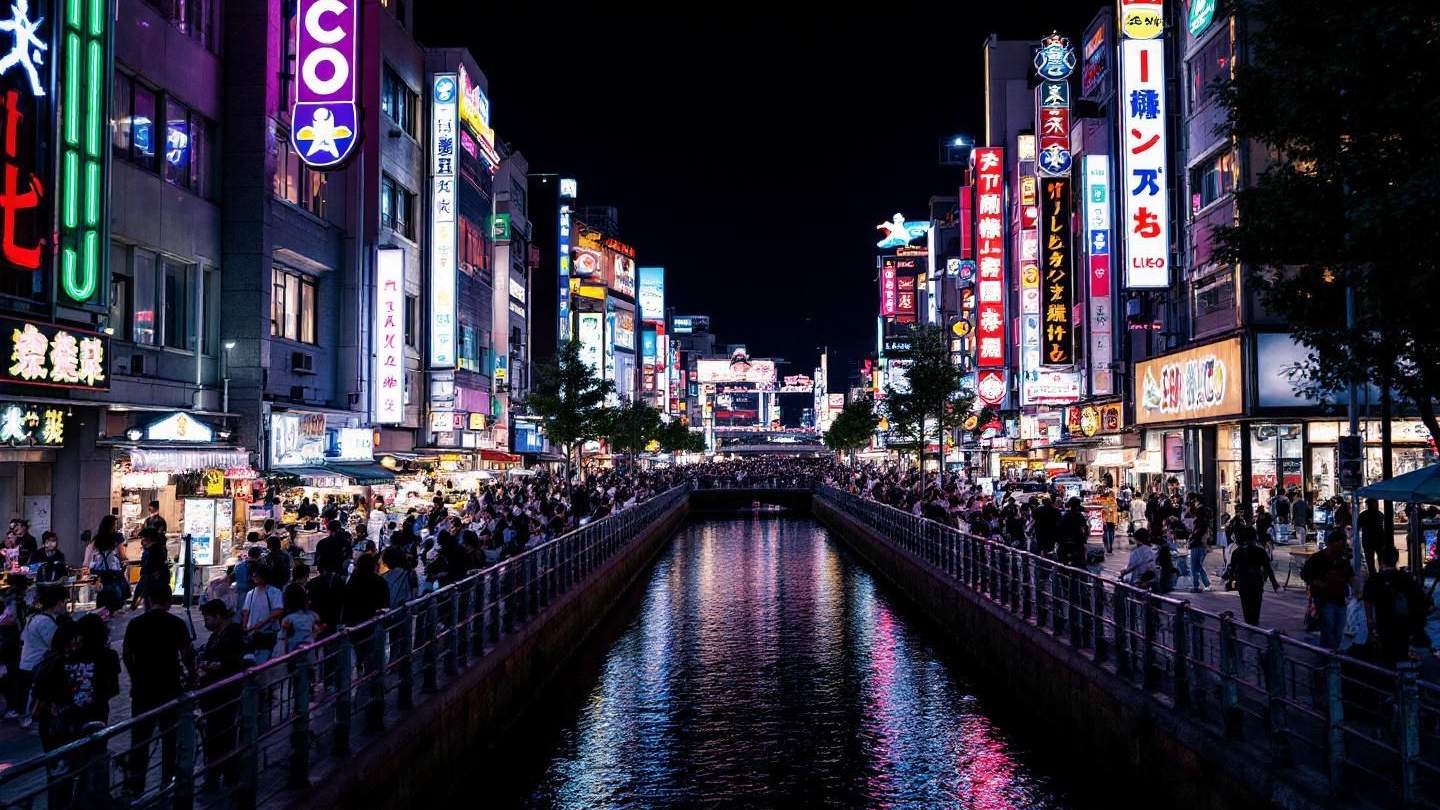
Namba is the best area for most first-time visitors to Osaka and it is not a close call. Dotonbori canal and the main entertainment strip are walking distance from nearly every hotel in the neighborhood. See things to do in Osaka to plan your itinerary before choosing a base. Kuromon Ichiba market opens every morning a 10-minute walk away. The dense concentration of restaurants, izakayas, ramen shops, and street food vendors means you have extraordinary dining options without ever needing a train. And when you want to go further, the Midosuji subway line connects you to Shinsaibashi in 2 minutes, Umeda in 10 minutes, and the rest of the subway network comprehensively.
The character of Namba is unapologetically commercial and lively. This is not the quiet, atmospheric corner of Japan — it is the version that never turns its neon signs off. For visitors who want to be fully immersed in Osaka’s energy, it is perfect. For visitors seeking calm, it requires noise-blocking strategies.
Accommodation in Namba
The range spans the full spectrum. Budget capsule hotels and hostels in the Namba area run from around 2,500–5,000 yen per person in dormitory or capsule format. Established budget-to-mid options include the Dormy Inn Namba (around 10,000–16,000 yen per double, with a rooftop sauna and onsen bath — exceptional value), the APA Hotel Namba (ubiquitous, reliable, around 8,000–14,000 yen), and the Cross Hotel Osaka (a cut above standard business hotels at 12,000–20,000 yen with good design and a central location).
For mid-range comfort, the Monterey Le Frere Osaka and the Namba Oriental Hotel occupy the 18,000–30,000 yen range and offer genuine comfort and location. At the top end, the W Osaka in the Design District (opened 2021) is currently the most talked-about luxury property in the city, with rooms from 50,000–90,000 yen, an excellent rooftop bar, and design by Wonderwall. The Conrad Osaka in Nakanoshima (not technically Namba but close) offers understated luxury at 40,000–70,000 yen.
Typical price range: 2,500–80,000 yen per night Best for: First-time visitors, food-focused travelers, those who want maximum dining and nightlife proximity, younger travelers
Shinsaibashi and Amerikamura
Shinsaibashi sits immediately north of Namba and blends into it seamlessly — the two are separated by a few streets rather than any meaningful geographical boundary. The distinction matters for accommodation because Shinsaibashi occupies the middle ground between the full-on commercial energy of Namba and the business-focused atmosphere of Umeda, while having good character of its own.
The Shinsaibashi shopping arcade is one of Japan’s most impressive covered shopping streets — 580 meters of shops ranging from mass-market fashion to international luxury brands, running from Shinsaibashi Station south toward Dotonbori. On the western side, Amerikamura (American Village) is the youth fashion and alternative culture district, with vintage clothing stores, independent cafes, record shops, and street art around Triangle Park.
The canal district of Hozenji Yokocho is a short walk east — a narrow alley of traditional restaurants lit at night by lanterns, with moss-covered stone and a small Fudo-son statue that people splash with water before making wishes. This is one of the most atmospheric evening walks in Osaka.
Accommodation in Shinsaibashi
Shinsaibashi tends to have slightly lower hotel prices than the heart of Namba while being equally well-connected. The Hotel Vista Premio Osaka Shinsaibashi and Remm Plus Shinsaibashi are both well-regarded in the 12,000–22,000 yen range. For boutique accommodation with genuine design attention, the Namba Hatch area and backstreets of Shinsaibashi have smaller guesthouses and converted machiya options at 15,000–30,000 yen.
The InterContinental Osaka is technically in the Nakanoshima district (between Kita and Minami) but is convenient to both. It offers luxury accommodation at 40,000–80,000 yen per night with strong business facilities.
Typical price range: 8,000–50,000 yen per night Best for: Shoppers, those wanting cultural depth alongside food, travelers who want Namba access with slightly lower prices
Umeda and Kita (Osaka Station Area)
Umeda/Osaka Station is the most important transport hub in western Japan. JR Osaka Station, the Hankyu Osaka-Umeda terminal, the Hanshin Osaka-Umeda terminal, and multiple Osaka Metro lines converge in the Kita area, making it the most logical base for anyone doing significant regional travel — day trips to Kobe (18 minutes on Hankyu), Kyoto (29 minutes on JR), Nara (47 minutes on Kintetsu from Namba via the Kintetsu Osaka Namba Station), or Hiroshima (90 minutes on Shinkansen).
The Umeda area has a distinctly different character from Namba: more corporate, more polished, with the gleaming Hankyu and Hanshin department stores. Day trips to Kyoto and Kobe are fastest from Umeda/Osaka Station, the underground Whity Umeda shopping complex, and the towering Sky Building — two connected skyscrapers with a floating observation ring connecting them at the top (admission 1,500 yen, genuinely spectacular views). The dining here tilts more toward department store restaurant floors, fine dining, and upscale izakayas rather than street food.
At night, Umeda has its own entertainment district along the Osaka Ekimae building area and the Sonezaki Shinchi area — a concentration of bars and restaurants that tends to draw more of an adult professional crowd than the younger energy of Namba.
Accommodation in Umeda
The accommodation density in Umeda is high and the quality range is wide. The Ritz-Carlton Osaka on the western edge is one of Japan’s most established luxury hotel addresses, with rooms from 60,000–120,000 yen. The Hilton Osaka is directly connected to the Osaka Station complex, rates from 25,000–50,000 yen. The Daiwa Roynet Hotel Osaka Kitahama and ANA Crowne Plaza Osaka are reliable mid-range options at 15,000–28,000 yen.
For budget to mid-range, the JR Osaka Station area has dozens of business hotels: Super Hotel Osaka Umeda, Toyoko Inn Osaka Higashi Umeda, and Comfort Hotel Shin-Osaka are all in the 7,000–13,000 yen range and thoroughly functional.
Typical price range: 7,000–120,000 yen per night Best for: Business travelers, those using Osaka as a regional base, travelers who prefer a calmer evening environment, those doing day trips to Kobe and Kyoto
Tennoji and Shinsekai
Tennoji is the southern hub of Osaka — the area around Tennoji Station, Tennoji Park, the Osaka Municipal Museum of Art, and the Abeno Harukas tower. It is also the gateway to Shinsekai and an easy walk from some of the city’s most authentic neighborhood character.
This area is the most genuinely local of Osaka’s accommodation zones. The Tennoji shopping district serves the residents of southern Osaka rather than tourists, the restaurants and izakayas around Tennoji and Abenobashi are local favorites at local prices, and the evening atmosphere in the backstreets around Shinsekai has a character that has not been sanitized for visitors.
Tennoji is slightly further from Dotonbori than Namba or Shinsaibashi — about 10 minutes on the Midosuji Line — but it is directly above the Nankai Line, which connects to Kansai International Airport (30 minutes on the Nankai Rapid) and to Koyasan/Mount Koya for the most dramatic day trip from Osaka.
Accommodation in Tennoji
The area has limited high-end options but is strong on value. The Osaka Marriott Miyako Hotel sits on the upper floors of Abeno Harukas tower (floors 57–58) and offers some of the highest-altitude hotel rooms in western Japan with genuinely spectacular views — rates from 35,000–65,000 yen. For mid-range, the Dormy Inn Tennoji, Cross Hotel (a branch in the area), and several locally-run business hotels come in at 8,000–16,000 yen.
Budget options are the strongest value proposition in this area — guesthouses, smaller business hotels, and hostel-style accommodation run 2,500–8,000 yen per person, often in properties with more character than the generic Namba business hotels at the same price.
Typical price range: 2,500–65,000 yen per night Best for: Budget travelers, those going to Koyasan, visitors wanting local neighborhood character, families (near the good-value zoo and park facilities)
Shin-Osaka
Shin-Osaka is the Shinkansen terminal for Osaka — the station where bullet trains arrive from and depart to Tokyo, Hiroshima, Fukuoka, and all points on the Sanyo Shinkansen. It is not, by any measure, an interesting neighborhood. It is a purely functional area dominated by business hotels, conference facilities, and transit infrastructure.
Staying at Shin-Osaka makes sense in one specific situation: if you are arriving by or departing on the Shinkansen and have an early departure or late arrival that makes it impractical to stay further into the city. Otherwise, Umeda is 4 minutes away by Midosuji Line and offers everything Shin-Osaka has in terms of transport access plus a far better range of restaurants and general livability.
Accommodation in Shin-Osaka
Almost entirely business hotels: APA Hotel, Dormy Inn, Super Hotel, Keihan Hotel. Prices run 7,000–15,000 yen per night for a standard single or double room. The Shin-Osaka Washington Hotel offers a slight step up in facilities at 10,000–18,000 yen.
Typical price range: 6,000–20,000 yen per night Best for: One-night stopovers, early Shinkansen departures, business travelers attending conferences in the area
Budget Accommodation Options
Osaka is one of Japan’s best cities for budget travelers. The hostel scene is well-developed, and competition between budget business hotels keeps prices lower than equivalent options in Tokyo.
Capsule hotels: The capsule hotel concept was invented in Osaka and the city still has some of the world’s finest examples. Nine Hours Umeda and The Millennials Shinsaibashi offer a contemporary take on the capsule format with proper privacy pods, excellent shower facilities, and rates from around 3,500–6,000 yen per person. Traditional capsule hotels in the Namba and Umeda areas run 2,500–4,500 yen.
Hostels: Khaosan Osaka Hostel, Osaka Guesthouse HIVE, and Namba Hostel are well-reviewed options with dormitory beds from 2,500–4,000 yen and small private rooms from 5,000–9,000 yen. Most have common areas that function as social hubs and some offer free or cheap Japanese breakfast.
Business hotels: APA Hotels, Toyoko Inn, and Super Hotel are nationwide chains with Osaka branches that provide clean, compact rooms with all necessary amenities for 7,000–12,000 yen per double. These are reliable, predictable, and well-located in Namba and Umeda.
Key Considerations
Transport passes. The Osaka Amazing Pass (1-day 2,500 yen, 2-day 3,300 yen) covers unlimited subway travel and free admission to over 40 attractions. If you are visiting Osaka Castle, Kaiyukan, Abeno Harukas, and Tsutenkaku in a single day, it pays for itself easily. Available at tourist information desks in Osaka Station and Namba.
Airport access. Kansai International Airport (KIX) is the main international gateway. From Namba: 38 minutes by Nankai Limited Express (1,450 yen) or 50 minutes by JR Haruka (2,410 yen with reservation, Umeda/Osaka Station). From Shin-Osaka: 70–80 minutes by Haruka all the way to KIX. The Nankai Line from Namba is generally faster and cheaper for budget travelers. Airport limousine buses serve Umeda, Namba, and other areas but are subject to traffic.
Cherry blossom and Golden Week. The period from late March to early May is the most expensive and most crowded. Hotels should be booked 2–3 months in advance for peak cherry blossom weeks. Prices in Namba can double from standard rates.
Night markets and late eating. Unlike Tokyo where most restaurants close by midnight, Osaka has a genuine late-eating culture. Many Dotonbori restaurants operate until 2am or 3am, and convenience store culture is strong. Staying in Namba means never being far from food regardless of the hour.
Combine with Kyoto. Many travelers split their Kansai trip between Osaka nights and Kyoto day trips (or vice versa). Read the Osaka things to do guide to plan your itinerary. The 29-minute JR connection makes this trivially easy. Budget 3 nights in each for a standard itinerary; even 2 nights in each gives you enough time for the highlights of both cities.
Booking Tips and Practical Notes
Booking platforms. Booking.com, Expedia, and Agoda all have strong Osaka inventory. For mid-range and budget Japanese business hotels, booking directly through the hotel website (or calling) sometimes yields better rates or more favorable cancellation policies. Some Japanese properties discount direct bookings by 5–10%.
Credit cards. Major hotels in Osaka accept credit cards without exception. Smaller guesthouses, capsule hotels, and a few budget properties may be cash-only. Check before arriving.
Check-in times. Standard check-in is 3pm–4pm; check-out is 10am–11am. Luggage storage is available at almost all hotels for early arrivals or late departures. For very early morning Shinkansen departures, Shin-Osaka area hotels save you a transit step.
Room size. Osaka hotel rooms in the budget-to-mid range are compact by international standards. A standard double room in a business hotel runs approximately 15–20 square meters. If you need more space, book a deluxe double or look for international chain properties that build to Western size standards.
Noise levels. The Namba and Dotonbori area stays active well past midnight on weekends. Lower floors of hotels within two blocks of the main entertainment streets can be noisy. Request upper floors or bring earplugs if you are a light sleeper.
Luggage forwarding. Takuhaibin (door-to-door luggage delivery) services allow you to send bags between hotels or directly to the airport for approximately 1,500–2,500 yen per bag. Yamato Transport and Sagawa Express have counters at most major hotels and at convenience stores. This is worth using when moving between Osaka, Kyoto, and other Kansai cities.
Currency. Japan remains largely cash-oriented at the street food and market level, though nearly all hotels, department stores, and larger restaurants accept cards. Budget 20,000–30,000 yen in cash for daily food, transport, and incidental expenses, with larger purchases handled by card where possible. ATMs at 7-Eleven and Japan Post Bank locations accept international cards reliably.