Best Things to Do in Osaka
Last updated: March 2026
Osaka operates on different principles from the rest of Japan. Where Tokyo is effortfully cool and Kyoto is thoughtfully refined, Osaka is openly and enthusiastically itself — loud, funny, hospitable, and possessed of a food culture so serious that locals have a dedicated phrase for their relationship to eating well: kuidaore, roughly translated as “eat until you drop” or “ruin yourself on food.” The city takes pride in this reputation and it is entirely deserved.
Osaka is Japan’s second economic center and third-largest city, but it functions with none of the corporate distance you encounter in Tokyo. Strangers talk to each other on trains. Shopkeepers are genuinely interested in your experience. The street food vendors of Dotonbori will wave you over with real warmth. The city has a different energy and it tends to generate genuine affection in almost every traveler who spends time there.
This guide covers the best things to do in Osaka with enough detail to actually execute each one.
Dotonbori
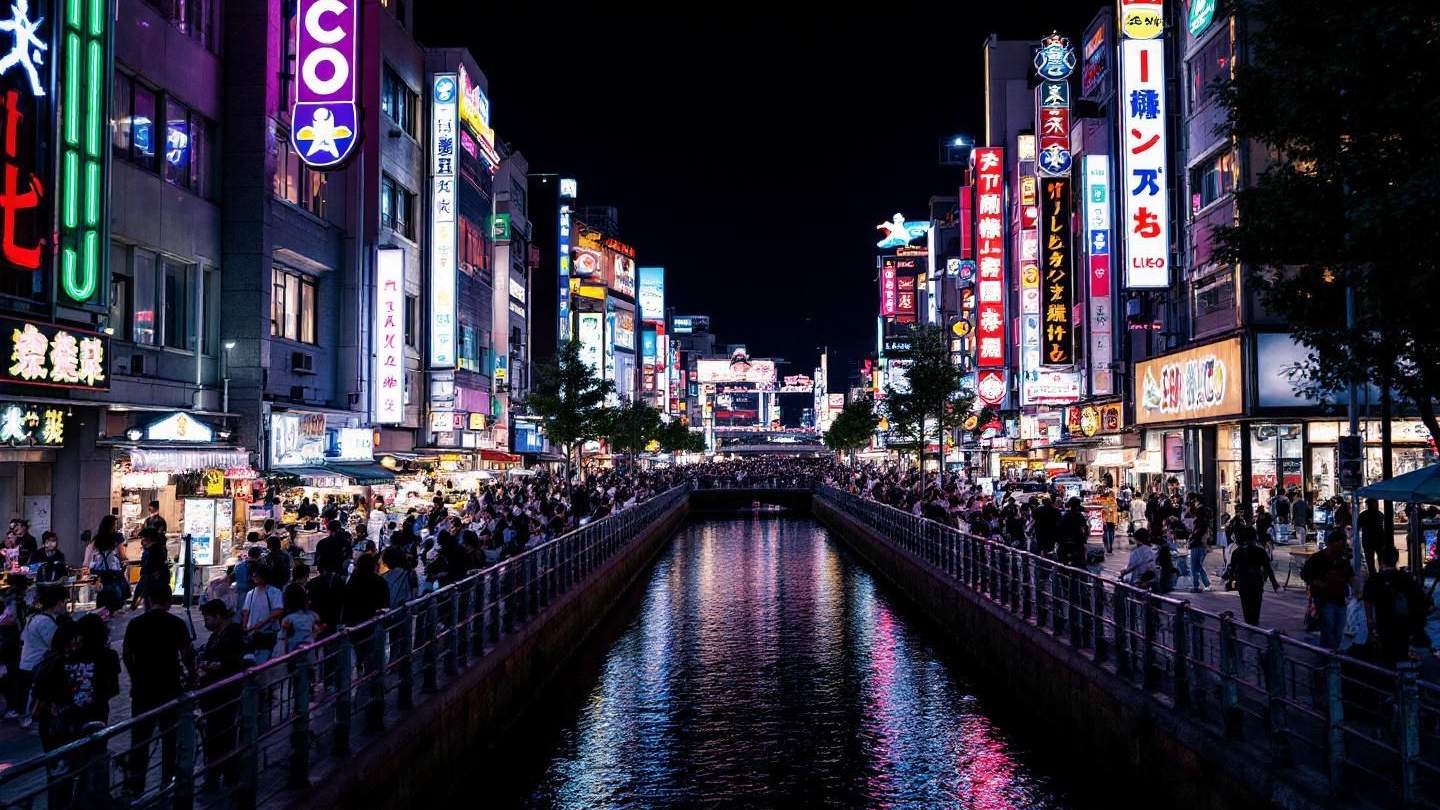
Dotonbori is the essential Osaka experience. The canal district in Namba is everything the city is known for: the towering mechanical Kani Doraku crab sign, the Glico Running Man neon figure, rival takoyaki vendors packed side by side, a density of restaurants on every floor of every building, and an atmosphere after dark that feels like a festival operating at full power seven days a week.
Walk the full length of the canal on the Dotonbori riverside promenade first — the view of the illuminated signs reflected in the water is the defining Osaka image. Then descend to street level and walk through the covered Dotonbori arcade. Every few meters is another food option: takoyaki from Aizuya (operating since 1945, famous for its thin batter and strong dashi flavor, around 600 yen for six), kushikatsu from Daruma (the original chain, easily identified by the “no double-dipping” sign), ramen from Kinryu Ramen (24 hours, 800 yen), and crab kaiseki from the mechanical-crab-adorned Kani Doraku building (lunch sets from 3,000 yen).
Dotonbori is good any time of day but genuinely extraordinary after dark from around 7pm to midnight. The illuminations reflect off the canal, the crowds are dense but festive, and the city is operating at peak performance.
Shinsekai
Shinsekai — literally “New World” — was built in 1912 as an entertainment district modeled on Paris and Coney Island simultaneously (the northern section was meant to evoke Paris; the southern section, Coney Island). Today it is one of Osaka’s most visually distinctive neighborhoods, a lived-in, slightly faded, entirely genuine counterpoint to the tourist gloss of Dotonbori.
The Tsutenkaku Tower (admission 800 yen for the main observation deck, 1,500 yen for the rooftop ROOF TOP 300 deck) is the neighborhood’s visual anchor — a 103-meter tower first built in 1912, destroyed and rebuilt in 1956. The surrounding streets are packed with kushikatsu restaurants (this is the home of the dish), retro game arcades, and fugu (pufferfish) restaurants. Kushikatsu Daruma has a branch here and maintains the famous sauce rules.
Shinsekai is smaller than it appears on maps — you can cover the main area in 90 minutes. Combine it with a visit to Spa World (an enormous public bath complex next to Shinsekai, admission from 1,000–1,500 yen depending on day and time) for a full half-day.
Osaka Castle
Osaka Castle was built by Toyotomi Hideyoshi in 1583 as a symbol of political unification after decades of civil war. The original was destroyed, the second version was struck by lightning, and the current tenshu was built in 1931 in concrete with a faithful recreation of the original’s exterior. The interior functions as a museum with detailed English exhibits tracing the castle’s history and the Sengoku period that produced it.
Admission to the museum inside the castle tower is 600 yen. The eight-floor interior takes about 45–60 minutes to work through. The view from the top observation floor over Osaka is good but not the best in the city. The castle’s real strength is its exterior — the massive stone walls constructed using stones of extreme size brought from across Japan, the dry moat, the cherry blossom trees planted throughout the park (one of Osaka’s prime sakura spots in late March to early April).
The castle park is free to enter and worth a 30–45 minute walk even without going inside. Visit on a clear day for the best views of the tenshu against the sky.
Universal Studios Japan
USJ is one of the world’s best theme parks and currently home to the Nintendo World area — arguably the finest theme park land built anywhere in recent years. Super Nintendo World recreates the world of Mario with extraordinary detail, AR elements, interactive features, and rides that are genuinely worth the wait.
Other major areas: The Wizarding World of Harry Potter, the Jurassic Park River Adventure, Minion Park, and Hollywood Dream — The Ride (a suspended coaster with a soundtrack you choose from options before boarding). The park operates from 8:30am to 9pm (hours vary seasonally).
Admission gates open at 8:30am; admission prices run 9,200 yen for a standard adult one-day ticket. Express passes (allowing you to skip queues at specific attractions) cost 4,500–12,500 yen extra depending on the number of attractions included and the day’s demand. Express passes for Super Nintendo World and Harry Potter sell out online weeks in advance — buy them the moment they become available for your visit date.
Plan a full day (9–10 hours) at minimum. Getting there: take the JR Sakurajima Line from Namba or Osaka stations to Universal City Station — it is a 5-minute walk from there.
Kaiyukan Aquarium
Kaiyukan is consistently rated among the top five aquariums in the world, and a few minutes inside make the reason clear. The central attraction is a tank holding 5,400 cubic meters of water — one of the world’s largest — containing whale sharks (the only aquarium in Japan to display them), manta rays, sea turtles, and thousands of other marine species. The scale of the central tank requires you to walk down multiple levels alongside it before you have seen it fully.
The aquarium is organized around the Pacific Rim, with tanks representing different ocean environments — the Aleutian Islands, Pacific Ocean, Monterey Bay, Great Barrier Reef, and the southern regions near Antarctica. The penguin tank has direct glass sides from floor height, allowing children (and adults) to crouch at eye level with the penguins.
Admission is 2,700 yen for adults. Located in the Tempozan Harbor Village area next to the Tempozan Giant Ferris Wheel. Allow 2–3 hours. Combine with the port area and Tempozan Marketplace for a half-day in the waterfront district.
Sumiyoshi Taisha
Sumiyoshi Taisha is one of Japan’s oldest and most important Shinto shrines, predating the introduction of Buddhist architecture that influenced most later shrine design. The four main sanctuaries date their original construction to 211 CE and the current buildings are reconstructed in the Sumiyoshi-zukuri style — Japan’s oldest shrine architectural form — with cypress bark roofs and stark white and vermillion coloring untouched by the curved rooflines that came later from China.
Admission is free. The famous arched Sori Bridge (Taikobashi) over the front pond is steep enough to require careful steps but offers a strong visual approach to the main gate. The shrine is in the southern Sumiyoshi district, somewhat off the typical tourist circuit, and this relative obscurity means you can experience it in something close to quiet — a genuine Shinto shrine atmosphere without the crowds of more famous sites.
Access by the Nankai Main Line from Namba Station to Sumiyoshi-Taisha Station takes about 10 minutes.
Abeno Harukas
Abeno Harukas was Japan’s tallest building until 2023 and remains the tallest in western Japan. The 60-floor tower in the Tennoji area houses the HARUKAS 300 observation deck on floors 58–60, with 360-degree views from 300 meters above the city. On clear days, the view extends to Kobe in the west, Kyoto to the northeast, the Kii Peninsula mountains to the south, and occasionally to Mount Fuji.
Admission to HARUKAS 300 is 2,000 yen for adults. The tower also contains the Kintetsu Department Store (the largest department store building in Japan), a hotel, an art museum, and direct connection to Osaka Abenobashi Station. The observation deck experience takes about 45–60 minutes. Best visited at sunset for the combination of daylight and city illumination — book evening slots in advance on weekends.
Namba Nightlife
Namba and its surrounding streets form the most concentrated entertainment district in western Japan. The full zone extends from Dotonbori in the north through the Namba Parks complex, American Village (Amerikamura), and the Shinsaibashi shopping district.
For nightlife specifically: the bar streets around Namba Parks, the Club Quattro area, and the side streets of Shinsaibashi have hundreds of options from craft beer bars (Try Craft Beer Base Namba for rotating local taps) to karaoke (Joy Joy Karaoke in Namba offers rooms from around 500–800 yen per hour per person), jazz bars (Osaka is one of Japan’s strongest jazz cities with venues like Cotton Club and Jazz on Top operating late), and club venues for electronic music.
For a more local evening, the Hozenji Yokocho alley near Namba parks is a narrow lane of traditional restaurants and bars that has operated largely unchanged for decades — grilled food, sake, and conversation in small rooms lit by lantern light.
Kuromon Ichiba Market
Kuromon Ichiba is Osaka’s most famous food market and one of the best morning destinations in the city. The 580-meter covered arcade has operated since 1902 and houses around 170 vendors selling fresh seafood, meat, produce, pickles, and a remarkable variety of prepared foods for eating on the spot.
The market is at its best between 7am and 11am when the produce is freshest and the cooking stalls are in full swing. Try: fresh oysters shucked to order and eaten standing at the counter (around 200–400 yen each), wagyu beef skewers grilled over charcoal (400–600 yen per stick), fresh-cut fruit on skewers, tamagoyaki, and the famous eel (unagi) vendors who grill over charcoal in the open air. The smoke drifting through the market in the morning is one of the great sensory experiences of the Osaka food circuit.
Kuromon sits in the Nipponbashi district, a 10-minute walk from Namba. Many visitors combine it with a breakfast walk before the rest of the city wakes up.
Cooking Class
Osaka’s food culture makes it one of Japan’s best cities for culinary instruction. Several operators run morning market-to-table classes where you visit Kuromon Ichiba or the local wholesale market to select ingredients, then prepare a 4–5 course meal in a home kitchen or professional teaching space.
Osaka Food Tour and Cooking (classes from around 6,000–9,000 yen) runs small English-language sessions with a focus on home-style Japanese cooking — miso soup with dashi made from scratch, tamagoyaki, nikujaga (meat and potato stew), and seasonal dishes. COOKING SCHOOL TAGATAME near Namba offers slightly more structured professional instruction for those who want to leave with replicable recipes.
For street food-specific instruction, a few operators offer a session on making proper takoyaki using a traditional cast iron pan — the skill is harder than it looks and the session is genuinely fun with groups. Prices run around 3,500–5,000 yen.
Day Cruises on the River
Osaka is built on water — the city sits at the confluence of several rivers and was historically a port city that connected the rest of Japan to China and Korea. Seeing it from the water reveals a different urban dimension.
Kansai Cruise operates boat tours on the Okawa River running from the Nakanoshima island district through the business center. The 60-minute cruise passes under 15 bridges and offers close-up views of the riverside architecture and Osaka Castle in the background. Adult tickets run around 1,500 yen. Operating hours vary by season; advance reservations recommended in spring and autumn.
During cherry blossom season, the Okawa River cruises sell out weeks in advance and for good reason — the river runs beneath hundreds of cherry trees and the blossoms overhanging the water create one of the finest sakura experiences in western Japan.
Nakanoshima
Nakanoshima is a narrow island in the center of Osaka formed by the split of the Dojima and Tosabori Rivers. The island houses the Osaka City Hall, the Museum of Oriental Ceramics (one of the world’s finest collections of Chinese and Korean ceramics, admission 500 yen), and the Nakanoshima Public Hall — a magnificent red Romanesque building from 1918 that looks entirely out of place and is all the more wonderful for it.
The riverside park running along the southern bank is one of Osaka’s most pleasant walking areas, particularly at night when the office buildings are lit and the reflections spread across the Tosabori River. The Baika Park section has rose gardens that bloom in May. In winter, the Osaka Hikari Renaissance light festival illuminates the entire island with elaborate projections on the City Hall and Hall buildings.
Practical Information
Osaka runs on the JR Osaka Loop Line and the Osaka Metro system. An IC card (ICOCA, available at JR stations) is the most flexible way to pay. For guided food experiences, see Osaka food tours. The Osaka Amazing Pass (1-day at 2,500 yen or 2-day at 3,300 yen) covers unlimited subway rides plus free admission to around 40 attractions including Tsutenkaku Tower and Osaka Castle — worth calculating if you plan to visit multiple paid sights.
The city is broadly divided into two zones: Kita (the northern area around Umeda/Osaka Station) and Minami (the southern area around Namba/Dotonbori). Most visitor attractions are in Minami or reachable by a single subway ride. The Namba area is the right base for first-time visitors.
Taxis are metered and available but the subway is faster and more reliable during rush hours. From Namba to Dotonbori is a 5-minute walk; to Shinsekai, 15 minutes on the Midosuji Line. To USJ, 20 minutes on the JR Sakurajima Line.
Most major sights are open 9am–5pm or 6pm. Dotonbori and the restaurant and bar districts run until midnight or later. The city never fully sleeps.
Seasonal Events and Festivals
Tenjin Matsuri (July 24–25): One of Japan’s three great festivals and Osaka’s most important annual event. The second day features a river procession of over 100 illuminated boats on the Okawa River, a land parade through the Osaka Tenmangu shrine area, and evening fireworks. The atmosphere along the river is extraordinary — book a riverside restaurant for a seat view well in advance.
Osaka Castle Sakura: Late March to early April, the grounds of Osaka Castle Park contain around 600 cherry trees that draw enormous crowds. Evening illuminations extend the viewing into the night. The combination of the lit castle tenshu and the surrounding blossom is one of western Japan’s finest sakura scenes.
Nakanoshima Hikari Renaissance (November to December): The Nakanoshima island district transforms in November and December with elaborate light art installations and projection mapping on the historic City Hall and Public Hall buildings. Free admission; the shows run from 5pm to 10pm.
Sumiyoshi Matsuri (July 30–August 1): One of Japan’s oldest summer festivals, centered on Sumiyoshi Taisha shrine. The procession on August 1 crosses the famous arched Sori Bridge with portable shrines, traditional performers, and thousands of local participants.
Getting Around Osaka
The Osaka Metro (formerly called the Municipal Subway) covers the city comprehensively with eight lines. The Midosuji Line running north-south through Umeda, Shinsaibashi, Namba, and Tennoji is the backbone of the system. A single ride costs 180–380 yen depending on distance; a one-day pass costs 820 yen.
The JR Osaka Loop Line circles the central city with stops including Osaka Station, Kyobashi, Tennoji, and Namba (JR Namba). It is particularly useful for reaching USJ (via the Sakurajima Line from Osaka Station) and for intercity travel covered by the JR Pass.
Cycling is feasible in the flat central areas and several docked bicycle share systems (Hello Cycling and DOCOMO Bike Share) operate throughout Namba, Shinsaibashi, and Nakanoshima. Day rates run 1,800–2,500 yen for unlimited short rides, making it economical for a full day of exploration.
Walking between Namba, Dotonbori, Shinsaibashi, and the surrounding streets is entirely practical — this is the most atmospheric way to move through central Osaka and you will make discoveries that no map or guide anticipates. For Osaka’s street food specifically, see the Osaka street food guide. For day trips from the city, see Osaka day trips.