Best Food Tours in Osaka
Last updated: March 2026
Osaka is Japan’s food city, and the claim is not marketing. The city has a different relationship to eating than anywhere else in the country — more democratic, more obsessive, and more willing to prioritize the next meal over almost anything else. The phrase kuidaore (eat until you drop, or ruin yourself eating) is Osaka’s defining cultural concept, and the infrastructure built around food here — the markets, the street stalls, the arcades of competing vendors, the multi-generation family restaurants that have not changed their recipe in sixty years — is extraordinary.
A food tour through Osaka is one of the best ways to spend half a day in the city. Whether you book a guided tour or design your own self-guided route, the principle is the same: move through multiple neighborhoods, eat smaller portions at each stop, and build a picture of Osaka’s food culture through direct experience rather than a single sit-down meal. For the street food itself, see the Osaka street food guide.
This guide covers why food tours work particularly well in Osaka, which guided tours are worth booking, and detailed self-guided walking routes through four different food areas.
Why Take a Food Tour in Osaka?
The answer comes down to density and decision paralysis. Dotonbori alone has hundreds of food options packed into 400 meters of canal-side street and arcade. Kuromon Market has 170 vendors each trying to feed you something different. Without context or guidance, the abundance is overwhelming — you end up eating at whichever stall has the loudest vendor or the longest queue, missing the specific dishes and vendors that represent the best of what each area offers.
A good guide — or a well-researched self-guided route — solves this by selecting across the range: by choosing the grilled octopus place that has operated since 1945 over the flashy new competitor two stalls down, by knowing which seemingly ordinary takoyaki stand in a side alley is beloved by locals rather than tourists, by understanding that the 200-yen crab claw at Kuromon is fresh that morning while the 800-yen version at the tourist stall near the entrance has been sitting longer.
Food tours also tend to take you off the main corridors. The best eating in Osaka is not always on the famous streets — it is often in the backstreets one block from the tourist circuit, in the covered arcade running parallel to Dotonbori, in the morning market that empties by 11am before most visitors arrive.
Guided Food Tour Options
Osaka Gourmet Walking Tour (Airbnb Experiences)
Several highly reviewed food tour experiences operate through Airbnb Experiences and similar platforms, typically running 3–4 hours through a curated selection of Namba, Dotonbori, and Shinsekai stops. Group sizes are usually 4–12 people. The best operators stop at 6–8 food points, covering multiple districts and including a range of price points from 200-yen street snacks to a sit-down tasting session.
Cost: 6,000–9,000 yen per person including all food tastings. Look for reviews specifically mentioning flexibility and local knowledge rather than generic walking tour descriptions.
Magical Trip Osaka Food Tour
Magical Trip is one of Japan’s most reputable tour operators for food and cultural experiences. Their Osaka food tour focuses on Dotonbori and the surrounding areas, with small groups (typically 6–8 people maximum) led by local guides who have personal relationships with the vendors visited. The tour covers takoyaki, kushikatsu, fresh seafood at a local spot, and finishes with sake or Japanese whisky tasting.
Cost: 7,500–9,000 yen per person including all food and drink. Advance booking required; tours run morning and evening, with the evening tour giving access to the full illuminated Dotonbori atmosphere.
Viator and GetYourGuide Listings
Both platforms list numerous Osaka food tours with verified reviews. When evaluating options, prioritize tours that specify: small group sizes (under 12 people), guides who are native Osaka residents rather than professional tour guides trained on scripts, inclusion of neighborhood areas beyond Dotonbori, and clear descriptions of what is covered versus what requires extra payment.
Cost: 5,000–12,000 yen per person depending on duration and format. Some premium tours include a cooking component.
Private Food Tours
For couples or small groups wanting a completely personalized experience, several operators offer private food tours. You specify dietary requirements, preferred cuisine styles, and areas of interest; the guide designs the route. Private tours with a knowledgeable local food guide run approximately 15,000–25,000 yen for 2–3 people over a 3-hour tour. Worth the investment for travelers with genuine food interest or specific dietary restrictions that make group tours complicated.
Self-Guided Food Walk: Dotonbori and Namba
This is the essential Osaka food walk. Allow 3–4 hours and do it hungry. Wear loose-fitting clothes.
The Route
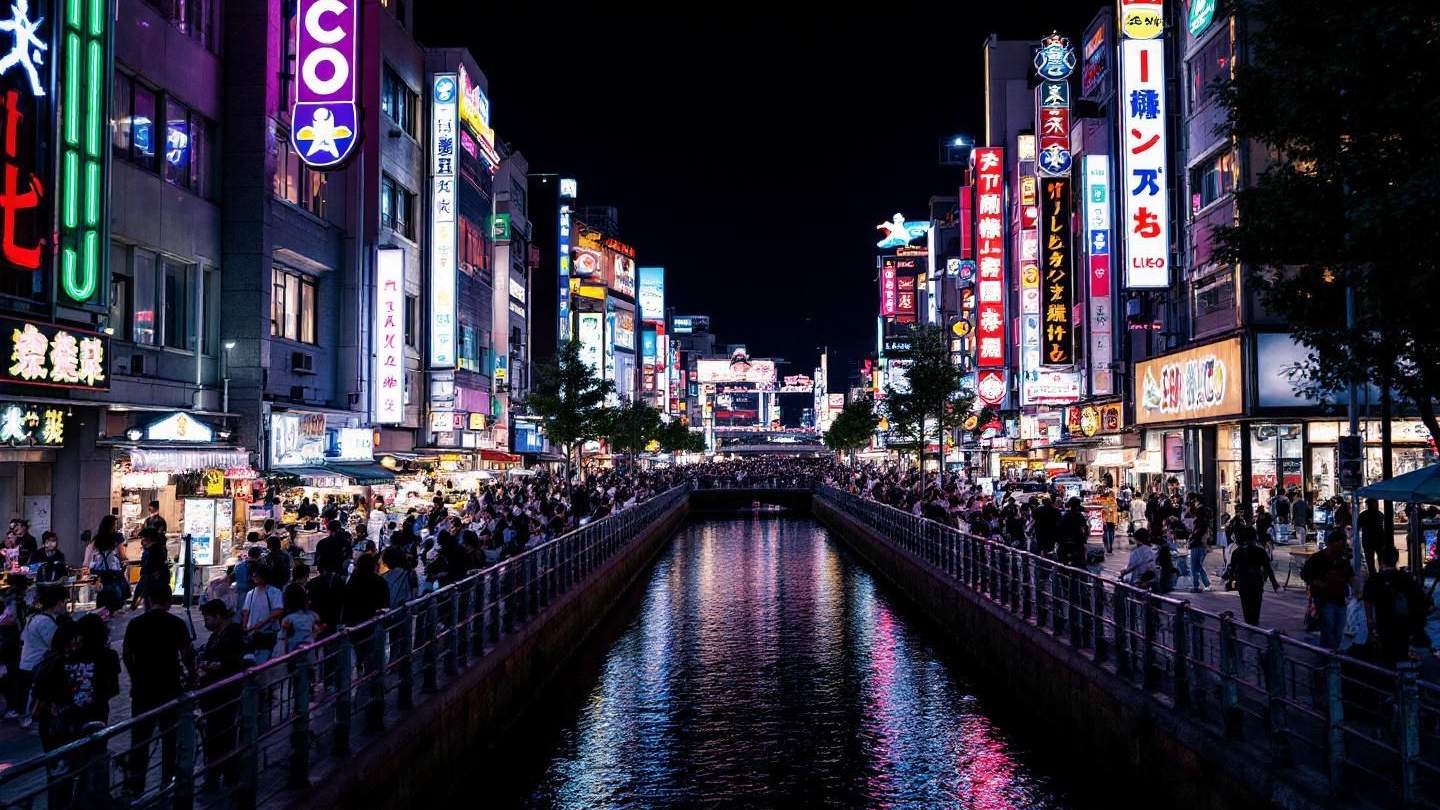
Begin at the eastern end of Dotonbori canal, where it meets Nipponbashi Street. Walk west along the canal promenade (Tombori River Walk) and get your first visual orientation of the strip — the mechanical crab, the Glico Running Man, the neon stacked vertically on every building surface.
Stop 1: Takoyaki at Aizuya Turn south off the canal at the famous Kani Doraku crab building and find Aizuya on the Dotonbori arcade. One of Osaka’s oldest takoyaki shops (operating since 1945), their version uses thinner batter and a stronger dashi flavoring than the tourist-oriented competitors. Six pieces for around 600 yen. Eat immediately — the interior is liquid and scalding, delicious.
Stop 2: Sashimi or Fresh Seafood Continue west through the arcade to one of the standing sushi bars or seafood stalls in the covered section. Fresh uni (sea urchin) on a small sushi piece runs about 300–500 yen per piece; fresh oysters with ponzu dressing around 250 yen each. These counter-style operations let you point and order with no Japanese required.
Stop 3: Kushikatsu at Daruma The original Daruma branch is one block south of the Dotonbori main strip. The rule is displayed on every table and on signs outside: NO DOUBLE-DIPPING. The sauce container is communal; you dip once, eat, never dip again. A set of 8 skewers costs around 1,200–1,500 yen. Order the standard set plus the quail egg and renkon (lotus root) skewers. Dip once, listen to the rule, and enjoy some of the city’s most satisfying fried food.
Stop 4: Nishiki/Dotonbori Crossover Walk north through the shopping arcade to the Shinsaibashi area. There is a standing ramen bar — Kinryu Ramen on the main Dotonbori strip operates 24 hours at around 750–900 yen per bowl. Good tonkotsu broth. Not the finest ramen in Osaka but the right setting for a standing bowl mid-walk.
Stop 5: Matcha or Hojicha Soft Serve Several shops along Shinsaibashi sell high-quality matcha and hojicha soft serve ice cream, notably from the Itohkyuemon brand and local matcha shops that have expanded from Kyoto and Uji. A single cone runs 450–650 yen. Good palate cleanser before continuing.
Stop 6: Izakaya or Standing Bar End the walk at a standing izakaya (tachinomi/tachizushi) — narrow, no-frills, beer and small plates at low prices. The area around Hozenji Yokocho has several options where local workers stop after 5pm. A glass of draft beer runs 400–500 yen; kushiyaki skewers from 150 yen each.
Self-Guided Food Walk: Shinsekai and Tennoji
Shinsekai deserves its own food walk — the character of the area and its signature dish (kushikatsu) make it a distinctly different Osaka food experience from Dotonbori. This walk takes 2–3 hours.
The Route
Start at Shin-Imamiya Station on the Osaka Loop Line. Walk north up Junan Dori toward the Tsutenkaku Tower. The tower is your landmark; the kushikatsu restaurants are in every direction around it.
Stop 1: Kushikatsu at a Traditional Restaurant Unlike the Daruma chain branches found elsewhere in the city, Shinsekai has original kushikatsu restaurants that have operated for decades. Look for restaurants with handwritten menus and no English signage — these are the originals. A full set of 10 skewers with salted cabbage (the traditional palate cleanser between skewers), beer, and the communal sauce runs about 2,000–2,500 yen. Standard skewers cost 120–200 yen each: pork, beef, shrimp, quail egg, lotus root, cheese, shiso-wrapped meat, asparagus.
Stop 2: Fresh Fruit or Taiyaki Walking south from the tower, you will find street vendors selling seasonal fresh fruit — strawberries in winter and spring, mango and melon in summer — presented on sticks and served with condensed milk. Around 400–800 yen depending on the fruit. Taiyaki (fish-shaped waffles filled with sweet red bean paste or custard) are also available from stalls in the arcade at around 200–300 yen.
Stop 3: Fugu (Pufferfish) Shinsekai has more fugu restaurants per square meter than anywhere else in Osaka. Fugu must be prepared by a licensed chef to remove the toxic organs safely. When properly prepared it is mild, slightly chewy, with a delicate flavor that is all about texture. A fugu set meal at a Shinsekai restaurant runs 2,500–6,000 yen depending on the preparation (sashimi, hot pot, or karaage versions all available).
Stop 4: Retro Cafe for Osaka-Style Pudding The Shinsekai area has several old-style kissaten (traditional coffee shops) that serve Osaka-style pudding (purin) — firmer and more egg-forward than modern versions, with bitter caramel sauce. Coffee and pudding set: around 700–900 yen. These cafes from the 1960s and 70s are increasingly rare in Japan and worth sitting down for.
Self-Guided Food Walk: Kuromon Ichiba Market
Kuromon is best as a morning experience. Arrive by 8:30am and spend 90 minutes to 2 hours working through the market from north to south.
The entrance on the northern end (from Nippombashi Station) is the formal market entrance. Walk the full 580-meter arcade once to get oriented, noting what each vendor specializes in, then circle back to eat.
Priorities: Fresh oysters from the seafood counters around the midpoint of the market — shucked in front of you, served with a small cup of ponzu sauce or lemon. Around 200–400 yen each depending on size. Eat four or five if you like oysters; they are Osaka Bay oysters, excellent quality.
Wagyu beef skewers from the grilling stalls — look for the vendors with visible smoke rising from charcoal grills. A wagyu skewer runs 400–700 yen. The quality difference from standard beef is noticeable.
Unagi (eel) — two vendors in Kuromon grill eel over charcoal in the open air and sell it by the portion. The smoke from the charcoal is the signal to find them. A half-portion over rice runs around 800–1,200 yen. Not a quick snack but one of the market’s finest offerings.
Tamagoyaki fresh from the pan — rolled egg omelets prepared by vendors using long rectangular pans. Sweet or savory versions available. Around 300–500 yen per piece.
Fresh-cut fruit and melon: several vendors sell premium Japanese musk melon (known for extreme sweetness) by the slice at around 500–800 yen, alongside seasonal fruits.
Self-Guided Food Walk: Amerikamura and Backstreet Namba
Amerikamura (American Village) is better known as a youth fashion district, but its backstreets between Midosuji and the Shinsaibashi area contain some of the best casual and cheap eating in Osaka. This walk is best in the evening.
Start at Triangle Park (the central gathering point of Amerikamura) and explore outward through the surrounding streets. The alleys parallel to Midosuji in this block have Korean BBQ restaurants, yakitori counters, Vietnamese pho shops, and standing ramen bars that cater to the neighborhood’s young local population.
For an Osaka-specific evening here: start with yakiniku (Korean BBQ, 2,500–4,000 yen per person) at one of the smaller restaurants off the main streets, follow with a craft beer at one of the neighborhood’s small bars (500–800 yen per glass), then finish with takoyaki from one of the late-night street stalls that appear from around 9pm (operating until 1am or 2am).
Dietary Considerations
Vegetarian and vegan. Japanese street food is heavily meat and seafood-oriented, and dedicated vegetarian street food is rare. The best options in the market/street food context: edamame (soy beans), tempura sweet potato or vegetables (ask specifically for yasai tempura), fresh fruit, matcha ice cream, taiyaki with sweet bean filling, and onigiri with umeboshi (pickled plum) or kombu filling. Several dedicated vegetarian restaurants have opened in Namba and Shinsaibashi in recent years; booking ahead for sit-down meals is advisable.
Shellfish allergies. Shellfish is pervasive in Osaka food culture. Takoyaki contains octopus; many dashi stocks are made with shrimp or scallop. Kushikatsu frequently includes seafood skewers. Always confirm with vendors when in doubt; point to the specific item and ask if it contains ebi (shrimp) or kani (crab).
Halal. Osaka has a growing number of halal-certified restaurants, particularly in the Namba and Shinsaibashi areas. Several dedicated halal ramen shops and halal izakaya exist; these can be found through dedicated halal dining apps. Not all mainstream food tour operators can accommodate halal requirements, so confirm before booking.
Booking Tips
Book guided tours at least a week in advance in standard season and 3–4 weeks in advance during cherry blossom (late March to early April) and Golden Week (late April to early May). For self-guided street food exploration, the Osaka street food guide has detailed walking routes. Evening tours fill faster than morning tours.
For self-guided walks, plan arrival at Kuromon by 8:30–9am to catch the freshest produce. Dotonbori walks are best from 11am to 2pm for lunch crowds or from 7pm to 10pm for the full illuminated evening experience. Shinsekai is best from 11:30am when kushikatsu restaurants open for lunch.
Budget approximately 3,000–5,000 yen per person for a thorough self-guided food walk covering 6–8 stops, not including sit-down restaurant meals. Guided tours at 7,000–9,000 yen per person include all food consumed during the tour and provide context that transforms eating from an activity into an education.
What to Drink on a Food Tour
Osaka’s food culture pairs naturally with a range of drinks. Understanding what to order at each type of stop makes the experience more complete.
Beer. Asahi Super Dry is Osaka’s default draft beer — its clean, dry finish was designed specifically to accompany food rather than to be the center of attention. A glass (nama biru) at a standing bar or stall costs 400–600 yen. The city also has a growing craft beer scene centered around Namba and Shinsaibashi; craft pints run 700–1,000 yen at specialist bars.
Highball. The Japanese whisky highball (whisky over ice, topped with soda water) is the drink of the izakaya. Cheap, light, and indefinitely refreshing alongside fried food. Around 400–500 yen at most bars. Nikka and Suntory whisky are both excellent in this format.
Sake. Osaka sake culture connects to the Fushimi brewing district of Kyoto (a 20-minute train ride away). At sake bars and traditional restaurants in Namba and Hozenji Yokocho, sake by the glass (hitokuchi) runs 300–600 yen. Ask for junmai (pure rice sake) for a clean, food-compatible flavor.
Canned drinks from convenience stores. Between food stops, a cold canned drink from a 7-Eleven or Lawson (100–160 yen) is entirely acceptable and what local food walkers do. Japan’s convenience stores have excellent matcha latte cans, cold brew coffee, and ramune-style sodas.
Building Your Own Food Tour Itinerary
The key to a successful self-guided food tour is pacing. Eat smaller portions than you want at each stop. For broader context on Japanese cuisine, the Japanese food guide covers all the major dishes and dining customs. The temptation — especially with fresh oysters at Kuromon and a plate of kushikatsu at Shinsekai — is to finish the full serving and order more. Resist this. The pleasure of a food tour is in the variety across multiple stops, not the volume at any single one.
A morning food tour starting at 8am at Kuromon and ending with ramen at noon is genuinely possible and enjoyable. An evening food tour starting at 7pm at Dotonbori and working through to midnight is equally valid and has the added dimension of Osaka’s extraordinary night atmosphere.
Mixing both in a single day — morning market, afternoon rest, evening street food crawl — is the approach that gives you the full scope of Osaka’s food culture and is what most dedicated food travelers do here over a 3-night stay.