Best Day Trips from Osaka
Last updated: March 2026
Osaka’s position at the center of the Kansai region makes it the best base for day trips in Japan. Within 90 minutes, you have access to the ancient temples of Kyoto, the deer park and Great Buddha of Nara, Kobe’s harbor and beef culture, one of Japan’s finest castles at Himeji, the mountain monastery complex of Koya-san, a panda sanctuary at Wakayama’s Adventure World, and the historic port city of Sakai. The transport infrastructure connecting all of these is fast, reliable, and simple.
This guide covers the seven best day trips from Osaka in detail — with precise transport information, time requirements, itinerary priorities, and honest assessments of what each destination offers versus what the tourist trail emphasizes.
Kyoto
Kyoto is the most obvious day trip from Osaka and it operates like a different world despite being 29 minutes away by train. The former imperial capital has more UNESCO World Heritage Sites than most countries — over 2,000 temples and shrines, 17 sites on the UNESCO list, intact historic districts with wooden machiya townhouses and stone-paved lanes that have functioned continuously for centuries.
The challenge of Kyoto as a day trip is that it rewards slow exploration, and a single day forces prioritization. The eastern Higashiyama district (Kiyomizu-dera, Ninenzaka, Sannenzaka, Gion) forms the most coherent half-day circuit and is the right choice for a first visit. Add Fushimi Inari if you start early — the shrine is at the southern end of Kyoto, close to the Osaka end, making it the logical first stop.
Recommended Kyoto Day Trip Itinerary
8:00am — Depart Osaka Station on JR Shinkaisoku (Special Rapid) to Kyoto (29 minutes, 580 yen). 8:30am — Arrive Kyoto Station, transfer to JR Nara Line, two stops to Inari Station. 9:00am–11:00am — Fushimi Inari Taisha. Walk the lower torii gate trail as far as the first main viewing platform (45 minutes) or higher for the full mountain circuit (2 hours). Free admission. 11:30am–1:30pm — Travel to Higashiyama (bus from Tofukuji or taxi from Fushimi), walk the Ninenzaka and Sannenzaka stone lanes, lunch at one of the tofu-focused restaurants in the area. 2:00pm–4:00pm — Kiyomizu-dera and the view platform over the valley (500 yen admission). Walk down through Gion toward the canal area. 4:00pm–5:30pm — Walk Hanamikoji Street and the Shirakawa canal area in Gion at dusk — the most atmospheric time of day. Evening — Return to Osaka. JR from Kyoto Station takes 29 minutes; last Shinkaisoku trains run well past midnight.
Alternatively, base in Kyoto for multiple days and treat it as the primary destination — see the Kyoto travel guide for comprehensive coverage.
Transport from Osaka
JR Shinkaisoku: Osaka Station to Kyoto Station, 29 minutes, 580 yen. Covered by JR Pass. Trains run every 15–30 minutes throughout the day.
Hankyu Kyoto Line: Osaka Umeda to Kyoto Kawaramachi, 47 minutes (limited express), 430 yen. Not covered by JR Pass. Arrives in the heart of the Gion/Shijo area, which is more convenient for the eastern Higashiyama circuit.
Recommended time: Full day (at least 8–9 hours).
Nara
Nara’s combination of monumental Buddhist architecture, free-roaming sacred deer, and a well-preserved historic district makes it Japan’s most satisfying half-day trip destination. The city was Japan’s first permanent capital (710–794 CE) and the scale of the Buddhist structures built during this period of peak imperial investment remains staggering over 1,200 years later.
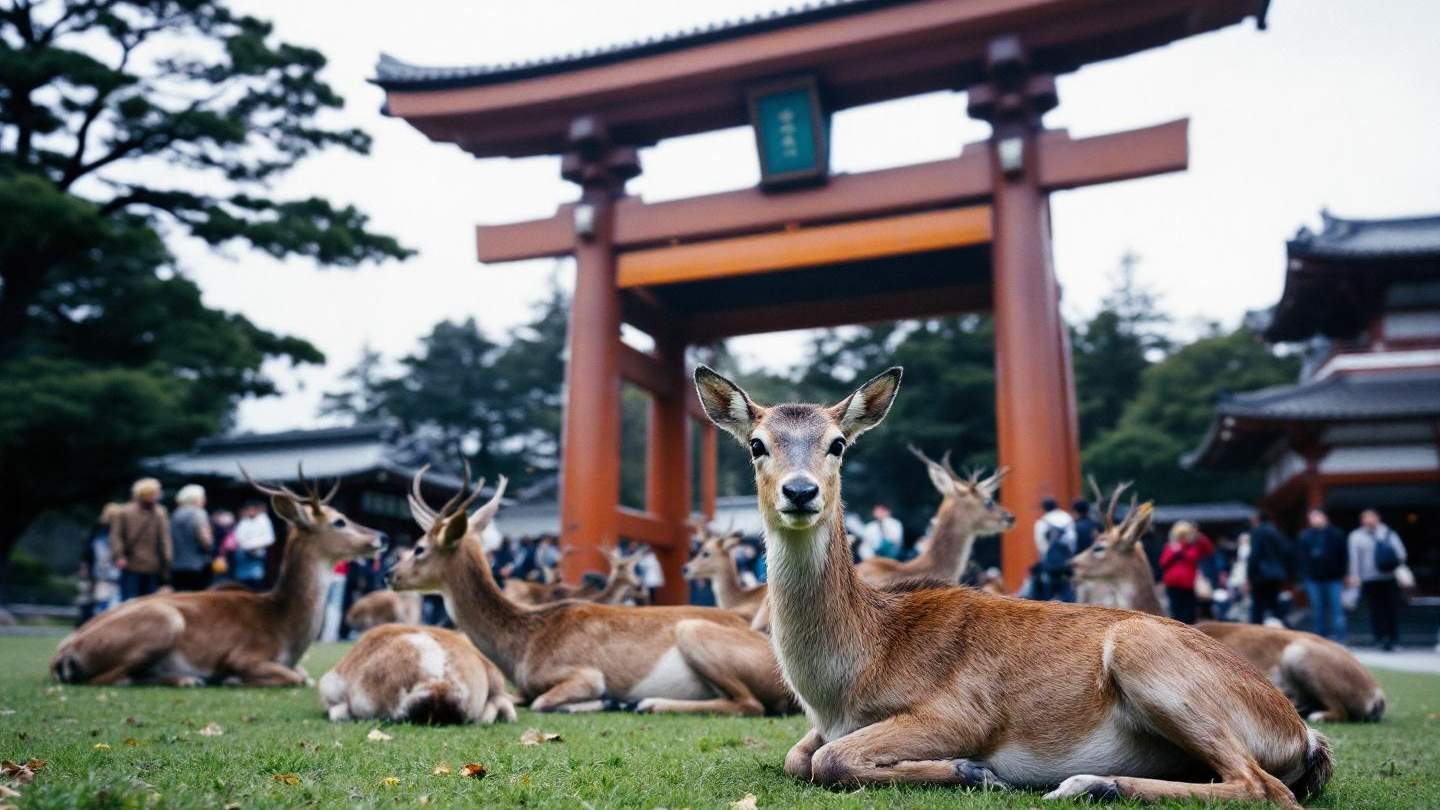
The deer are the first thing you encounter and they are genuinely extraordinary — over 1,200 sika deer roam freely through Nara Park and the surrounding temple precincts, considered sacred messengers of the Kasuga deity. They bow for shika senbei deer crackers sold by vendors at 200 yen per pack, follow visitors with mild persistence, and occasionally assert themselves around food. They are wild animals with mild temperaments and no cages.
What to See in Nara
Todai-ji is essential. The Great Buddha Hall is the largest wooden structure in the world and the bronze daibutsu inside it — 15 meters tall, cast in 752 CE — is one of the most impressive religious artworks in Asia. Admission is 600 yen. Allow 60 minutes for the main hall and grounds.
Kasuga Taisha — a 20-minute walk through deer-filled park from Todai-ji — is one of Japan’s most important Shinto shrines. Over 3,000 stone and bronze lanterns line the approaches and the forests surrounding the complex. Free to the outer precincts; 500 yen for the inner sanctuary.
Naramachi is the preserved merchant district south of the central park. Spend an hour walking its lanes past sake breweries, small museums, and craft shops for a sense of Nara’s post-imperial daily life.
Isuien Garden (admission 1,200 yen) uses Todai-ji’s great roof as borrowed scenery in one of Japan’s most compositionally perfect garden designs. The northern garden and southern garden can be visited together.
Transport from Osaka
Kintetsu Limited Express: Osaka Namba (Kintetsu Osaka Namba Station) to Kintetsu Nara Station, 33–40 minutes, 1,160 yen (including limited express surcharge). The most direct and comfortable option.
JR Yamatoji Rapid: Osaka Station (or Namba, JR) to JR Nara Station, 50 minutes, 820 yen. Covered by JR Pass. JR Nara Station is a 10-minute bus or 20-minute walk from the park.
Recommended time: Half day (4–5 hours) for the main circuit; full day to include Naramachi, Isuien Garden, and a slower pace.
Kobe
Kobe is Japan’s most cosmopolitan city. An international trading port since 1868, it accumulated a significant foreign community whose architectural legacy remains visible in Kitano-cho — a hillside neighborhood of European-style houses (ijinkan) built by British, German, French, and American merchants. The combination of mountain backdrop, harbor waterfront, international character, and the city’s own exceptional food culture makes Kobe one of the most pleasant half-days from Osaka.
Kobe beef is the city’s most famous export — Tajima-goshi cattle raised in Hyogo Prefecture to strict certification standards, marbled with fat to a degree that approaches the texture of butter. Authentic Kobe beef must be certified from specifically registered cattle; restaurants displaying the official certification are numerous in the Kitano and Sannomiya areas. A genuine Kobe beef teppanyaki lunch at a certified restaurant runs 8,000–20,000 yen per person for a multi-course set. Worth it.
What to Do in Kobe
Kitano-cho is the main historic district — a 15-minute walk uphill from Sannomiya Station through neighborhoods that gradually shift from modern city to preserved 19th-century architecture. About 20 of the original Western houses are open to visitors at small admission fees (200–500 yen each); the French house, the English house, and the German house are the most interesting. The neighborhood itself justifies the climb even without entering any of the buildings.
Kobe Port and Meriken Park — the harbor waterfront with the Kobe Port Tower (a distinctive red lattice tower, free to view from outside, observation deck 700 yen), the Kobe Maritime Museum, and the USS Missouri anchor monument. The waterfront walk is pleasant and offers views of the ships and mountains.
Nankinmachi is Kobe’s compact Chinatown — one of three official Chinese quarters in Japan (the others are in Yokohama and Nagasaki) with street food, Chinese restaurants, and dense crowds on weekends. The roast pork buns (kakuni man, 350–500 yen) are the food highlight.
Nada sake district east of central Kobe (accessible by the Hanshin or JR lines) is one of Japan’s most important sake production areas, with several brewery visitor facilities including Hakutsuru Sake Brewery Museum (free admission) and Kikumasamune Sake Museum.
Transport from Osaka
JR Kobe Line: Osaka Station to Sannomiya, 24 minutes on Special Rapid, 420 yen. Covered by JR Pass.
Hankyu Kobe Line: Umeda to Kobe Sannomiya, 27 minutes, 330 yen. Cheaper and frequent.
Recommended time: Half day (4–5 hours). Full day if combining Kitano-cho, the port, Nankinmachi, and a Kobe beef lunch.
Himeji Castle
Himeji Castle is the finest surviving feudal castle in Japan and the most compelling argument for a longer day trip from Osaka. Unlike most Japanese castle towers — which are concrete reconstructions of various fidelity — Himeji has never been destroyed. The current six-story main tenshu and its three smaller turrets date to 1601–1609 and are entirely original, surviving fires, the post-feudal reforms that demolished most Japanese castles, and the Allied bombing of Himeji city in 1945 (the bombs fell around but not on the castle).
The white lime-plastered exterior earned it the name Hakuro-jo (White Heron Castle). The approach up the main path and through successive gates takes about 20 minutes before you reach the main tower entrance. The interior — original timber construction, gunports, stone-dropping trapdoors, and increasingly narrow floors as you ascend — takes 60–90 minutes to climb through properly. The views from the top floor over the city and surrounding plain are excellent.
Admission to the castle complex (including Koko-en Garden) is 1,050 yen. Koko-en is a nine-garden complex adjacent to the castle with reconstructed samurai residence gardens, tea houses, and a restaurant serving sets using himeji local ingredients.
Allow a full day for Himeji — the journey takes 50–90 minutes each way and the castle and its grounds deserve 3–4 hours.
Transport from Osaka
JR Shinkansen (Hikari or Sakura): Shin-Osaka to Himeji, 28–35 minutes, 3,180 yen. Covered by JR Pass.
JR Shinkaisoku: Osaka Station to Himeji, 60–80 minutes, 1,520 yen. Covered by JR Pass. Slower but significantly cheaper without a pass.
Note: Nozomi Shinkansen is faster but not covered by the JR Pass. Use Hikari if you have a pass.
From Himeji Station, the castle is a 15-minute walk or 5-minute bus ride (100 yen).
Recommended time: Full day (8–9 hours).
Mount Koya (Koya-san)
Koya-san is one of the most extraordinary places in Japan — a mountain plateau at 900 meters elevation in the Kii Peninsula, home to 117 Buddhist temples, a thousand-year-old graveyard through cedar forest, and an enduring monastic community founded by the monk Kukai (Kobo Daishi) in 816 CE. It is the headquarters of Shingon Buddhism and remains an active religious center where monks wake before dawn for meditation and sutra chanting.
The two essential experiences are Okunoin — Japan’s largest graveyard, with around 200,000 tomb monuments under massive cryptomeria cedar trees, paths lit by stone lanterns at dusk, and the inner sanctuary where Kukai is said to sit in eternal meditation rather than having died — and the Konpon Daito pagoda in the Garan temple complex, the symbolic center of the Shingon esoteric Buddhist world.
Staying overnight at a shukubo (temple lodging) is the way to fully experience Koya-san — waking at 6am for the morning fire ritual, eating shojin ryori (Buddhist vegetarian cuisine), walking the graveyard at night with the lanterns lit. If doing it as a day trip, leave early and arrive by 10am to have maximum time before the last cable car.
Transport from Osaka
Nankai Line: Osaka Namba (Nankai Namba Station) to Gokurakubashi, then cable car to Koya-san. The Nankai Koya Limited Express runs twice per hour; the journey from Namba to Gokurakubashi takes 80 minutes (1,900 yen one way including limited express surcharge, or 1,310 yen on the slower regular express). The cable car adds 390 yen return. The Koyasan World Heritage Ticket (2,860 yen) covers round-trip travel on the Nankai Line and cable car plus unlimited bus rides on the mountain.
From the cable car top station, buses run to the main Koya-san temple areas.
Recommended time: Full day minimum (10–11 hours). Overnight strongly recommended for the full experience.
Wakayama and Adventure World
Adventure World in Shirahama, Wakayama Prefecture, may be Japan’s most surprising day trip. The park is not primarily a theme park — it is a conservation and breeding facility that houses the largest giant panda population outside China. With 10 pandas as of 2026 (the number has varied as cubs are born), it is possible to see more giant pandas in a single visit here than virtually anywhere else on Earth. The pandas are the draw but the park also has a large zoo complex, a marine attraction, and a safari area.
This is the right day trip for families with children and for anyone who specifically wants to see giant pandas without traveling to China. The combination of panda cubs in the nursery, adult pandas in outdoor enclosures, and the relatively uncrowded atmosphere compared to Chinese panda bases makes it genuinely excellent.
Admission to Adventure World is 4,800 yen for adults. Open year-round except occasional maintenance closures.
Transport from Osaka
JR Kuroshio Ltd. Express: Osaka Station (or Shin-Osaka) to Shirahama, approximately 2 hours, 5,310 yen one way. Covered by JR Pass. Buses run from Shirahama Station to Adventure World.
Note: The round trip represents a significant day — 4 hours of travel plus park time. Start at Osaka Station by 8am for a comfortable day.
Recommended time: Full day (10–11 hours).
Sakai
Sakai is the most underrated day trip from Osaka — a city immediately south of the prefectural border with a genuinely distinctive history and character. It was Japan’s most important merchant city during the 16th century, so wealthy and politically independent that it functioned essentially as a free city, and its prosperity attracted artisans, intellectuals, and eventually the tea culture that produced Sen no Rikyu (Sakai’s most famous son).
Sakai is also home to Japan’s largest collection of kofun — ancient keyhole-shaped burial mounds for emperors and nobles, dating from the 3rd to 7th centuries CE. The Daisen Kofun, built for Emperor Nintoku, is the largest burial mound in the world by area (larger than the Great Pyramid of Giza or Napoleon’s tomb). You cannot enter the kofun grounds, but walking the exterior moat path (about 2.8 kilometers) gives a clear sense of the extraordinary scale.
The Museum of History Sakai (admission 200 yen) provides excellent context for both the merchant history and the kofun period, with an observation deck offering views of Daisen Kofun’s forest-covered outline.
The Sakai Traditional Crafts Museum highlights the city’s legacy as Japan’s most important production center for kitchen knives — Sakai knives are still considered among the world’s finest, and visiting a knife shop or small forge is a legitimate reason to make the trip.
Transport from Osaka
Nankai Main Line: Namba Station to Sakai-Higashi, 15 minutes, 250 yen. JR Hanwa Line also connects from Tennoji Station to Sakai Station in 10 minutes (170 yen).
Recommended time: Half day (3–4 hours). Can be combined with a morning in Shinsekai or a Nankai Line continuation to Wakayama or Koya-san.
Planning Your Day Trips
Transport passes. The JR Kansai Area Pass (1-day from 2,400 yen, up to 4 days) covers JR trains throughout the region including Kyoto, Nara, Kobe, and Himeji. It does not cover Nankai (for Koya-san and Adventure World) or Kintetsu (for a faster Nara connection). The Kintetsu Rail Pass (2-day from 3,000 yen) covers the Kintetsu network.
Start early. The most popular destinations — Kyoto and Nara — get crowded by mid-morning as tour groups arrive. A 7:30–8:00am departure from Osaka gets you to both cities well ahead of the main crowds.
Return timing. JR trains back to Osaka run frequently and late — you can safely stay at most destinations until 7–8pm without worrying about the last connection. Nankai Line to Koya-san has more limited evening service; check the last cable car departure (typically 8:30–9:30pm depending on season) and work backward.
Combine strategically. Kyoto and Nara are often combined in a single day, but Kyoto genuinely deserves more time. Better to give Kyoto a full day and Nara a separate half-day than to rush both. Kobe and Himeji can realistically be combined — leave Osaka at 8am for Himeji, spend 3 hours at the castle, then take the 40-minute JR train to Kobe for the afternoon and Kobe beef dinner before returning to Osaka.