Osaka
Complete Osaka travel guide. Street food capital, vibrant nightlife, family-friendly attractions, and the warmest locals in Japan.
Quick Facts
- Best For
- Food, Nightlife, Families
- Days Needed
- 2–3 days
- Best Season
- Spring & Autumn
- Airport
- Kansai (KIX) / Itami (ITM)
- Getting There
- 2h30 from Tokyo by Shinkansen
- Budget (per day)
- ¥6,000–¥18,000
Osaka at a Glance
| Category | Details |
|---|---|
| Best For | Food, nightlife, families, budget travelers |
| Recommended Stay | 2–3 days (4–5 if using Osaka as a Kansai base) |
| Best Seasons | Late March–early May (cherry blossoms), mid-September–November (cooler, fewer crowds) |
| Daily Budget | Around ¥6,000–¥18,000 per person |
| Airports | Kansai (KIX) — around 35–50 min to the city; Itami (ITM) — around 25–45 min |
| Getting Around | ICOCA IC card on Osaka Metro, JR, and buses; Midosuji Line covers most sights |
| Getting There from Tokyo | Around 2h30 by Nozomi Shinkansen |
| Getting There from Kyoto | Around 29 minutes by JR Special Rapid |
Why Visit Osaka
There is a Japanese concept — kuidaore — that means “eat until you drop” or, more precisely, to ruin yourself financially through eating. It’s Osaka’s unofficial motto, and it’s not metaphorical. The city genuinely organizes its social life around food in a way that no other Japanese city quite matches. Osakans will tell you, with complete sincerity, that the money they don’t spend on clothes they spend on eating. A plate of food that would cost ¥1,500 in Tokyo costs ¥800 in Osaka, and it’s often better. Our Osaka street food guide and food tours cover the best ways to eat your way through the city.
This food culture has roots in Osaka’s history as Japan’s commercial capital. During the Edo period (1603–1868), Osaka was where goods flowed through from the rest of Japan — rice, fish, soy, mirin, vegetables — and the city developed a merchant culture that valued productivity, pragmatism, and above all, good value. The phrase “Osaka’s kitchen” (tenka no daidokoro) was used to describe the city for centuries. The markets and trading houses are gone, but the appetite remains.
Beyond food, Osaka has a personality that’s genuinely different from the other major Japanese cities. Osakans are louder, more direct, and funnier than their counterparts in Tokyo or Kyoto. They will talk to you on the street. They will tell you their opinion of your food choice. They will do the Glico running man pose in front of the canal without embarrassment. The city has a working-class warmth that is immediately noticeable to first-time visitors, and it makes eating at a counter, drinking at a neighborhood bar, or wandering a covered shopping arcade feel immediately comfortable even without language.
Osaka is also, practically speaking, one of the best-positioned cities in Japan. It is 30 minutes from Kyoto by local train, 30 minutes from Nara, and 30 minutes from Kobe. Mount Koya is 90 minutes away. Himeji Castle is 40 minutes. Using Osaka as a base and taking day trips is a legitimate and often more affordable strategy than staying in Kyoto. See our Osaka day trips guide for the full breakdown.
How Many Days Do You Need?
2 days — workable but tight. Two days gives you Dotonbori, Osaka Castle, a visit to Shinsekai, and enough meals to get a real impression of the food culture. You will not see Tennoji, Nakazakicho, or any of the less central neighborhoods.
3 days — the right amount. Three days allows you to eat at your own pace (which in Osaka means frequently), take one day trip, explore Umeda and the underground shopping city, visit Universal Studios if that’s relevant to your travel party, and spend a full evening in Shinsekai or Namba without feeling rushed.
4+ days for Osaka as a base. If you’re treating Osaka as your Kansai headquarters and taking day trips, four to five days here is perfectly justified. You’ll run out of day trips (Kyoto, Nara, Kobe, Himeji, Koya-san) before you run out of Osaka restaurants to try.
Street Food Price Guide
| Dish | What It Is | Price Range | Best Area to Find It |
|---|---|---|---|
| Takoyaki | Octopus batter balls with sauce and bonito | ¥500–¥700 per 6–8 pieces | Dotonbori, Shinsekai |
| Okonomiyaki | Savory cabbage pancake with toppings | ¥900–¥2,000 | Dotonbori, Namba |
| Kushikatsu | Breaded deep-fried skewers | ¥180–¥300 per skewer | Shinsekai (traditional heartland) |
| 551 Horai Nikuman | Steamed pork buns | ¥220 each | Namba, Osaka Station |
| Kitsune Udon | Thick noodles with sweetened fried tofu | ¥700–¥1,200 | Citywide |
| Gyoza | Pan-fried dumplings | ¥340–¥500 for 6 | Namba, Shinsekai |
| Hako-zushi / Battera | Osaka-style pressed sushi | ¥800–¥1,500 | Depachika, Nishidaya |
| Horumon | Grilled offal over charcoal | ¥1,500–¥2,500 (set) | Tsuruhashi, Tennoji |
What to Eat in Osaka
Eating in Osaka is not optional tourism — it is the point of visiting. The following is a comprehensive guide to what matters, where to find it, and what to expect. For guided tasting experiences, see our Osaka food tours. Our Japanese food guide provides context on the broader cuisine.
Takoyaki (Octopus Balls)
Osaka invented takoyaki and has spent decades perfecting it. The snack is a round ball of wheat batter cooked in a special cast iron pan, with a piece of octopus (tako) in the center, topped with okonomiyaki sauce (thick, Worcester-based), Japanese mayonnaise, dried bonito flakes (katsuobushi), and powdered green seaweed (aonori). When done correctly, the outside is crispy and slightly charred, and the inside is almost liquid — the mistake most tourists make is eating them immediately, before the interior has the right temperature contrast with the crust.
Where to go: Wanaka in Namba has been operating since 1946 and queues form before opening. A six-piece order is ¥650. Takohachi in Dotonbori (six pieces, ¥700) is another reliable classic. Aizuya near Shinsekai claims to be the original takoyaki establishment and serves a version (¥680 for eight pieces) that’s less photogenic than the sauced versions but closer to the original recipe. For stand-up casual eating, the stalls in Dotonbori’s covered arcade serve acceptable versions at ¥500–¥600 per six pieces.
Okonomiyaki (Savory Pancake)
Osaka-style okonomiyaki (literally “grilled as you like it”) is made by mixing all ingredients together — cabbage, egg, flour, dashi, and your choice of pork, shrimp, cheese, squid, or mochi — and grilling them as a thick pancake. This is meaningfully different from Hiroshima-style, which layers ingredients separately. The Osaka version is rounder, denser, and arguably more satisfying as a single dish.
Toppings are the same as takoyaki: okonomiyaki sauce, mayo, bonito flakes, and aonori. A basic pork and vegetable version costs ¥900–¥1,300. Adding shrimp, cheese, or extra ingredients brings it to ¥1,500–¥2,000.
Where to go: Mizuno in Dotonbori is the most famous establishment and usually has a queue (¥1,200–¥1,800). Fukutaro near Hozenji Yokocho is excellent and slightly less crowded (¥1,200–¥1,600). For a self-cooked experience, choose a restaurant where they bring the batter to your table-top griddle — it’s part of the experience.
Kushikatsu (Deep-Fried Skewers)
Kushikatsu is Osaka’s most democratic eating format. Everything — beef, pork, shrimp, quail egg, lotus root, eggplant, asparagus, cheese, even mochi and banana — is skewered, coated in light breadcrumbs, and deep-fried. You dip each piece once into the communal pot of tangy Worcestershire-based sauce.
The cardinal rule: No double-dipping. Single dip only. Every restaurant has this rule, often displayed in multiple languages, and it is enforced.
Shinsekai is the traditional heartland of kushikatsu culture. The main street has a dozen restaurants, most clearly displaying their menus outside. Daruma (multiple locations in Shinsekai, established 1929) is the original and most recognizable (two skewers typically ¥180–¥300 each). A full kushikatsu meal with six to ten skewers and a beer runs ¥1,500–¥2,500. In Namba and Dotonbori, kushikatsu restaurants are plentiful but slightly more expensive. If you’d rather have a local show you the best stalls, this local food tour of Dotonbori and Shinsekai covers both neighborhoods in one outing.
Gyoza
Osaka’s gyoza culture is distinct from that of Kyoto or Tokyo. Osaka-style gyoza tends toward larger dumplings with a higher vegetable-to-pork ratio and a crisper bottom. Chao Chao in Namba (¥340 for six) is well-regarded for its size. Gyoza Ohsho is a dependable chain for the classic format. For something more interesting, the smaller independent restaurants in Shinsekai and Tennoji serve gyoza with regional variations.
Yakiniku (Grilled Meat)
Osaka has one of Japan’s strongest yakiniku cultures, partly because of its large Zainichi Korean community, which introduced Korean barbecue techniques that evolved into the current form. The Tsuruhashi neighborhood east of Namba contains Japan’s largest Korean market and some of the most authentic yakiniku in the country. Yakiniku Jumbo Harue (¥3,000–¥5,000 per person including drinks) is a neighborhood institution. Expect to smell of smoke afterward.
Sushi
Osaka’s sushi tradition predates Edo-style nigiri sushi by several centuries. Hako-zushi (box sushi) and battera (pressed mackerel sushi) are distinctly Osaka styles, assembled in wooden boxes and cut into portions. You’ll find these at Nishidaya in Namba (¥800–¥1,500 per piece) and at depachika throughout the city. For modern omakase, Endo Sushi at Osaka Central Wholesale Market (near Namba, opens 5 AM, ¥1,000–¥3,000) serves market-fresh nigiri to a clientele that includes market workers.
Kitsune Udon
Osaka is the birthplace of kitsune udon — thick wheat noodles in a clear dashi broth topped with a large piece of sweetened fried tofu (abura-age). The dish is associated with the fox (kitsune) messenger deity, for whom fried tofu is the traditional offering. Mimiu and Dotonbori Imai are two of Osaka’s most respected udon establishments. A bowl runs ¥700–¥1,200.
Horumon (Offal Grilling)
Osaka’s working-class food culture has always embraced offal (horumon), and the best horumon restaurants are concentrated around Tsuruhashi and Tennoji. The variety — tripe, intestine, heart, tongue, liver — is grilled over charcoal and eaten with garlic, salt, or miso paste. For the uninitiated, starting with tongue (tan) and heart (hatsu) is the accessible entry point. A horumon set dinner runs ¥1,500–¥2,500.
551 Horai Nikuman
No visit to Osaka is complete without a nikuman (steamed pork bun) from 551 Horai. These large, slightly sweet steamed buns, sold at chain locations throughout the city and at Osaka Station, are an Osaka institution that locals buy by the bagful to take home. A single bun costs ¥220. Two buns is a snack. Six in a box is a reasonable gift. The queues at 551 Horai at Namba are genuine and fast-moving — the turnover is remarkably high.
Osaka’s Neighborhoods
Dotonbori
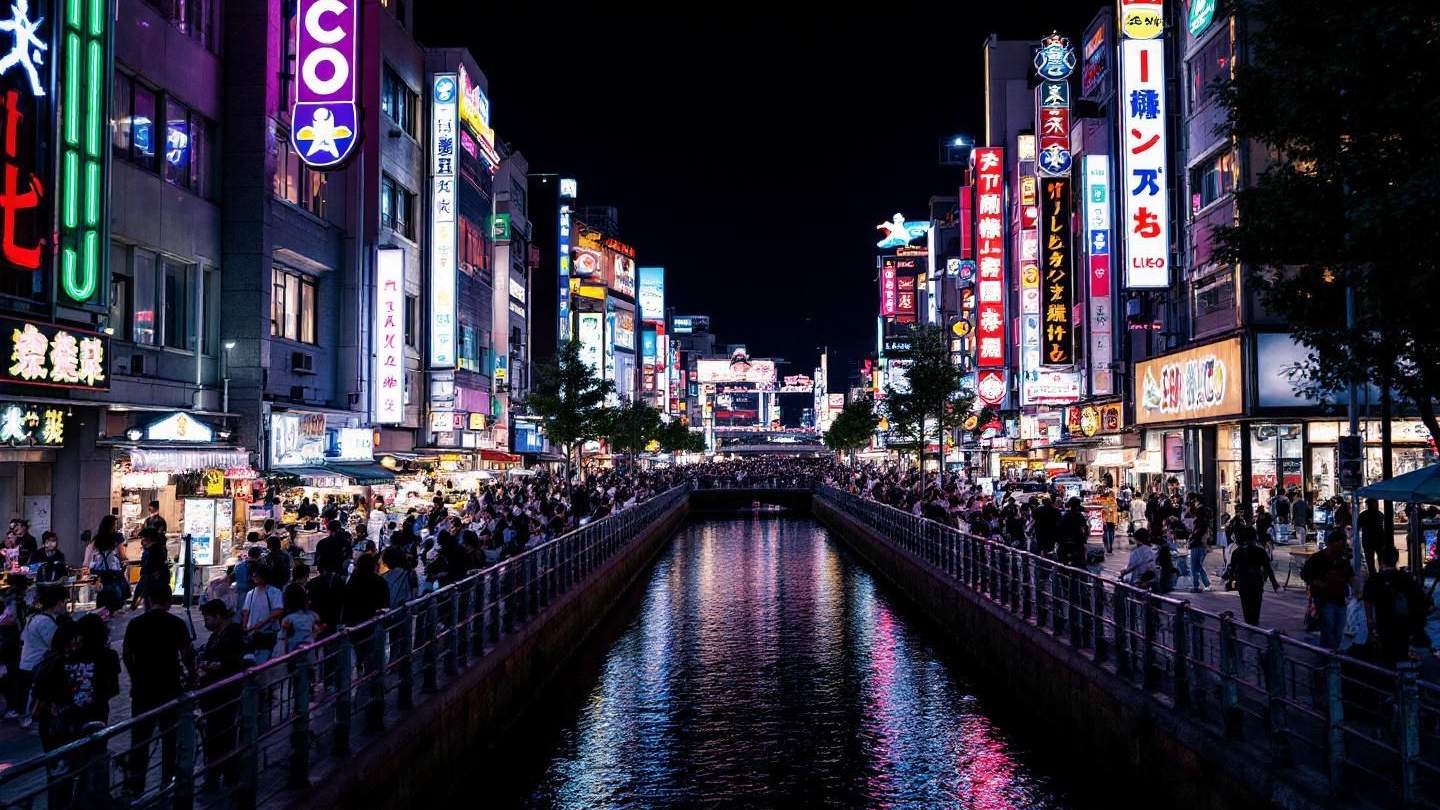
Dotonbori is the most famous one-kilometer stretch in Osaka, and probably in all of Japan after Shibuya. The south bank of the Dotonbori canal is lined with enormous 3D signage — the Glico running man, a massive crab with moving claws, a blowfish lamp, a giant bowl of ramen — all illuminated in neon that reflects off the canal water at night. It looks exactly like a comic book panel brought to life.
The canal itself is now walkable on both banks after a riverside promenade (Tombori River Walk) was developed in the 2000s. Nighttime in Dotonbori is extraordinary in a sensory overload sense — the lights, the crowds, the cooking smells, the noise from pachinko parlors and restaurants all layering together.
Beyond the main canal: Dotonbori-suji is the main road running parallel to the canal, packed with restaurants and izakayas. Turn south off the canal street and you reach Hozenji Yokocho — a tiny stone alley leading to the moss-covered Fudo Myo-o statue at Hozenji temple, surrounded by traditional restaurants. It’s the most atmospheric contrast in the area, ten meters from the crowds and suddenly completely quiet.
Photography tip: The Glico man is best photographed from Ebisu Bridge (Ebisu-bashi), which crosses the canal directly in front of it. Evening is best. The signage is reflected in the canal water when it’s not too windy.
Shinsekai
Shinsekai means “new world,” and the neighborhood was indeed once new — it was developed in 1912 as a modernist district inspired by Paris and New York, divided into two sections separated by a central tower. The tower became the Tsutenkaku (100 meters, designed by the same architect who designed Paris’s Eiffel Tower), which still dominates the neighborhood. The “new world” aspect faded as the city modernized around it, and Shinsekai developed a retro charm that is now entirely genuine.
Tsutenkaku is the 100-meter tower in the center of Shinsekai, rebuilt in its current form in 1956 after being dismantled for scrap during the war. The observation deck costs ¥800 (main deck) or ¥1,200 (top deck). The neighborhood around its base contains the densest concentration of kushikatsu restaurants in Osaka, plus vintage game centers, pachinko parlors, oden stalls, and the occasional fortune teller.
The architecture of Shinsekai is worth looking at carefully: the shotengai (covered shopping arcades) still have their original 1950s signage in some places. Old-school sento (public baths), fried chicken counters, and beer halls operating since the 1960s sit next to newer craft beer bars. The energy is unpretentious and welcoming. Come for dinner and stay for a beer or two.
Billiken is the neighborhood mascot — a cheerful, slightly unsettling idol statue displayed in windows, on food packaging, and at the base of Tsutenkaku. Rubbing the soles of his feet is said to bring good luck.
Namba and Shinsaibashi
Namba is Osaka’s largest commercial and entertainment district, centered on Namba Station and extending in every direction. It’s where you come for department stores, covered shopping arcades, restaurants of every type, and the density of nightlife options that gives Osaka its reputation.
Shinsaibashi-suji is the main covered shopping arcade — 580 meters of mid-range shops, department stores, and restaurants running from Shinsaibashi Station south toward Namba. It’s busiest on weekends. The side streets adjacent to the arcade contain Osaka’s best concentration of restaurants across all price points.
Amerikamura (American Village) is the street fashion district west of Shinsaibashi, centered on Triangle Park. In the 1970s the area developed as an import and secondhand American goods market. Today it’s Osaka’s answer to Harajuku — youth fashion, streetwear, vintage stores (the density of vintage stores in Amemura rivals Shimokitazawa in Tokyo), and a cluster of izakayas and bars. The energy is younger and louder than neighboring Shinsaibashi. It’s also where you find Osaka’s most interesting street fashion photography opportunities.
Umeda and Kita
Kita (meaning “north”) is the area around Osaka and Umeda stations, which is where the business district, major department stores, and a very different social register from Namba concentrate. While Namba operates as the street food and entertainment heart, Umeda is the corporate face.
Umeda Sky Building is worth visiting regardless of your interest in architecture. Two towers connected at the top by a “floating garden” observation deck (40th floor, ¥1,500) give panoramic views over Osaka. The Showa-era retro basement floor (“Takimi Koji”) contains atmospheric restaurants modeled on the 1920s. The building itself is a remarkable piece of late 1980s architecture — two towers leaning toward each other, connected by escalators ascending through open air.
The underground shopping city (Umeda Chika) is a network of several interconnected underground malls — Whity Umeda, Diamor Osaka, Daimaru Umeda, and others — extending under and around the station complex. It’s genuinely maze-like, contains over 200 shops and restaurants, and provides a useful alternative to above-ground navigation in bad weather. The food stalls in the underground sections serve good set lunches for ¥800–¥1,300.
HEP Five on Umeda’s main boulevard has a red Ferris wheel on the roof (¥600). It’s visible from blocks away and the ride takes 15 minutes, providing views of the city and the passing Shinkansen tracks.
Tennoji and Abeno
Tennoji is the southern gateway to Osaka’s older neighborhoods and a transit hub connecting the city to Nara, Wakayama, and Koya-san. It’s less polished than Umeda or Namba, which is part of its appeal.
Abeno Harukas is Japan’s second-tallest building at 300 meters, visible from much of south Osaka. The observation deck (Harukas 300) on floors 58–60 costs ¥2,000 and gives the widest panorama in the Kansai region — on clear days you can see to Kyoto and Awaji Island. The building also contains a department store, hotel, and art museum.
Tennoji Park and Keitakuen Garden (¥150) is a formal Japanese garden dating from 1918, tucked behind the Osaka City Museum of Fine Arts. The garden is genuinely excellent and almost always uncrowded — a calm counterpart to the surrounding area.
Tsutenkaku and Shinsekai are a 10-minute walk west of Tennoji Station.
Nakazakicho
Nakazakicho is Osaka’s answer to Shimokitazawa — a narrow-street district of independent cafes, vintage clothing shops, art galleries, and small restaurants that resists the commercial logic of the surrounding city. It’s located one stop north of Umeda on the Tanimachi subway line and is walkable from the Sky Building.
The area developed as a cafe and creative district in the early 2000s, when low rents attracted independent operators. The density of independent coffee shops — many roasting their own beans — is remarkable for such a small area. Budget two to three hours, arrive late morning, and move slowly from cafe to cafe. This is not a sightseeing destination so much as a mood.
Major Attractions
Osaka Castle
Osaka Castle is one of Japan’s most significant historical symbols. The original castle, built by Toyotomi Hideyoshi between 1583 and 1598, was the largest in Japan at the time — a statement of power designed to unify the country after a century of civil war. It was destroyed twice and rebuilt in its current form in 1931 (reinforced concrete, elevator installed) on the original stone base.
The castle park (free to enter) covers 106 hectares with a double moat system, stone walls, multiple gateways, and trees that make it one of Osaka’s best cherry blossom spots in spring (Osaka Mint Bureau nearby is even better for cherry blossoms, opening its path to the public for about one week in April — free entry). The museum inside the main keep (¥1,200) tells the history of Osaka Castle and the Toyotomi clan in considerable detail.
Tips: The castle is busy during cherry blossom season. Arrive before 9 AM or after 4 PM. The main keep has an elevator but the interior museum is less compelling than the exterior and views. The best photos of the castle are from the Nishi-no-maru Garden side (¥200 entry), where the main tower appears above a foreground of garden.
Universal Studios Japan
Universal Studios Japan (USJ) is one of the most visited theme parks in Asia, with attractions including The Wizarding World of Harry Potter, Super Nintendo World, and various thrill rides. Ticket prices vary by date, see the official Universal Studios Japan website. Express passes that allow priority boarding on major rides are sold separately; their price also varies by date, see the official website.
Super Nintendo World, opened in 2021, is genuinely extraordinary as a physical environment — the level design of Mario Kart and Yoshi’s Adventure has been translated into a walkable world with extraordinary fidelity. The Mario Kart AR ride is the centerpiece. Queue times of 90–180 minutes are normal for the headline attractions on weekends. Buy an Area Entry pass for Super Nintendo World at the same time as your ticket (or online in advance) as entry is timed. You can book a one-day Universal Studios Japan entry ticket ahead of time to skip the ticket-booth queue.
Access: JR Yumesaki Line (Universal City Line) from Osaka Station, 9 minutes, ¥180.
Kaiyukan Aquarium
Kaiyukan is one of the world’s largest aquariums, built around a central tank (9 meters deep, 34 meters long) where whale sharks and manta rays swim alongside schools of smaller fish. The building is designed around a Pacific Rim theme, with tank environments representing different Pacific Ocean zones. Admission is ¥2,700 adults. The whale shark tank — which you pass on a spiraling ramp over multiple floors — is genuinely spectacular.
Access: Osakako Station on the Chuo subway line, 5-minute walk.
Cup Noodles Museum
The Instant Ramen Invention Museum in Ikeda (one stop from Osaka on the Hankyu Takarazuka Line) celebrates the invention of instant noodles by Momofuku Ando in 1958 — one of the most significant food inventions of the 20th century, if you measure by the number of meals it has enabled. The museum (free admission) tells Ando’s story with enthusiasm. The main event is creating your own custom Cup Noodles — you decorate a cup, choose your soup base (four options), and add up to four toppings from twelve choices. The whole process takes 45 minutes and costs ¥400. There’s also a Chicken Ramen workshop (¥1,000, 90 min, advance booking required) where you make noodles from scratch.
Sumiyoshi Taisha
Sumiyoshi Taisha is one of Japan’s oldest and most important shrines, predating the introduction of Buddhism to Japan and dedicated to the gods of the sea. The architectural style (sumiyoshi-zukuri) is distinctive — straight rooflines and cylindrical ridgepoles that predate Chinese architectural influence. The arched stone bridge (sorihashi) over the inner pond is one of the shrine’s most recognizable features.
The shrine is in southern Osaka, connected by the Nankai Line from Namba (12 minutes, ¥200). It’s an excellent half-morning excursion before the afternoon tourist circuit. Free admission.
Shitennoji Temple
Shitennoji was founded in 593 AD by Prince Shotoku and is one of Japan’s oldest Buddhist temples and the oldest officially administered temple in the country. The current buildings (the complex has been destroyed and rebuilt many times over the centuries) include a central gate, five-story pagoda, main hall, and a lecture hall, laid out on the original 6th-century axis. Inner precinct admission is ¥300.
A large market (tenjin-ichi) is held on the grounds on the 21st of each month — antiques, used goods, plants, and food stalls. Worth combining with a visit if your dates align.
Nightlife
Osaka’s nightlife operates later, louder, and more accessibly than Tokyo’s. The compact geography of Namba and Dotonbori means you can walk from izakaya to bar to club in ten minutes.
Dotonbori bars and izakayas are the starting point for most evenings. The side streets off the main canal have izakayas serving beer from ¥500 and small plates from ¥300. The formula is simple: a cold Osaka Lager (or Asahi, Sapporo, or Kirin on draft), several plates of something fried or grilled, a loud conversation, and a leisurely exit sometime after 11 PM.
Amerikamura has the best cluster of small music bars and craft cocktail spots. Bar Nayuta, Cinquecento, and a dozen others in the Triangle Park area cater to a younger crowd (20s–30s) with good music selections and reasonable prices. Clubs here tend to open around midnight and run until 5 AM.
Namba has several larger clubs. Triangle (techno, house, from ¥2,000 entry) and other venues along the Midosuji boulevard cater to international visitors. The club scene is more approachable than Tokyo’s Roppongi in terms of crowd behavior.
Craft beer has arrived in Osaka in a serious way. Minoh Beer (brewed in nearby Minoh, sold widely in the city), and several taprooms in Namba and Shinsaibashi, serve Osaka craft beer alongside international selections. Osaka Beer Garden (Namba) has a large outdoor format in summer. Craft Beer Works Temmabashi and Tanaka Shoten in Nakazakicho are two of the better craft-focused indoor options.
Day Trip Quick Reference
| Destination | Travel Time | Cost | Highlight |
|---|---|---|---|
| Kyoto | 29 min (JR Special Rapid) | ¥580 | Fushimi Inari, Arashiyama, temples |
| Nara | 35 min (Kintetsu from Namba) | ¥680–¥760 | Free-roaming deer, Todai-ji Great Buddha |
| Kobe | 25 min (Hankyu or JR) | ¥330–¥420 | Kobe beef, Kitano-cho, waterfront |
| Himeji | 40 min (Shinkansen) / 60 min (JR Rapid) | ¥1,490–¥2,940 | Japan’s finest surviving feudal castle |
| Mount Koya (Koya-san) | 90 min (Nankai + cable car) | ¥2,860 | Mountaintop monastery, atmospheric cemetery |
Day Trips from Osaka
For detailed guides to each destination, see our Osaka day trips guide.
Kyoto (30 min by JR Special Rapid, ¥580): The most obvious day trip. Catch the first train (around 5:30 AM on weekdays), arrive at Fushimi Inari before the crowds, and return to Osaka for dinner. Alternatively, a full day covering Arashiyama and Higashiyama works cleanly.
Nara (45 min by Kintetsu Express from Namba, ¥760 or JR from Osaka, ¥740): The ancient capital’s freely roaming deer, the 15-meter bronze Great Buddha at Todai-ji (¥800), Kasuga Taisha shrine with its famous stone lanterns, and Isuien Garden (¥1,200) make a full and satisfying day. Arrive by 9 AM, leave by 4 PM to avoid the afternoon crowds.
Kobe (25 min by Hankyu or JR, ¥330–¥420): Japan’s most cosmopolitan city outside Tokyo, with the Kitano-cho foreign settlement district, a good waterfront, China Town, and the best beef in Japan (Kobe beef tasting menus from ¥5,000 at lunch). Arima Onsen (40 min from Kobe) is Japan’s oldest hot spring resort.
Himeji Castle (40 min by Shinkansen or 60 min by JR Special Rapid, ¥1,490–¥2,940): Japan’s finest surviving feudal castle and a UNESCO World Heritage Site. The six-story main keep has never been destroyed — the whitewashed exterior has earned it the nickname “Egret Castle.” Castle admission is ¥2,500 for adults (under 18 free); the combined ticket with the adjacent Koko-en Garden is ¥2,600. Koko-en contains nine traditional gardens in different styles.
Mount Koya (Koya-san) (90 min by Nankai Limited Express plus cable car, total ¥2,860): The mountaintop monastery complex founded by Kobo Daishi in 816 AD, still home to over 100 temples. The Oku-no-in cemetery, where 200,000 stone lanterns and monuments line a 2-kilometer path through ancient cedar forest to Kobo Daishi’s mausoleum, is one of the most atmospheric places in Japan. Staying overnight (shukubo temple lodging, ¥12,000–¥20,000 including dinner and breakfast) and attending the 6 AM morning service is strongly recommended.
Getting to Osaka
From Tokyo: Tokaido Shinkansen from Shin-Osaka Station. The Nozomi takes 2 hours 30 minutes (¥14,720 reserved). The Hikari takes 3 hours (covered by JR Pass). Osaka Station in Umeda and Shin-Osaka Station (Shinkansen terminus) are connected by a 5-minute subway ride on the Midosuji Line.
From Kyoto: JR Special Rapid Service (Shinkaisoku), 29 minutes from Kyoto Station to Osaka Station (¥580). So fast and cheap that Kyoto-Osaka is effectively a commuter route. The last train is around midnight.
From Kansai Airport (KIX): Nankai Rapi:t express to Namba, 34 minutes (fare on the Nankai website). Or JR Haruka express to Shin-Osaka, 50 minutes (fare on the JR West website). The Nankai Rapi:t is the standard choice for travelers staying in Namba — fast, direct, and drops you within walking distance of most accommodation.
From Itami Airport (ITM): Osaka Monorail to Hotarugaike, then Midosuji subway to central Osaka (total ~45 min, ¥600–¥800). Or limousine bus to Umeda (~25 min, ¥640).
Getting Around Osaka
Osaka’s subway system (Osaka Metro, formerly operating as Municipal Subway) is clean, extensive, and easy to navigate. The Midosuji Line (red) runs north-south through the city’s spine, connecting Shin-Osaka, Umeda, Shinsaibashi, Namba, Dobutsuenmae (for Shinsekai), and Tennoji. Almost every major destination is on or within one transfer of the Midosuji Line.
A single subway fare starts at ¥190. An Osaka Metro Day Pass is ¥820 (weekdays) or ¥620 (weekends and holidays) and covers unlimited rides on all Osaka Metro lines. At three or more rides per day, the day pass pays off.
IC cards (ICOCA) work on all Osaka Metro trains, JR lines, and buses, and at convenience stores. Tokyo Suica cards are fully compatible in Kansai.
Cycling is practical in the flat terrain around Namba, Shinsaibashi, and the Dotonbori area. Docomo Bike Share has docking stations around the city center (¥165 per 30 minutes, or a day pass for ¥1,650).
Taxis start at ¥680 and are metered. Osaka taxis are reliable and the drivers are generally knowledgeable. Late-night taxis from Dotonbori or Namba are readily available.
Best Time to Visit
Spring (late March to early May): Cherry blossom season transforms Osaka Castle Park and the Mint Bureau’s cherry blossom path (open for one week in April, free entry, featuring 300 trees of unusual varieties). Temperatures are excellent (15–22°C). Accommodation books up quickly in late March and early April — reserve two to three months ahead.
Autumn (mid-September to November): The heat breaks in mid-September and the city becomes extremely comfortable. Autumn foliage is less dramatic in Osaka than in Kyoto or Nara, but the festivals and food events of October and November make the season worth it. Fewer crowds than spring.
Summer (June to September): Osaka’s summer is genuinely hot and humid — August regularly reaches 35–38°C with high humidity. However, summer in Osaka brings the Tenjin Matsuri (July 24–25), one of Japan’s three great festivals, with fireworks, boat processions on the Okawa River, and enormous crowds. Beer gardens open on department store rooftops and the energy of the city is at its most festive.
Winter (December to February): Cold (5–10°C) but less severe than Tokyo. Fewer tourists means more space and better availability at restaurants. The illuminations around Midosuji boulevard in December are impressive. Osaka’s hot food culture — kushikatsu, oden, nabe, sake — makes winter eating particularly satisfying.
Practical Tips
Osaka is notably cheaper than Tokyo for food. A satisfying lunch costs ¥700–¥1,200. Dinner including drinks at a neighborhood izakaya runs ¥2,000–¥3,500. Street food is the cheapest in Japan’s major cities — budget ¥500–¥1,000 for a complete street food circuit through Dotonbori. More detail in our Osaka street food guide.
Speak up and engage. Osaka people are genuinely friendly and are more likely than residents of other Japanese cities to initiate conversation or assist proactively. A smile and a sumimasen (excuse me) goes a long way. Basic Japanese phrases are warmly received.
Get an IC card. ICOCA at Kansai airports or any major station. Tokyo Suica works too. Load ¥2,000 and top up at convenience stores.
Carry cash. While major restaurants and all chain stores accept cards, many of the best kushikatsu and takoyaki places in Shinsekai, and smaller izakayas throughout the city, are still cash-only. Keep ¥5,000–¥10,000 on hand. 7-Eleven ATMs accept foreign cards 24 hours.
Stay in Namba for first-timers. Namba is the most walkable, food-dense, and centrally located neighborhood for experiencing Osaka. Budget hotels (Dormy Inn Namba, Vessel Hotel Campana, and APA Hotel chains) run ¥7,000–¥12,000 per night in this area. For a full breakdown by neighborhood and budget tier, see our Osaka where to stay guide.
The no double-dipping rule at kushikatsu restaurants is real. Every table has a container of sauce and a ladle. Dip once. If you want more sauce, use the cabbage leaves provided as a ladle. Violation of this rule will be noted by staff and other customers.
Osaka’s covered shopping arcades (Shinsaibashi-suji, Tenjinbashi-suji — Japan’s longest at 2.6 km, and the arcades of Namba and Shinsekai) are useful in rain and worth walking even in good weather as social environments.
Where to Stay
Namba: Best for first-timers, night-owls, and food-focused travelers. Walking distance to Dotonbori, Shinsekai (15 min walk), and excellent transit access to everything else. Mid-range hotels run ¥8,000–¥15,000.
Shinsaibashi: Slightly more upscale than Namba, adjacent to the shopping arcade and Amerikamura. Good option if you’re combining shopping and eating.
Umeda/Kita: Better for business travelers or those making multiple day trips to Kyoto and Nara via the Shinkansen at Shin-Osaka (one stop by subway). More corporate atmosphere, slightly fewer good izakayas within walking distance.
Tennoji: Budget-friendly area in south Osaka, near Shinsekai, Abeno Harukas, and the Kintetsu line to Nara. Less central but cheaper — budget options run ¥4,000–¥7,000.
Capsule hotels and hostels: Osaka has some of Japan’s best capsule hotels. The Capsule Hotel Asahi Plaza Shinsaibashi (from ¥3,500) and First Cabin Midosuji Namba (from ¥5,000, larger capsule format) are well-regarded.
Osaka vs Tokyo vs Kyoto
Travelers building a Kansai-plus-Kanto itinerary often ask how much time to allocate to each city. Here’s a quick comparison for planning purposes.
| Osaka | Tokyo | Kyoto | |
|---|---|---|---|
| Best for | Food, nightlife, value | Scale, variety, first-timers | Temples, tradition, gardens |
| Pace | Loud, casual, fast | Dense, high-energy | Slow, contemplative |
| Typical stay | 2–3 days | 3–5 days | 2–3 days |
| Daily food budget | ¥2,000–¥4,000 | ¥3,000–¥6,000 | ¥2,500–¥5,000 |
| Best day trip base | Kyoto, Nara, Kobe, Himeji all under an hour | Hakone, Nikko, Kamakura | Nara, Osaka, Uji |
Using Osaka as a base for day trips into Kyoto and Nara is a genuinely competitive strategy against staying in Kyoto itself — accommodation is typically cheaper, the food is better value, and Kyoto is a 29-minute train ride away. Compare against basing in Kyoto directly if temples and gardens are your priority, or split the difference with a 2-2-2 pattern across Tokyo, Kyoto, and Osaka. Our Tokyo vs Osaka comparison goes deeper on that specific choice.
Frequently Asked Questions about Osaka
How many days should I spend in Osaka?
Two days covers Dotonbori, Osaka Castle, and Shinsekai, but three days lets you eat at a proper pace, take one day trip, and explore Umeda without rushing. If you’re using Osaka as a Kansai base for Kyoto, Nara, and Kobe day trips, four to five days is easily justified — see how many days do you need above.
Is Osaka cheaper than Tokyo?
Generally, yes — for food especially. A satisfying lunch in Osaka runs ¥700–¥1,200 versus ¥900–¥1,500 in Tokyo, and street food circuits through Dotonbori can be done for ¥500–¥1,000. Accommodation is often somewhat cheaper too, particularly outside the most central Namba blocks.
More tours on Viator
Top-rated experiences with verified reviews, bookable on Viator (a Tripadvisor company).
 Viator
Samurai Training Experience KENDO in Osaka
FromUSD 126Check availability → Viator
Osaka Sake Tasting & Takoyaki Cooking Experience
FromUSD 70Check availability → Viator
Private Osaka Tour from Your Hotel with Local Guide
FromUSD 108Check availability → Viator
Ramen Cooking Class in Osaka Dotonbori with Sushi or Gyoza Option
FromUSD 69Check availability → Viator
Kimono experience and Japanese home-cooking lesson Osaka Umeda
FromUSD 77Check availability → Viator
Calligraphy Workshop in Namba, Dotonbori
FromUSD 48Check availability →More About Osaka
Best Things to Do in Osaka
Top attractions, experiences, and neighborhoods.
Read more → Where to Stay in Osaka
Namba, Shinsaibashi, and the best areas to stay.
Read more →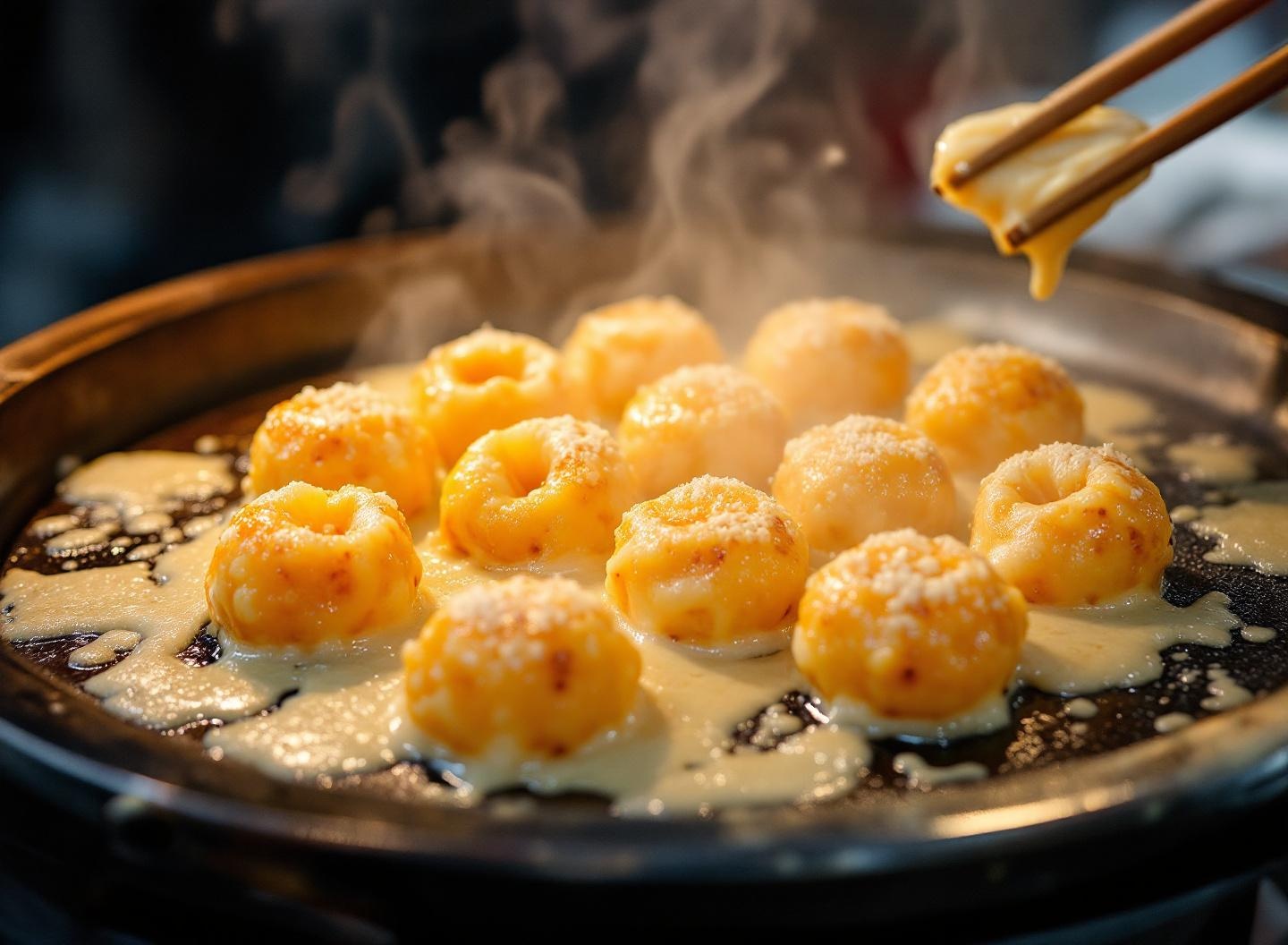
Osaka Street Food Guide
Takoyaki, okonomiyaki, kushikatsu — the essential guide.
Read more →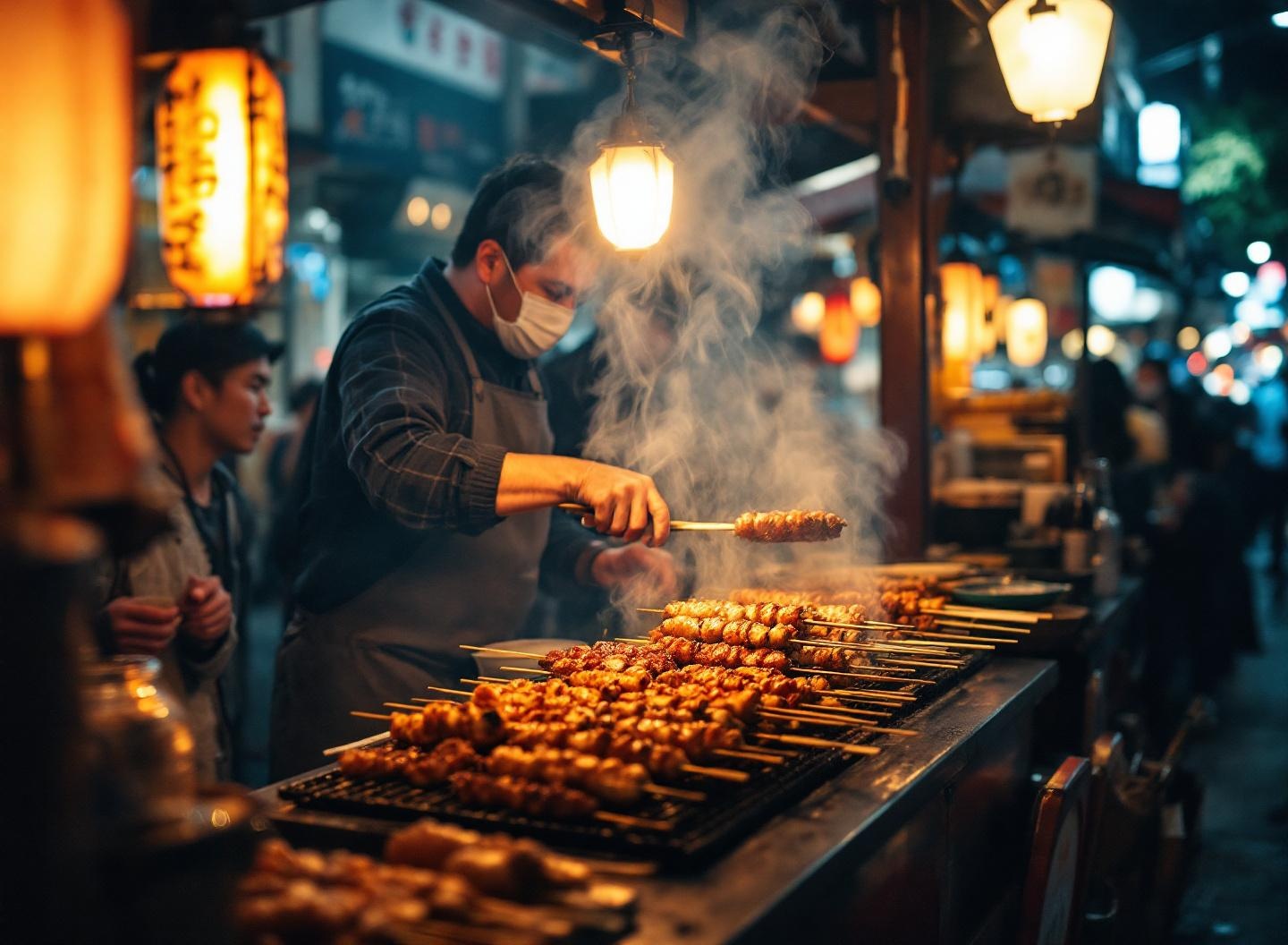
Best Food Tours in Osaka
Guided food tours through Dotonbori and Shinsekai.
Read more → Osaka Cooking Classes
Learn to make takoyaki, okonomiyaki, and sushi.
Read more →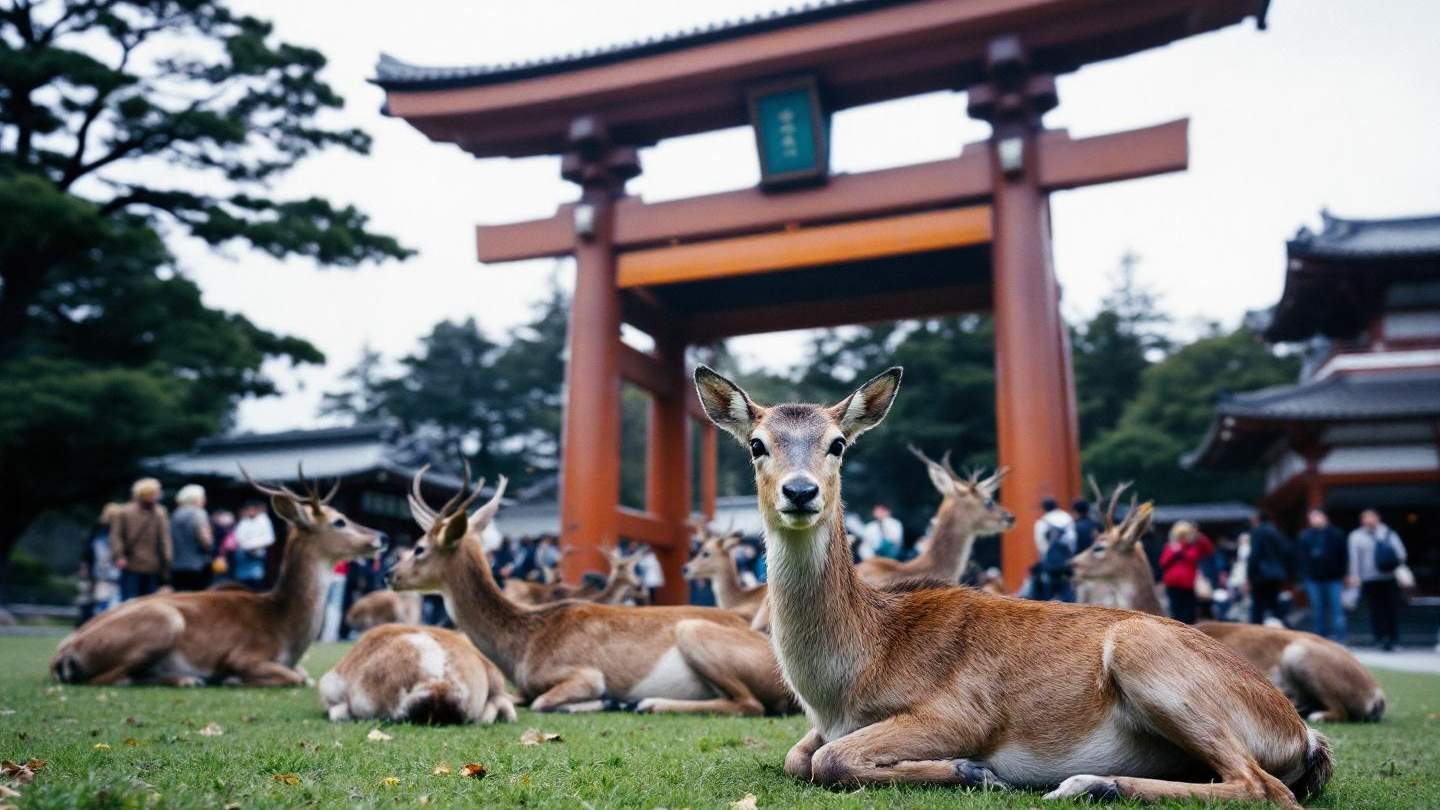
Day Trips from Osaka
Kyoto, Nara, Kobe, Himeji, and Mount Koya.
Read more →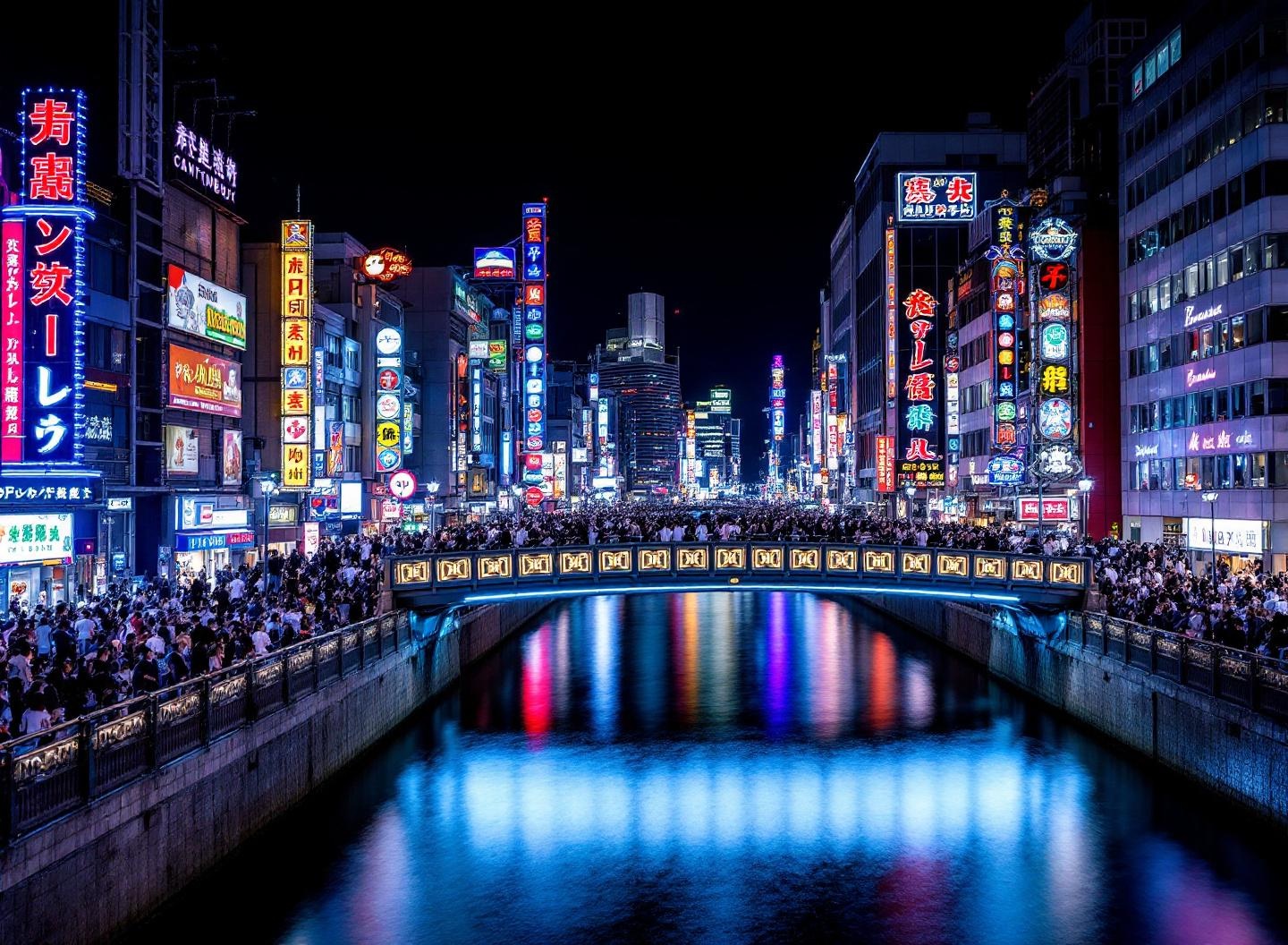
Osaka Nightlife
Dotonbori after dark, bars, clubs, and late-night food.
Read more →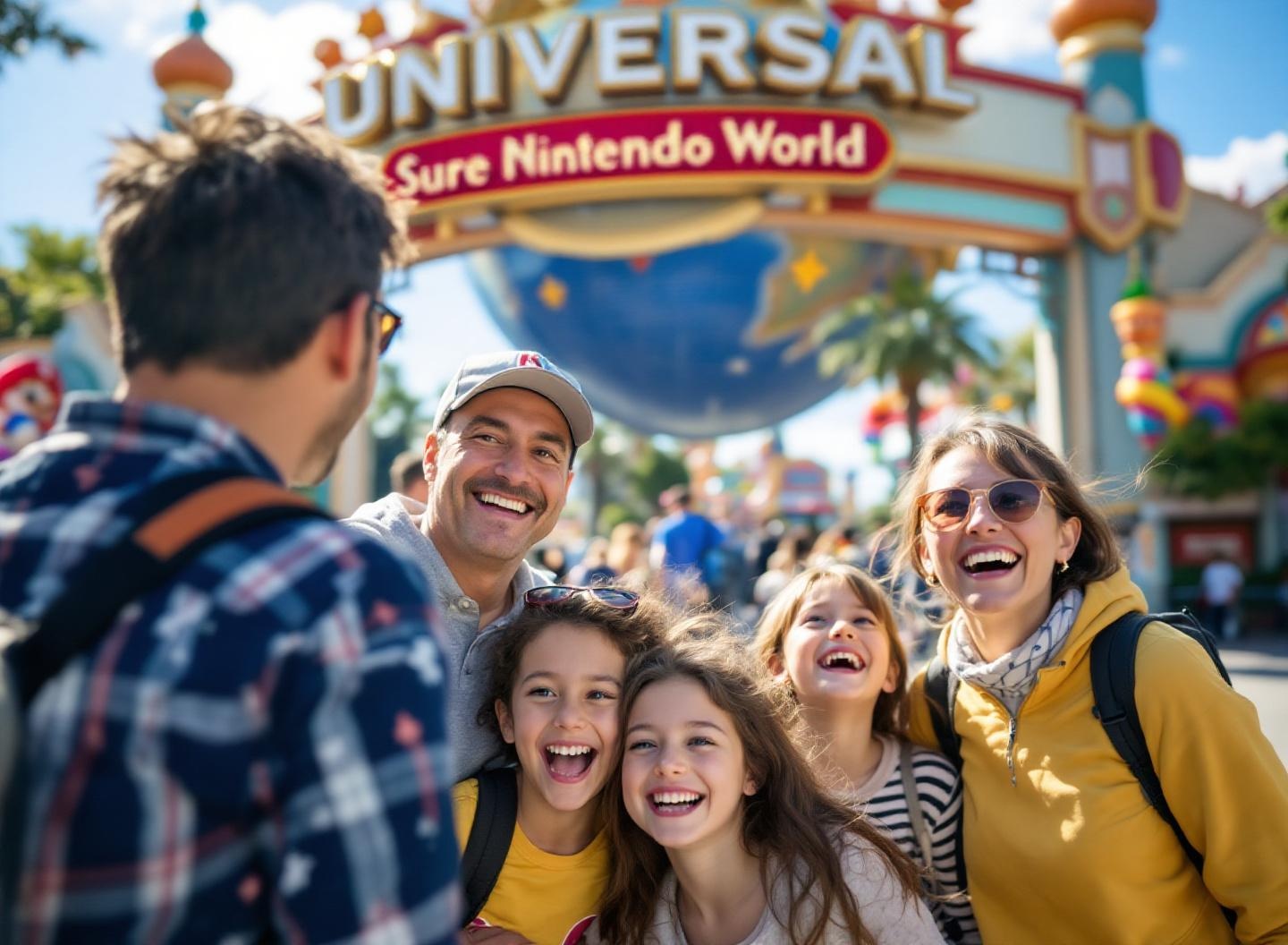
Osaka with Kids
Universal Studios, Aquarium, and family-friendly fun.
Read more →