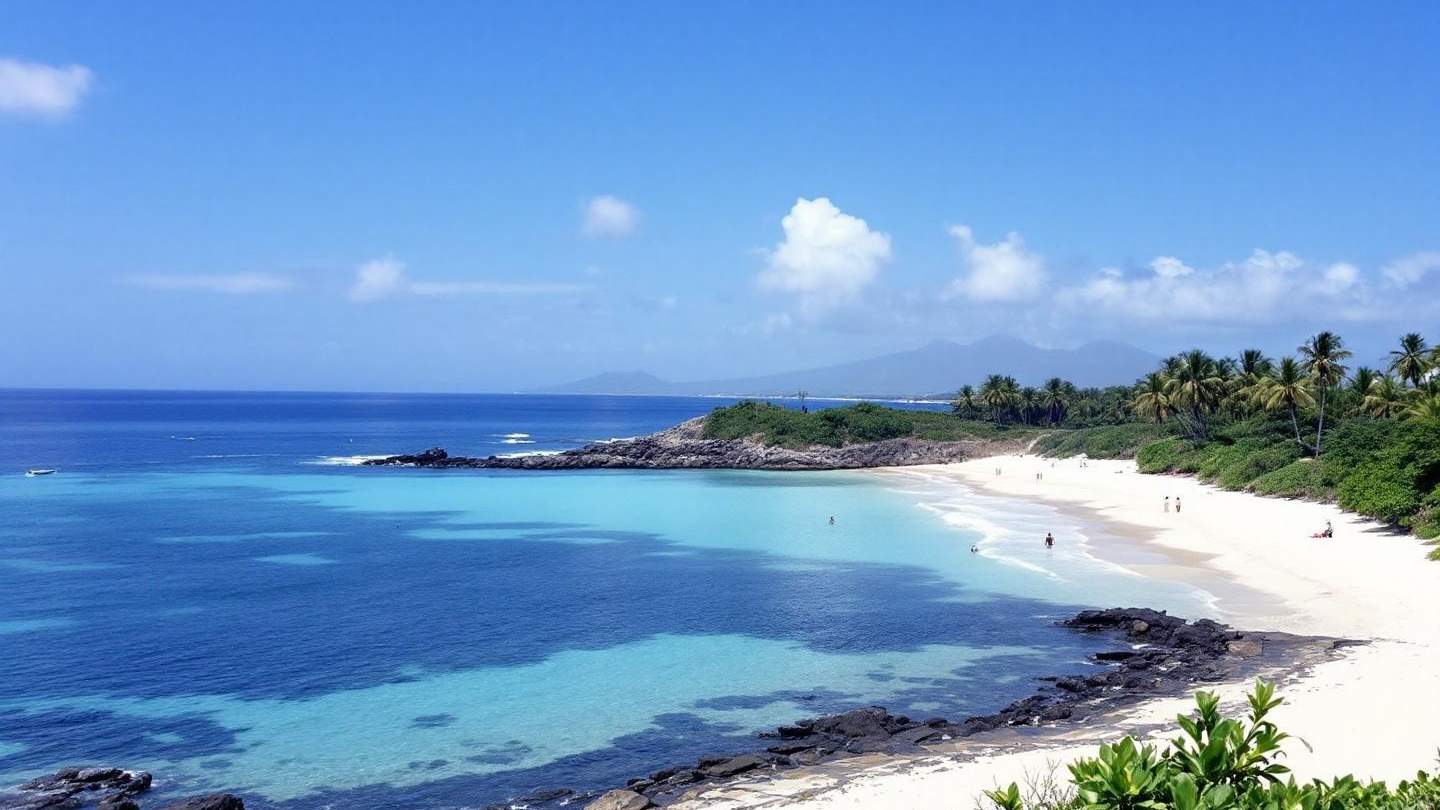
Okinawa
Tropical beaches, Ryukyu culture, incredible diving, American-influenced food, and a completely different side of Japan.
Quick Facts
- Best For
- Beaches, Diving, Culture
- Days Needed
- 3-5 days
- Best Season
- April-June (before typhoons)
- Airport
- Naha (OKA)
- Getting There
- Flight from Tokyo (2.5h)
- Budget (per day)
- 7,000-20,000 yen
Why Visit Okinawa
This Okinawa travel guide covers the best beaches in Okinawa, things to do in Okinawa across the main island and outer islands, when to visit Okinawa, and whether you need a car in Okinawa. It also covers the best islands in Okinawa — from the Keramas to Miyako-jima and the Yaeyamas — so you can plan the right trip for your style and timeline.
Okinawa is Japan at its most unexpected. The Ryukyu Islands chain stretches 1,000 kilometers southwest from the main Japanese archipelago, closer to Taiwan than to Tokyo, and the culture, food, architecture, and even the language that developed here over centuries are distinct from anything you will find elsewhere in Japan. This is a subtropical world of turquoise water, coral reefs, ancient limestone castles, fierce warrior history, and a tradition of music and dance that predates Japanese annexation.
The water here is the main event. Okinawa’s surrounding seas offer some of the most accessible world-class diving and snorkeling in Asia — warm, clear water with visibility often exceeding 30 meters, coral gardens of extraordinary biodiversity, and sea creatures ranging from manta rays and whale sharks to sea turtles and brilliantly colored reef fish. Even non-divers get access to these reefs through snorkeling, glass-bottom boat tours, and the remarkable Churaumi Aquarium.
Beyond the water, Okinawa carries layers of difficult, important history. The Battle of Okinawa in 1945 was one of the war’s most devastating engagements, fought on the island for three months with catastrophic civilian casualties. Peace memorials at the southern cape, the rebuilt Shuri Castle, and the Okinawa Prefectural Peace Memorial Museum give travelers essential context for understanding the island and its relationship with both Japan and the United States.
The American military presence — 70% of US military facilities in Japan are on Okinawa — has shaped the food, architecture, and music scene in ways that feel surprisingly vibrant rather than simply imposed. Taco rice, Okinawa steakhouses, and American Village are all products of this decades-long interaction.
Main Island Highlights
Shuri Castle
Shuri Castle (首里城) was the palace of the Ryukyu Kingdom from the 14th through 19th centuries and is now the most important historical site in Okinawa. The castle was destroyed in the Battle of Okinawa in 1945 and painstakingly reconstructed based on historical records, reopening as a UNESCO World Heritage Site in 1992. The central Seiden (main hall) burned in a devastating fire in October 2019 and has been under reconstruction since; partial reconstruction work should be substantially complete by 2026, with much of the outer areas and some inner buildings accessible.
Entry to the main castle grounds costs 400 yen (partial access during reconstruction; check current status on arrival). The site’s position on a hill in the Shuri district of Naha provides views across the city toward the East China Sea. The distinctive Okinawan castle architecture — lower and more massive than mainland Japanese castles, influenced by Chinese fortification design — is visible in the great stone walls even during reconstruction. Allow 1.5 hours.
Kokusai Street
Kokusai Street (国際通り) is Naha’s main tourist thoroughfare — a 1.6-kilometer strip of souvenir shops, restaurants, izakaya, clothing stores, and convenience stores running through central Naha from Makishi to the Palette Kumoji building. It is vibrant, commercial, and very useful. Every Okinawan specialty food and souvenir is available somewhere on or immediately off this street.
For more authentic shopping, turn south off Kokusai Street into the covered Heiwa-dori, Ichiba Hon-dori, and Makishi market arcades — a network of traditional covered markets selling fresh produce, fresh fish and meat, Okinawan crafts (awamori ceramics, bingata textiles, ryukyu glass), and prepared food stalls. Makishi Public Market is particularly good for its second-floor “bring your own fish” restaurants where you buy fresh fish at the stall and take it upstairs to be cooked for a small preparation fee.
American Village
American Village (アメリカンビレッジ) at Chatan, 30 minutes north of Naha, is a surreal and entertaining complex of American-themed shopping, entertainment, and restaurants that grew around the US military base perimeter. Ferris wheel, retro diners, surf shops, a movie theater, craft beer bars, and a sunset view across the East China Sea attract both tourists and American military personnel.
It is unabashedly theme-park-ish but worth a half-day visit for the food alone. The taco rice, Okinawan steakhouses, and American-style craft beer bars here have a genuine history rooted in 70 years of cross-cultural contact. Sunset at the waterfront is genuinely beautiful regardless of the surroundings.
Cape Manzamo
Cape Manzamo (万座毛) on the central west coast of the main island is a small promontory of sculpted limestone cliffs rising about 20 meters above the East China Sea, with a famous rock formation shaped like an elephant’s trunk. The view across the turquoise shallows and out to the open sea is one of the best coastal panoramas on the main island. The cape itself takes 20 minutes to walk; combined with the surrounding hotel resort area (Manzamo Beach is nearby), it works as a pleasant hour-long stop on a north-bound drive. Free entry.
Churaumi Aquarium
The Okinawa Churaumi Aquarium (美ら海水族館) in the Ocean Expo Park on the northwest coast of the main island is one of the world’s great public aquariums. The main Kuroshio Sea tank is enormous — 35 meters wide, 27 meters deep, with an acrylic panel 8.2 meters high — and holds whale sharks (three adults at time of writing) and manta rays alongside thousands of other species. Watching a whale shark move slowly through the blue half-light of that tank, alongside schools of tuna and rays, is one of the most spectacular things in Japanese tourism.
Admission is 2,180 yen for adults; open daily 8:30am-8pm (last entry 7:30pm; closed first Wednesday and Thursday in December). Allow a minimum of 2 hours, 3 if traveling with children. The aquarium is within Ocean Expo Park, which also contains a dolphin show area (included in ticket), a manatee and sea turtle pool, and pleasant grounds with Okinawan tropical gardens.
Getting there: 2 hours by highway bus from Naha (1,000 yen); considerably faster by rental car. The journey along the western coast on the expressway passes several good beaches.
Kerama Islands
The Kerama Islands (慶良間諸島) lie 30-40 kilometers west of Naha and are accessible by high-speed ferry from Tomari Port (round trip approximately 3,000-4,000 yen; journey 35-70 minutes depending on destination island). They are, quite simply, some of the best islands in Japan.
The water clarity around the Keramas is referred to as “Kerama Blue” — a transparency so extreme that coral formations at 15 meters depth are visible from the surface. The main diving and snorkeling islands are Zamami-jima and Tokashiki-jima. Both have small fishing village communities, basic accommodation, rental beach equipment, and dive operators offering one-day discovery dives (around 12,000 yen including equipment) and certification courses.
For snorkelers without diving experience: the beaches at Furuzamami on Zamami Island and Tokashiku on Tokashiki offer accessible snorkeling directly from the beach in water 1-3 meters deep, with coral and fish life beginning within 20 meters of shore. Snorkel rental is available on both islands for 500-1,000 yen.
Zamami Island’s whale-watching season (January-March) is outstanding — humpback whales use the Kerama waters as a breeding ground, and half-day whale-watching boats (from 3,000 yen) depart from Zamami port daily during the season. Sighting rates exceed 90% at peak season.
Staying overnight on either Zamami or Tokashiki — in a minshuku (family-run guesthouse) from around 8,000-12,000 yen per person including two meals — is strongly recommended if your schedule allows. The islands after the day-trippers leave are tranquil in a way that is rare in Japan.
Miyako-jima
Miyako-jima (宮古島) lies 300 kilometers southwest of Naha and is reached by a 45-minute flight from Naha Airport (from around 5,000-10,000 yen) or a 2.5-hour overnight ferry. It is consistently ranked among the top beach destinations in Japan — flat, agricultural, and surrounded by water of extraordinary clarity and color.
Yonaha Maehama Beach is Miyako’s most famous beach — a 7-kilometer stretch of white sand on the southwest coast that appears on virtually every list of Japan’s finest beaches. The sand is fine, white, and squeaky; the shallow water graduates from clear to turquoise to deep blue with startling rapidity. Beach entry is free.
Sunayama Beach on the north coast is smaller and more dramatic — accessed by climbing a small dune, revealing a cove of white sand framed by a natural arch in the coral rock. Best for photos at late afternoon.
Ikema Island and Irabu Island are connected to Miyako by bridges (Irabu Bridge is free; at 3.54km it is the longest free bridge in Japan) and offer quieter beaches, mangrove kayaking, and a different, slower pace than the main island.
Miyako has a strong triathlon culture and hosts the Miyako Island Triathlon (Strongman) in April, which brings a cheerful influx of athletes and spectators. A rental car or scooter is essential on Miyako.
Ishigaki and the Yaeyama Islands
The Yaeyama Islands (八重山諸島) cluster at the southwestern tip of the archipelago, closer to Taiwan than to mainland Japan. Ishigaki-jima (石垣島) is the hub, with an airport receiving flights from Naha (45 minutes, from 6,000 yen) and from Tokyo Haneda (3.5 hours, from 15,000 yen).
Ishigaki itself has excellent beaches — Kabira Bay (川平湾) on the northwest coast is frequently cited as Okinawa’s most beautiful bay, a protected inlet of islands and sandbars in water of impossible blue-green. Swimming is prohibited in Kabira Bay due to strong currents, but glass-bottom boat tours (1,000-1,500 yen, 30 minutes) take you over the coral and through the bay. Sea turtles are regularly seen.
From Ishigaki, ferries run to Iriomote-jima (西表島) and Taketomi-jima (竹富島), both UNESCO World Heritage-listed (as part of the 2021 Iriomote-Ishigaki National Park designation):
Iriomote-jima is 90% jungle — subtropical rainforest covering a mountainous island accessible by a single road along the coast. The Nakama River mangrove kayaking tour (half-day, around 4,000 yen) and the Urauchi River boat trip into primary jungle are the key experiences. Iriomote wildcats (Iriomote yamaneko) are critically endangered and endemic to this single island; sightings are rare but the possibility adds a frisson to evening drives.
Taketomi-jima is a perfectly preserved village island — traditional Ryukyu stone-walled houses with red tile roofs, bougainvillea spilling over garden walls, water buffalo carts carrying tourists slowly along sand roads. The beaches (Kondoi Beach) have the finest sand in the Yaeyamas. The island is small enough to cycle in 45 minutes.
Beaches Guide
Best Beaches on the Main Island of Okinawa
Emerald Beach (Motobu, near Churaumi Aquarium): Artificial but superbly maintained, enclosed bay with calm turquoise water, good facilities. Free entry. Best for families with young children.
Manza Beach (Onna Village): Popular resort beach on the central west coast with consistently calm water and excellent snorkeling directly off the beach. Best coral within 50 meters of shore.
Nishihama Beach, Hamajima (Hamajima Island): The finest accessible beach on the main island’s offshore islands, accessible from Itoman by ferry. Fine white sand, clear water, few crowds on weekday mornings.
Sesoko Island beaches: Sesoko-jima is connected to the main island by a short bridge; its west-facing beaches are excellent for sunset and have light crowds.
Araha Beach (Chatan, near American Village): Urban beach with good facilities, calm water, and a sunset-facing direction that makes it particularly pleasant in the late afternoon. Free entry.
Main Island Beach Practical Notes
Entry to most municipal beaches in Okinawa is free. Beaches charge for umbrella and lounger rental (typically 1,000-2,000 yen for a set). Lifeguards are present at major beaches during designated swimming season (April-October at most beaches). Outside season, swimming is permitted but without supervision. Box jellyfish (habu jellyfish) are present in Okinawan waters from May through October; many beaches install net enclosures during this period. Always check for nets and signs before entering the water at beaches you do not know.
Diving and Snorkeling
Okinawa’s waters are part of the Coral Triangle of biodiversity and host over 400 coral species and 1,000 fish species within the prefecture. Water temperatures range from 22°C in February to 30°C in August; a 3mm wetsuit is comfortable most of the year, a 5mm preferred in winter.
Best dive sites on the main island: Blue Cave (Maejima Island near Motobu) is Okinawa’s most famous dive site — a sea cave with brilliant blue refracted light filtering in from below the water’s surface; accessible to beginners. Visibility averages 20-25 meters.
Kerama Islands (see above) are considered the premier diving destination accessible from Naha, with the best coral health and water clarity.
Miyako-jima has excellent visibility (average 30+ meters), wall diving and drift diving at sites like Toriike (Twin Ponds) — two inter-connected ocean-fed ponds at a salt level between sea and fresh water.
Yonaguni-jima (Yonaguni Island, the westernmost point of Japan) has a famous site: the Yonaguni Monument — a large, geometrically regular underwater rock structure at 25 meters depth that has generated debate over whether it is natural or man-made since its discovery in 1986. Hammerhead sharks aggregate here in winter (December-March), forming large schools visible from the dive boat surface.
Dive operators throughout Okinawa offer discover scuba diving experiences (体験ダイビング, taiken diving) for non-certified divers for around 8,000-15,000 yen per person including all equipment and one dive with a guide. Certification (PADI Open Water) takes 3-4 days and costs around 40,000-60,000 yen.
Ryukyu Culture
Castles
The Ryukyu Kingdom operated from the 14th to 19th centuries as an independent trading state between Japan and China, and its castles (gusuku) are among the most distinctive in East Asia. Nine gusuku on Okinawa are UNESCO-listed: the most significant beyond Shuri Castle are Nakagusuku Castle Ruins (中城城跡) — vast, well-preserved stone walls on a ridge with sea views on both sides — and Katsuren Castle Ruins (勝連城跡), also on a hilltop with extraordinary panoramic views. Entry to most castle ruins costs 400-600 yen.
Music and Performing Arts
Okinawan traditional music centers on the sanshin (三線) — a three-stringed lute derived from the Chinese sanxian, covered in python skin, producing a plaintive, resonant sound unlike anything in mainland Japanese music. Traditional songs in the Ryukyu scale (a pentatonic scale different from both Western and Japanese scales) are performed at cultural centers throughout Okinawa.
Eisa (エイサー) is the traditional bon dance of Okinawa, performed by young men beating large taiko drums while dancing in procession — one of the most physically energetic traditional performing arts in Japan. Full eisa performances occur during Obon (July-August) and at cultural shows. The all-island eisa parade in Okinawa City in late August is the largest public gathering in the prefecture.
Okinawan Food — Complete Guide
Okinawa Soba
Okinawa soba (沖縄そば) is the island’s most ubiquitous dish and bears little resemblance to mainland Japanese soba despite sharing the name. The noodles are thick, round wheat noodles (more similar to udon) served in a clear pork-based broth seasoned with soy sauce and awamori liquor. The standard toppings are soki (braised pork spare rib), kamaboko (fish cake), and finely sliced ginger. A bowl costs 600-900 yen at local soba shops throughout the island.
Soki soba features the soki rib specifically — slow-braised to complete tenderness, falling from the bone. This is the variant most visitors prefer. The pork flavor permeates the broth.
Goya Champuru
Champuru (チャンプルー) is an Okinawan stir-fry method — the word comes from the Malay campur, meaning “mixed.” Goya champuru is the most famous iteration: bitter melon (goya) stir-fried with tofu, egg, pork belly, and spam or canned pork. The bitterness of the goya is offset by the richness of the other ingredients. Goya champuru is found at virtually every restaurant serving Okinawan food, typically 800-1,200 yen as a set with rice and miso soup. Other champuru variations include tofu champuru and somen champuru (with thin wheat noodles).
Taco Rice
Taco rice (タコライス) is ground beef seasoned with taco spices (cumin, chili, garlic) served over hot white rice rather than in a taco shell, topped with shredded lettuce, tomato, cheese, and salsa. It was invented in 1984 near a US military base in Kin Town and became a staple of Okinawan casual food culture. Available at dedicated taco rice restaurants throughout the island (and increasingly across Japan), a taco rice plate costs 700-1,000 yen. It is fast, filling, and a fascinating artifact of cross-cultural food history.
Awamori
Awamori (泡盛) is Okinawa’s traditional distilled spirit, made from Thai-style long-grain indica rice and black koji mold, distilled in a single pass rather than twice like many spirits. The result is a clear, aromatic spirit (25-43% ABV) with a fuller body and different flavor profile from mainland shochu. Aged awamori (kuusu, typically aged 3 years or more in clay pots) develops remarkable complexity — floral, slightly earthy, with a long warm finish.
Awamori is served on the rocks (mizuwari) or neat, at izakaya throughout Okinawa. Local brands to try include Zuisen, Helios, and Ryukyu. A glass of awamori at an izakaya costs 400-700 yen; a bottle of quality aged kuusu from a distillery or liquor store runs 1,500-5,000 yen and makes an excellent souvenir.
Purple Sweet Potato (Beni-imo)
Okinawan purple sweet potato (紅芋, beni-imo) is a deeply colored, sweet, slightly dense variety of sweet potato grown in Okinawa. It is used as a flavoring and coloring in an enormous range of local confections — tarts, ice cream, chips, pound cake, soft-serve. The bright purple color is unmistakable. Beni-imo tarts (紅芋タルト) from T’s are one of Okinawa’s most popular omiyage (souvenir) items — a pack of six tarts costs around 900-1,200 yen.
Okinawan Steakhouse Culture
American-influenced steakhouses are a distinct feature of Okinawan food culture, operating since the 1950s in a style unique to the island. Steak houses like Jumbo Steak Han’s (ジャンボステーキHAN’S) and Steak House 88 serve large cuts of tenderloin or sirloin at prices much lower than mainland Japan — a 200g sirloin steak set with rice, soup, and salad for around 2,000-3,000 yen. The cuts are not wagyu but the atmosphere and the price make these restaurants a genuinely enjoyable Okinawa experience.
Getting to Okinawa
From Tokyo: Flights from Haneda and Narita to Naha (OKA) take approximately 2.5 hours. JAL and ANA operate frequent service; budget carriers Peach, Jetstar, and Skymark offer lower prices with advance booking (from around 5,000–8,000 yen one way; regular prices 12,000–20,000 yen). Book well ahead for spring and summer; prices spike significantly from late June through August and during Golden Week.
From Osaka: About 1 hour 45 minutes by air; fares similar to Tokyo with budget carriers operating the route.
From Fukuoka: About 1 hour 30 minutes; convenient gateway for Kyushu-based travelers.
There is no Shinkansen to Okinawa; flying is the only practical option.
Getting Around — Rent a Car
Outside central Naha, a rental car is almost essential for visiting Okinawa’s beaches, cape viewpoints, and northern attractions efficiently. The public bus network covers the main island’s central spine but runs infrequently to beach areas and does not serve the outer islands at all.
Rental cars are available at Naha Airport from around 4,000–7,000 yen per day for a compact vehicle. Book ahead, especially in summer. An International Driving Permit is required.
Within Naha, the Yui Rail monorail (ゆいレール) connects the airport with Shuri Station and stops at Kokusai Street (Kencho-mae Station) — fast, clean, and useful. A one-day pass costs 800 yen. Single fares range from 230-370 yen.
Taxis in Naha are plentiful. Ride apps (Uber, DiDi) operate on the main island.
Island Hopping Guide
The Okinawan islands are natural companions. Here is a practical framework for combining them:
Naha as base (3 nights): Shuri Castle, Kokusai Street, Makishi Market, Naha day trip to Kerama (1 day). Suits first-time visitors and those combining with mainland Japan.
Add Miyako-jima (2-3 nights): Fly from Naha (45 minutes). Yonaha Maehama Beach, Ikema and Irabu island drives, snorkeling. Rent a car.
Add Ishigaki/Yaeyamas (3-4 nights): Fly from Naha or Miyako. Kabira Bay, day ferry to Taketomi (half-day), day ferry to Iriomote (full day, river tour). Requires planning around ferry schedules.
A combined 10-day itinerary of Naha (3 nights) + Miyako (3 nights) + Ishigaki/Yaeyamas (4 nights) is the gold standard for experiencing Okinawa’s full range.
Best Time to Visit Okinawa
| Season | Months | Water Temp | Weather | Notes |
|---|---|---|---|---|
| Spring (best) | Apr–Jun | 22–26°C | Warm, mostly sunny | Rainy season ends late June; May is ideal |
| Autumn (second best) | Sep–Nov | 26–28°C | Warm, typhoon risk dropping | Crowds thin; October excellent |
| Summer | Jul–Aug | 28–30°C | Hot, humid, typhoon risk | School holiday crowds; book ahead |
| Winter | Jan–Mar | 20–22°C | Cool (16–22°C) | Whale watching; few beach swimmers |
April to June is the best time to visit Okinawa for most travelers. The rainy season (tsuyu) typically ends in late June in Okinawa (earlier than the mainland); May is reliably sunny, warm (24-28°C), and sees fewer tourists than summer. Water is already warm enough for comfortable swimming by late April. This is the ideal window.
September to November is the second-best period. Typhoon risk drops significantly after late September, temperatures cool slightly (26-30°C), and crowds diminish from the summer peak.
Typhoon season runs from June through October, with peak risk in August-September. Typhoons are a serious consideration in Okinawa — the islands are in the direct path of storms forming in the Pacific. A direct-hit typhoon closes beaches, suspends ferries, and grounds flights for 24-48 hours. Check the Japan Meteorological Agency typhoon forecast during any visit in this window, and have a flexible plan or travel insurance that covers weather disruption.
January-March is the cool season (16-22°C) — too cold for most beach activities but excellent for whale watching (January-March in the Kerama Islands) and for diving and cultural sightseeing without crowds. Some hotels offer significantly reduced rates.
Practical Tips
For first-time visitors, our Japanese food guide covers the dishes you’ll find across Okinawa — from goya champuru to awamori. For etiquette at Shuri Castle and cultural sites, see our Japan etiquette guide.
Sun protection: The Okinawan sun is strong and the subtropical latitude means UV intensity even in spring and autumn that exceeds mainland Japan. High-SPF sunscreen, UV-protective rash guards (available at surf shops for 2,000-4,000 yen), and a hat are essential for beach and outdoor days.
Drinking water: Tap water is safe throughout Okinawa but has a distinctive taste that many people dislike. Bottled water from vending machines and convenience stores (120-150 yen) is the practical default.
Language: English signage and menus are more common in Okinawa than most of Japan, particularly in tourist areas and near US bases. Basic Japanese phrases are still very useful outside Naha.
Jellyfish nets: From May through October, many beaches install jellyfish nets to protect against habu jellyfish (which can cause serious pain). Swim inside the nets. If you snorkel or dive outside nets in summer, wear full exposure protection.
Budget: Okinawa tends to be slightly cheaper than Tokyo for accommodation and food at the local level — street food meals, soba, and champuru are very affordable. Beach resort hotels and diving packages add cost. Budget 7,000-12,000 yen per person per day for mid-range travel including accommodation; 15,000-20,000 yen for resort-level experiences.
Okinawa is not Japan in the way that Kyoto is Japan. It is something older, stranger, more tropical, and ultimately more surprising — and that is precisely why it is worth the journey.
For planning context, see our guide to planning a trip to Japan, Japan travel budget guide, and best time to visit Japan. Our Japan eSIM vs pocket wifi guide is especially useful for island hopping where connectivity can be patchy. For a broader perspective on costs, see is Japan expensive?
Frequently Asked Questions About Okinawa
What is the best time to visit Okinawa?
The best time to visit Okinawa for most travelers is April to early June. May is the sweet spot: warm temperatures (24–28°C), clear blue water already warm enough for swimming and snorkeling, fewer crowds than the summer peak, and the rainy season (tsuyu) typically finishing by late June. September to November is the second-best window — typhoon risk drops sharply after late September and the weather is still warm. Avoid July–August if you want to skip peak crowds, high prices, and typhoon risk, unless the Obon festivities or school holiday flexibility are factors.
Do I need a car in Okinawa?
Yes, a rental car is strongly recommended for most Okinawa itineraries outside central Naha. The main island’s beaches, Churaumi Aquarium, Cape Manzamo, American Village, and the northern sights are spread out and served by infrequent buses. Without a car you will spend significant time waiting for connections or limiting yourself to Naha’s walkable area. Rental cars are available from Naha Airport from about 4,000–7,000 yen per day. An International Driving Permit is required. Within Naha itself, the Yui Rail monorail (day pass: 800 yen) handles all the central sights efficiently.
What is the best island in Okinawa?
The best island in Okinawa depends on your priorities. For the most beautiful beaches in Japan, Miyako-jima — with Yonaha Maehama’s 7-kilometer white sand stretch — is consistently ranked at the top. For diving and the clearest water, the Kerama Islands (30–40 minutes from Naha by ferry) offer “Kerama Blue” visibility that rivals anywhere in Asia. For a mix of culture, history, and accessibility, the main island of Okinawa (Naha as base) is the easiest starting point. For a perfectly preserved Ryukyu village experience, Taketomi-jima in the Yaeyamas is unlike anywhere else in Japan. Most visitors with 7+ days combine two or three islands.
Is Okinawa worth visiting?
Absolutely — Okinawa is one of the most distinctive travel experiences in Japan. The combination of world-class beaches in Okinawa, extraordinary diving and snorkeling, unique Ryukyu culture and history, and a food scene unlike anything elsewhere in Japan makes it a standout destination. It is also a completely different atmosphere from the rest of Japan — subtropical, relaxed, and shaped by a fascinating intersection of Ryukyu, Japanese, and American cultural influences. First-time Japan visitors often skip it; those who go almost always wish they had gone sooner. See our guide to Japan mistakes to avoid.
How do you get to Okinawa from Tokyo?
Flying is the only practical way to get to Okinawa from Tokyo — there is no Shinkansen or ferry connection. Flights from Haneda or Narita to Naha (OKA) take approximately 2.5 hours. JAL and ANA fly frequently; budget carriers Peach, Jetstar, and Skymark offer fares from as low as 5,000 yen one way with early booking (regular prices 12,000–20,000 yen). Book well ahead for April–June and the summer school holiday period, when prices spike. If you’re combining Okinawa with the main island itinerary, consider a domestic flight as part of a broader 14-day Japan itinerary.