Best Things to Do in Nara
Last updated: March 2026
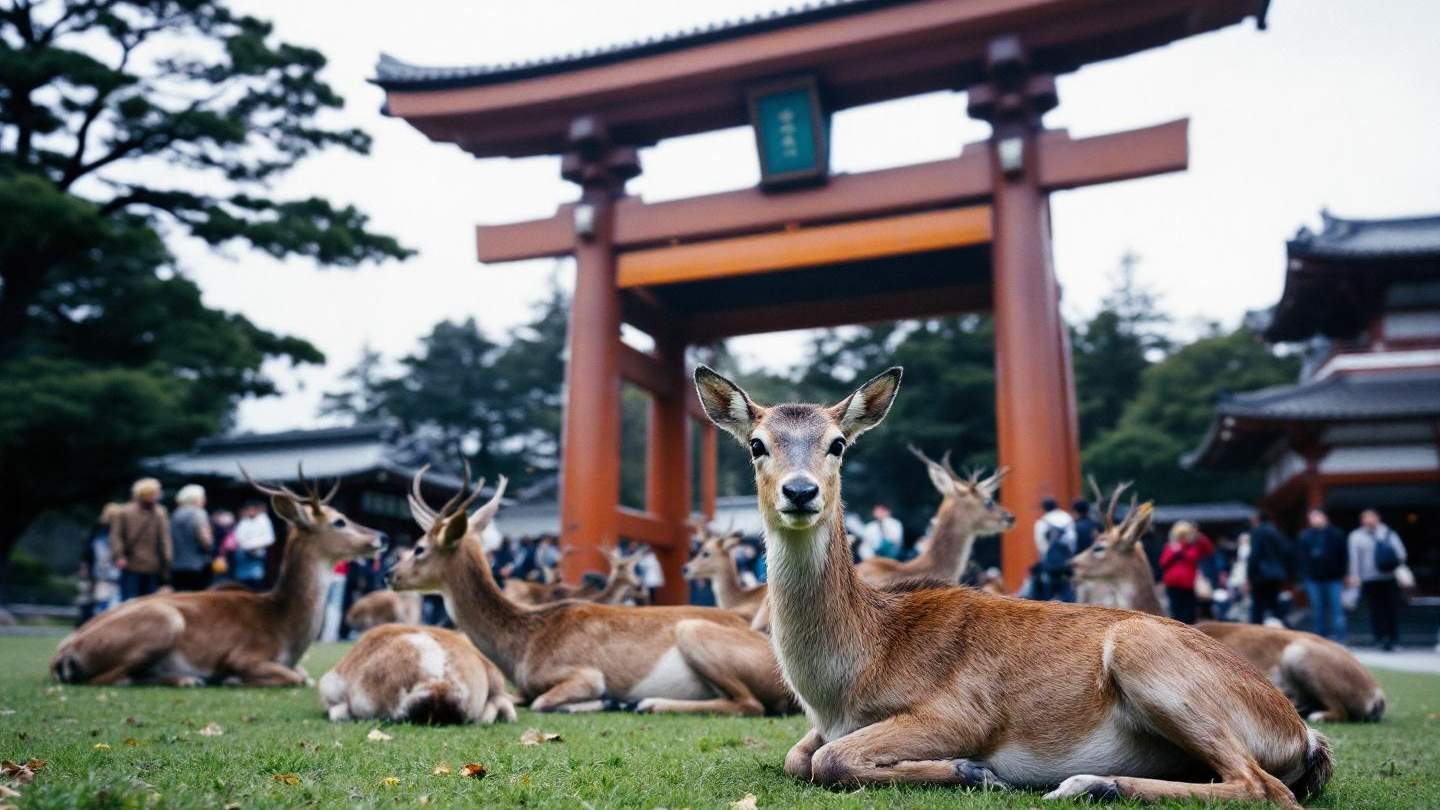
Nara was Japan’s first permanent capital, established in 710 AD, and its eight years at the center of Japanese civilization left a legacy that makes it one of the country’s most important historical destinations. The city has more UNESCO World Heritage Sites than most countries have significant monuments. But Nara’s most immediate attraction is also its most unexpected: approximately 1,200 wild deer roam freely through the city’s central park, riding trains of polite tourists, bowing at strangers for crackers, and wandering into shrines with the confident air of beings who have lived here far longer than any of the buildings.
The combination of genuinely unmissable ancient temples, freely roaming sacred deer, and manageable scale (the main sites cluster within easy walking distance) makes Nara one of Japan’s most rewarding destinations — whether as a day trip from Kyoto or Osaka or as an overnight stay that lets you explore at a slower pace.
Quick Reference
| Activity | Time Needed | Cost | Best For |
|---|---|---|---|
| Todai-ji Great Buddha Hall | 45–90 minutes | 600 yen | All visitors |
| Feeding the deer in Nara Park | 30–60 minutes | 200 yen (shika sembei) | All visitors, families |
| Kasuga Taisha Shrine | 45–60 minutes | 500 yen (inner shrine) | Culture, photography |
| Nigatsu-do and Hokke-do | 30–45 minutes | Free (exterior) / 600 yen | History lovers |
| Kofuku-ji Temple and Pagoda | 30–60 minutes | Free (grounds) / 700 yen museum | Architecture enthusiasts |
| Yoshiki-en and Isuien Gardens | 1–1.5 hours | 500–1,000 yen | Garden lovers |
| Naramachi Historic District | 1–2 hours | Free (walking) | Shopping, atmosphere |
| Nara National Museum | 1–2 hours | 700 yen | Art and Buddhist artifacts |
| Kasugayama Primeval Forest | 1–2 hours | Free | Nature, UNESCO forest |
| Mount Wakakusa Hike | 1.5 hours | 150 yen | Views, exercise |
Nara Park and the Deer
Nara Park is not really a bounded park in the conventional sense — it is a 502-hectare landscape containing the major temples and shrines of central Nara, through which approximately 1,200 sika deer wander freely. These are the original deer of Nara, considered sacred messengers of the gods in Shinto belief since the founding of Kasuga Taisha Shrine. They have never been domesticated, are genuinely wild animals, and are protected under Japanese law.
The deer have learned that tourists carry food and approach visitors directly, bowing in anticipation of shika sembei (deer crackers, 200 yen per packet from vendors throughout the park). The bowing behavior is real — the deer have observed that humans bow before receiving food and have incorporated it into their request behavior. It is one of the stranger and more charming wildlife interactions available anywhere in Japan.
A few practical notes: deer can headbutt if you tease them with crackers without giving them up quickly, they will eat paper and plastic bags if given the chance, and they occasionally wander into shops and restaurants with limited regard for the inconvenience this causes. They are entirely safe to approach but are wild animals and should be treated with basic respect.
Early morning in the park — before the tour groups arrive — is when the deer gather in large numbers on the main approaches and the experience is at its most atmospheric.
Todai-ji Great Buddha Hall
Todai-ji Temple (admission 600 yen) houses one of the most arresting sights in Japan: the Great Buddha (Daibutsu), a bronze statue of Vairocana Buddha 15 meters high and weighing approximately 500 tonnes, sitting inside the world’s largest wooden building. Both the scale of the hall and the scale of the Buddha inside it are genuinely shocking on first encounter — photographs do not adequately prepare you.
The hall (Daibutsuden) was originally built in 745 AD. The current structure dates to 1692 and is actually only two-thirds the size of the original, which means the building you see — already enormous — represents a scaled-down version of what stood here over a thousand years ago. The Buddha’s right hand is raised in a gesture of benediction; the left hand rests open in a gesture of giving.
Inside the hall, a wooden pillar with a hole through its base is said to be the same size as the Great Buddha’s nostril. Visitors who can squeeze through are believed to receive enlightenment. The hole is approximately 37 centimeters wide by 37 centimeters tall — possible for a slim adult, easy for children, and the source of considerable entertainment for everyone watching.
The approach to Todai-ji through the massive Nandaimon Gate (guarded by two 8-meter wooden guardian statues) is itself impressive. Budget 45 to 90 minutes for the full visit including the exterior.
Kasuga Taisha Shrine
Kasuga Taisha (admission to inner shrine 500 yen; grounds free) is one of Japan’s most ancient and most important Shinto shrines, founded in 768 AD and rebuilt on the same site every 20 years for over 1,200 years in a ritual called shikinen zotai (the current structure dates to 2016). The shrine is the ancestral shrine of the Fujiwara clan, the aristocratic family that dominated Japan’s imperial court for centuries.
The approach along the long stone pathway through the forest — flanked by over 3,000 stone lanterns donated over the centuries — is atmospheric even on a crowded day. Inside the inner sanctuary, approximately 1,000 bronze lanterns hang from the corridors and covered walkways. During the Mandoro Festival in February and August, all 3,000-plus lanterns are lit simultaneously, creating an experience entirely unlike anything in normal visiting hours.
The Kasuga Taisha Museum (admission 500 yen, separate from shrine admission) houses a collection of the shrine’s treasures including armor, swords, and lacquerware.
Kofuku-ji Temple
Kofuku-ji is the temple whose elegant Five-Story Pagoda appears in most photographs of central Nara — standing 50 meters tall beside a pond, framed by deer. The pagoda (currently under restoration but visible) has stood here since 730 AD in various forms and is one of Japan’s most important architectural monuments.
The temple’s grounds are free to enter. The Eastern Golden Hall and National Treasure Hall (combined admission 700 yen) contain one of Japan’s finest collections of Buddhist sculpture, including the famous Ashura statue — a three-faced, six-armed figure of extraordinary craftsmanship dating to 734 AD that draws visitors specifically. Photography is not permitted inside the treasury building.
Kofuku-ji sits at the main entrance to Nara Park from central Nara, making it a natural starting point before heading deeper into the park toward Todai-ji and Kasuga Taisha.
Nigatsu-do and Hokke-do
Above and behind Todai-ji, a short uphill walk through the forest leads to two buildings that most visitors to the Great Buddha Hall miss entirely. Nigatsu-do (admission free to the exterior, 600 yen for the full complex with Hokke-do) is an 8th-century hall built on the edge of the hillside, with a broad veranda offering a sweeping view over Nara’s rooftops and forested mountains. It is one of the most beautiful views in the city and requires only a 10-minute additional walk from Todai-ji.
Hokke-do (also called Sangatsudo) is the oldest surviving building in the Todai-ji complex, dating to 746 AD, and houses a collection of Nara-period Buddhist statues of exceptional quality including a large dry-lacquer Fukukensaku Kannon with an elaborate headdress.
The walk between Todai-ji, Nigatsu-do, and Kasuga Taisha through the forested hillside paths is one of Nara’s best stretches — quiet, shaded, and punctuated by deer standing in the undergrowth.
Isuien and Yoshiki-en Gardens
Isuien Garden (admission 1,000 yen) is one of Japan’s finest strolling gardens — a two-section Meiji-era garden that incorporates the rooflines of Todai-ji and the forested mountains behind it as borrowed scenery. The effect of sitting in the garden teahouse and seeing the Great Buddha Hall’s roof floating above the treeline is one of Nara’s quietest pleasures.
Yoshiki-en Garden (admission 500 yen; free for foreign visitors during certain periods — check before visiting) is the adjacent garden, featuring a lotus pond, moss garden, and tea ceremony arbor. Both gardens can be visited together in under 90 minutes.
These gardens are significantly less visited than the main temples despite being within easy walking distance. They offer a genuine pause in pace from the deer and crowds.
Naramachi Historic District
Naramachi is Nara’s surviving merchant neighborhood, south of Kofuku-ji, with narrow streets lined with machiya townhouses converted into craft shops, cafes, galleries, and small restaurants. Walking the main lanes is free and takes about an hour at a relaxed pace.
Naramachi Koshi-no-ie is a restored machiya open to the public free of charge, giving a sense of how merchant families lived in the Edo period. The surrounding streets have excellent craft shops selling Nara specialty products including Nara ink sticks (sumi), calligraphy brushes, and sake from the several breweries that have operated in the area for centuries.
Naramachi is the best area for a relaxed lunch — multiple small restaurants serve miwa somen (thin wheat noodles native to the Nara area), kaiseki, and vegetarian Buddhist cuisine (shojin ryori).
Best Time to Visit Nara
| Season | Conditions | Highlights | Crowds |
|---|---|---|---|
| Spring (Mar–May) | 10–22°C, pleasant | Cherry blossoms in Nara Park, deer fawns born May–June | High in late March–April |
| Summer (Jun–Aug) | 25–35°C, humid | Mandoro lantern festival (mid-August), fireflies in June | Moderate; August festival draws crowds |
| Autumn (Sep–Nov) | 14–24°C, ideal | Autumn foliage, antler cutting ceremony (October) | High in November |
| Winter (Dec–Feb) | 2–10°C, occasional frost | Quiet temples, uncrowded deer park, January Wakakusa Yamayaki | Low; excellent for relaxed visits |
Shikahara (deer antler cutting ceremony) in October is one of Nara’s most memorable traditional events — a centuries-old ritual in which wild deer are temporarily corralled and their antlers trimmed by Shinto priests. The event is dramatic and entirely unlike anything in typical tourist itineraries.
Wakakusa Yamayaki in January involves setting fire to the entire grass-covered slope of Mount Wakakusa — a dramatic spectacle visible from much of central Nara.
How to Get to Nara
| Route | Travel Time | Cost | Notes |
|---|---|---|---|
| Kintetsu Limited Express from Osaka (Namba) | 35 minutes | ~700 yen + 520 yen express surcharge | Fastest from Osaka |
| JR Yamatoji Line from Osaka (Loop Line) | 50–60 minutes | 820 yen | Covered by JR Pass |
| Kintetsu from Kyoto | 35–45 minutes | ~760 yen + surcharge | Direct and convenient |
| JR Nara Line from Kyoto | 45–70 minutes (varies by service) | 720 yen | Covered by JR Pass |
| JR Shinkansen + local from Tokyo | 3.5–4 hours total | ~15,000 yen | Change at Kyoto or Osaka |
For visitors based in Kyoto, the logistics and day-trip options are covered in detail in the Day Trips from Kyoto guide. From Osaka, full logistics are in the Day Trips from Osaka guide.
The Nara city center (Kintetsu Nara Station and JR Nara Station) is about 15 minutes walk from the main park entrance. City buses and the Nara Park Loop Bus (200 yen per ride, day pass 500 yen) connect the stations to outlying areas.
Staying Overnight vs Day Trip
Nara’s main sites can be covered in a 5–6 hour day trip from Kyoto or Osaka without feeling rushed, if you focus on the core: Todai-ji, the deer park, Kasuga Taisha, and Kofuku-ji. This is how most visitors experience the city.
Staying overnight unlocks a different Nara: the park at dawn with mist among the deer and the temples to yourself, the lantern-lit streets of Naramachi in the evening, and the opportunity to reach the quieter sites like the primeval forest and Kasugayama at a pace that day trips cannot accommodate. The city has good ryokan options including several that have operated near the park for centuries.
For visitors on a broader Japan circuit, the Day Trips from Kyoto page has Nara covered alongside the other key Kansai excursions.
Practical Tips
Deer crackers are sold throughout the park. Putting them in a pocket or bag is unwise — the deer will attempt to retrieve them. Hold them openly and distribute quickly to avoid a gentle headbutting.
Kasuga Taisha and Todai-ji are the two busiest sites. Both are substantially more enjoyable before 9am or after 4pm when tour groups thin. The deer are most active in early morning and late afternoon.
Nara Park is free to walk at any hour. The temples and shrines have their own admission and opening times (most open by 8am and close between 4:30pm and 6pm depending on season).
Photography of the deer is unrestricted and the light in the park — filtered through old-growth forest and open grass — is excellent in early morning. The long approach to Kasuga Taisha through lantern-lined forest is particularly atmospheric.
For a well-paced overnight itinerary that includes Nara alongside Kyoto and Osaka, the structure in the Day Trips from Osaka guide covers timing and logistics in detail.
Nara Food and Local Specialties
Nara’s food identity is quieter than Osaka’s or Kyoto’s but worthwhile engaging with. Miwa somen — extremely fine wheat noodles from the Miwa area southeast of Nara, eaten cold with dipping broth in summer or hot in a simple broth in winter — is the most distinctive local specialty. Several restaurants in Naramachi serve it as their main product.
Kakinoha-zushi is a pressed sushi wrapped in persimmon leaves — the tannic leaf acts as a mild preservative and imparts a subtle flavor. It was originally developed as a way to transport fresh fish inland from the coast before refrigeration, and today persists as a regional favorite. It is widely sold in boxed sets for 1,200–2,500 yen at markets and specialty shops.
Yoshino kuzu (arrowroot from the Yoshino mountains south of Nara) is used to make various sweets and noodles unique to the region. Kuzu-mochi and kuzu-kiri (arrowroot noodles eaten cold with black sugar syrup) appear in several Naramachi shops.
Nara sake has a long history — Buddhist monks in the Nara temples were producing sake using refined techniques as early as the 12th century (a style called soboshu). The brewing traditions that eventually spread across Japan are considered to have originated in Nara’s temple breweries. Several sake shops in the central city sell local bottles from the few remaining regional producers.
Kasugayama Primeval Forest
Kasugayama Primeval Forest surrounds the Kasuga Taisha Shrine and extends across the hills of eastern Nara. The forest has been protected as sacred land since the 8th century — over 1,200 years without cutting, grazing, or disturbance — resulting in a true old-growth forest of extraordinary ecological richness. It is a UNESCO World Heritage component and one of the few places in Japan where you can walk through forest of genuinely ancient character.
The main forest trail accessible from Kasuga Taisha takes about 60–90 minutes to walk in a loop through the trees. Entry is free. The atmosphere differs markedly from the managed garden areas around the shrine — wilder, quieter, with large trees, mossy stones, and a sense of genuine age.
Mount Wakakusa (342 meters, admission 150 yen from late January to November) is a grass-covered hill immediately east of the main park area with a 30-minute walk to the summit. The view from the top over Nara — the pagodas of Kofuku-ji, the roofline of Todai-ji, the city spreading into the Yamato Plain — is the best panorama available in the area. The annual Wakakusa Yamayaki (mountain burning ceremony, held in late January) sets the entire hillside on fire in a deliberately dramatic event visible from across the city.
Mount Yoshino Day Trip from Nara
Yoshino, 90 minutes by Kintetsu railway from Nara, is a mountain town famous as Japan’s most celebrated cherry blossom destination — approximately 30,000 trees covering an entire mountainside in a cascade of pink that opens from the base upward over about two weeks in early April. The mountain is also significant as the site of the Southern Court during the 14th-century schism in the Japanese imperial succession, and has temples dating back to the 7th century.
Outside cherry blossom season, Yoshino is a quiet mountain town with excellent kuzu products, persimmon sweets, and accommodation in traditional inns on the hillside. The Kinpusen-ji Temple at the mountain’s base is the headquarters of Shugendo — Japan’s mountain asceticism tradition — and houses enormous wooden guardian statues.
This makes an excellent addition to an overnight Nara stay for visitors interested in going beyond the main park circuit.