Mount Fuji Guide
Last updated: March 2026
What is the best way to see Mount Fuji?
The best views of Mount Fuji are from Hakone (Lake Ashi), Kawaguchiko (Fuji Five Lakes), and the Chureito Pagoda viewpoint. For climbing, the official season is July to early September. Day trips from Tokyo to Fuji viewing spots take 2-3 hours each way.
Mount Fuji is Japan’s most iconic image — a near-perfect volcanic cone rising to 3,776 metres, snow-capped for most of the year, visible on clear days from Tokyo over 100 km away. Whether you want to see Mount Fuji from the perfect viewpoint, make the climb Mount Fuji pilgrimage, or take a Mount Fuji day trip from Tokyo, this guide gives you every piece of information you need.
Understanding Fuji means accepting one fundamental truth: the mountain is its own boss. Japan’s most famous view is also one of its least reliable — cloud, haze, and humidity obscure the summit on most days of the year. The strategies in this guide help maximise your chances of seeing it, but no planning can guarantee a clear view. Embrace the uncertainty as part of the Fuji mystique.
Viewing Mount Fuji vs Climbing It
These are two completely different activities, and most visitors who say they want to “do Mount Fuji” mean they want to see it dramatically rather than summit it. Let’s separate the two:
Viewing Mount Fuji: Taking in the mountain’s iconic profile from a lake shore, pagoda, or hillside viewpoint. Accessible year-round, no fitness required, achievable as a day trip from Tokyo in 2–3 hours.
Climbing Mount Fuji: A serious 5–10 hour ascent on rocky mountain trails to the 3,776 m summit crater. Official season July to early September only. Requires fitness, proper gear, and physical preparation. Dramatically rewarding but genuinely demanding.
Best Mount Fuji Viewing Spots
The classic view — Fuji’s perfect cone reflected in still water, or framed by cherry blossoms or autumn leaves — requires finding the right spot at the right time. The mountain is most visible in winter (cold air = clear skies) and least visible in summer (heat haze and humidity).
| Viewing Spot | Location | Access from Tokyo | Entry Cost | Best Season |
|---|---|---|---|---|
| Chureito Pagoda | Fujiyoshida | 2 hrs (Fuji Kyuko line + walk) | Free (¥400 shrine entry) | April (cherry blossoms), autumn |
| Lake Kawaguchiko shore | Kawaguchiko | 2 hrs (highway bus ¥2,200) | Free | Winter, spring mornings |
| Oshino Hakkai (springs) | Oshino village | 30 min from Kawaguchiko | ¥500 | Clear winter mornings |
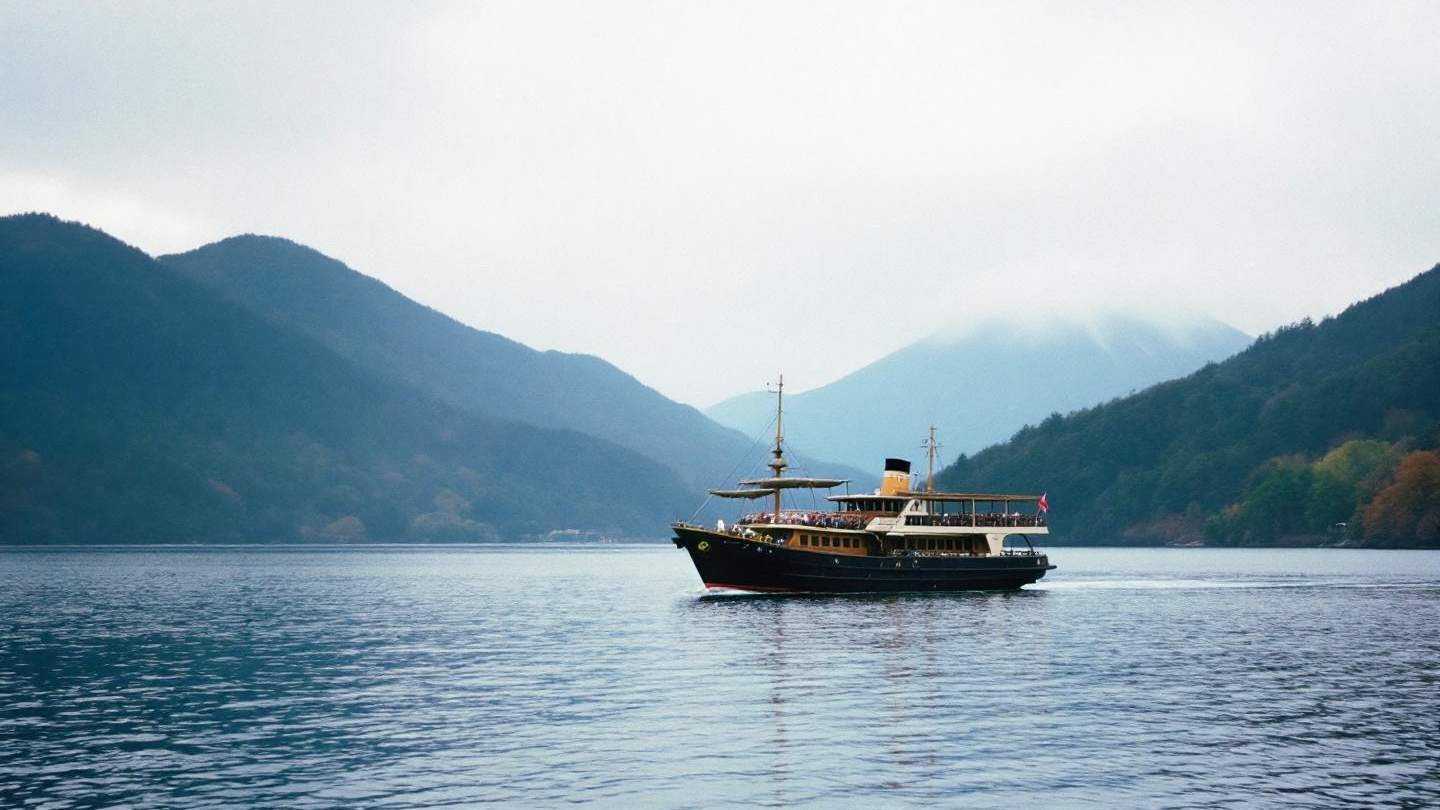
| Lake Ashi, Hakone | Hakone | 2 hrs (Romancecar from Shinjuku) | Free (lakeside) | Winter, October mornings |
| Hakone Open Air Museum | Hakone | 2 hrs from Tokyo | ¥1,600 | Any clear day |
| Yamanakako (Lake Yamanaka) | Yamanaka | 2.5 hrs from Shinjuku | Free | Winter mornings |
| Nihondaira (hillside) | Shizuoka | 3 hrs from Tokyo | Free | Winter, spring |
| Fujisan World Heritage Center | Fujinomiya | 3 hrs via Shinkansen | Free (museum ¥300) | Any clear day |
Best single spot: The Chureito Pagoda at Fujiyoshida — a five-story traditional pagoda on a hillside with a direct sightline to Fuji — is the source of one of Japan’s most reproduced photographs. In late March / early April when cherry blossoms frame both the pagoda and the distant mountain, it is genuinely one of the world’s great views. Arrive before 8:00 AM to avoid crowds; 395 stone steps lead up from the shrine entrance.
Best overall Fuji base: Hakone offers the best infrastructure for Fuji viewing combined with onsen, mountain scenery, and easy Tokyo access. The Romancecar express from Shinjuku runs directly to Hakone-Yumoto in 1 hour 25 minutes (¥2,470 or covered by JR Pass via Odakyu). From Hakone, the ropeway and Lake Ashi views offer multiple Fuji angles on a clear day.
Visibility: When to See Mount Fuji Clearly
Understanding Fuji visibility is the key to planning. The mountain is visible roughly 80–100 days per year from the surrounding areas.
| Month | Visibility | Notes |
|---|---|---|
| January | Excellent | Cold, clear air; snow on summit maximally white |
| February | Excellent | Best overall visibility; frequent clear days |
| March | Good | Improving; cherry blossoms in late March |
| April | Good | Cherry blossom frames peak; some haze builds |
| May | Moderate | Haze begins; Golden Week crowds |
| June–August | Poor | Heat haze, humidity, summer cloud; least reliable |
| September | Moderate | Improving after rainy season |
| October | Good | Clear autumn days; stunning foliage combo |
| November | Good–Excellent | Excellent visibility; early snow on summit |
| December | Excellent | Clear winter air; first full snow cap |
The practical implication: If seeing Fuji clearly is important to you, visit between October and April. If you are visiting in summer for climbing, accept that ground-level views may be hazy but the summit view above the clouds is extraordinary.
How to Climb Mount Fuji
Climbing Mount Fuji is one of Japan’s most famous physical challenges. The Japanese proverb: “A wise man climbs Fuji once; a fool climbs it twice.” The climb is genuinely demanding, but accessible to fit recreational hikers without technical mountaineering experience.
Essential Facts
- Official climbing season: Early July to early September (exact dates vary by trail)
- Summit elevation: 3,776 m (12,389 ft)
- Typical ascent time: 5–7 hours from 5th Station
- Typical descent time: 3–5 hours
- Total round-trip: 8–12 hours
- Recommended starting point: Yoshida 5th Station (most popular), 2,305 m elevation
- Conservation fee: ¥2,000 per person (introduced 2024; collected at trailheads)
The Four Climbing Trails Compared
| Trail | Location | Difficulty | Time (up) | Best For |
|---|---|---|---|---|
| Yoshida Trail | Yamanashi (north side) | Moderate | 5–7 hrs | Most popular; best facilities, mountain huts |
| Subashiri Trail | Shizuoka (east side) | Moderate | 5–8 hrs | Through forest to 8th Station; less crowded |
| Gotemba Trail | Shizuoka (east side) | Hard | 7–10 hrs | Longest; most remote; dramatic descent on volcanic sand |
| Fujinomiya Trail | Shizuoka (south side) | Moderate–Hard | 4–6 hrs | Shortest to summit; closest to Shinkansen access |
The Yoshida Trail is the default recommendation for first-time climbers. It has the most mountain huts (for rest and emergency shelter), the best trail marking, and the most English-speaking guides. Starting from Yoshida 5th Station (reached by bus from Kawaguchiko or direct from Tokyo Shinjuku), the first section crosses rocky volcanic terrain to the 7th Station, where most hikers stop to sleep in a mountain hut before a pre-dawn summit push.
Mountain Huts and Overnight Climbing
The most rewarding climb Mount Fuji strategy is the two-day ascent: arrive at 5th Station in the afternoon, hike to the 7th or 8th Station mountain hut, sleep for a few hours, and summit in time for the gonraiko (summit sunrise). Watching sunrise from 3,776 metres, above the clouds, is extraordinary.
Mountain hut costs:
- Reservation (essential in peak season): ¥7,000–¥9,000 per person including dinner and breakfast
- Sleeping arrangements: bunk-style mats in shared dormitory rooms (think: organised sleeping in rows)
- Book via each hut’s individual website; popular huts sell out in May for July/August nights
What to Bring for the Fuji Climb
Minimum essential kit:
- Headlamp with fresh batteries (pre-dawn summit is non-negotiable)
- Warm jacket and thermal layers (summit temperature is 5–10°C even in August)
- Waterproof outer layer (mountain weather changes rapidly)
- Hiking boots or trail running shoes with ankle support
- Trekking poles (dramatically reduces knee strain on descent)
- 2 litres of water minimum (mountain huts sell drinks at ¥500–¥1,000)
- High-energy snacks
- Altitude sickness medication (Diamox; consult doctor before travel)
- Gloves and hat for summit conditions
New Restrictions (2024 Onwards)
Following unprecedented overcrowding, Mount Fuji now has formal crowd management measures:
- A gate on the Yoshida Trail closes at 4:00 PM and reopens at 3:00 AM to prevent dangerous overnight hiking without shelter
- Daily visitor limits may be introduced on the Yoshida Trail in peak season
- The ¥2,000 conservation fee is now mandatory and enforced at the trailhead
- Hiking in ordinary shoes (sneakers, sandals) will attract warnings from rangers; proper footwear is strongly advised
Mount Fuji Tours from Tokyo
Organised Mount Fuji tours from Tokyo offer the easiest access for visitors who do not want to navigate buses, hut bookings, and trail logistics independently.
| Tour Type | Duration | Approx Cost | Includes |
|---|---|---|---|
| Fuji viewing + Hakone day tour | 1 day | ¥10,000–¥18,000 | Transport, guide, lakeside viewing, cable car |
| Fuji 5 Lakes day tour | 1 day | ¥8,000–¥14,000 | Kawaguchiko, Chureito, Oshino Hakkai |
| Fuji climb guided (2-day) | 2 days | ¥30,000–¥60,000 | Guide, mountain hut, gear rental option |
| Fuji + Nikko combination | 2 days | ¥25,000–¥40,000 | Two UNESCO sites in one trip |
Tour operators typically depart from Shinjuku or Tokyo Station. For independent travellers, highway buses to Kawaguchiko from Shinjuku Bus Terminal run every 30–60 minutes and cost ¥2,200 one-way (90 minutes). This is the cheapest and most flexible option for Fuji Five Lakes viewing.
The Fuji Five Lakes (Fujigoko) Area
Mount Fuji is surrounded by five crater lakes — Kawaguchiko, Yamanakako, Saiko, Shojiko, and Motosuko — formed when lava flows blocked rivers in past eruptions. This area, known as Fujigoko, is the most popular Fuji viewing region.
Kawaguchiko is the most accessible and developed lake. The north shore, visible from the lake’s main bridge, offers the classic Fuji reflection view on still mornings. The Kawaguchiko Music Forest, multiple hot spring hotels, and the cable car to Kachi Kachi Mountain viewpoint all cluster around the lake.
Oshino Hakkai (8 Springs of Oshino) — 15 minutes by bus from Kawaguchiko — is a UNESCO-recognised historic village where snowmelt from Fuji’s glaciers emerges as spectacularly clear spring pools. With thatched farmhouses and Fuji rising behind the pools, it is one of Japan’s most photogenic spots at any time of year.
Photography Tips for Mount Fuji
- Arrive before dawn: The clearest views and best light occur at sunrise, before heat haze develops
- Check weather apps: Windy.com and Weather.jp both show summit cloud cover; check the night before
- Use a polarising filter: Dramatically improves reflection and blue sky contrast
- Shoot from the north (Kawaguchiko): The north-facing shore gives the cleanest mountain profile without angled light complications
- Embrace telephoto: A 70–200 mm lens compresses distance and makes Fuji appear dramatically large against foreground elements
- Winter visit for snow cap: The summit snow is most dramatic December through April
Common Mount Fuji Myths
“You can see Fuji from central Tokyo every day” — False. On most days (especially in summer), urban haze and cloud make the mountain invisible from the city. On clear winter mornings, the view from elevated points in Tokyo (Skytree observation deck, Shibuya Sky) is genuinely spectacular.
“Climbing Fuji is easy” — False. The altitude, volcanic terrain, rapid weather changes, and 8–12 hour round-trip duration make it a genuine physical challenge. Many people who summit without proper preparation regret it.
“You need special permits to climb” — Currently false (as of 2026), but trail access management is tightening. Check the official Yamanashi Prefecture Mount Fuji climbing website before your trip for any new requirements.
For planning the wider trip, see our Hakone travel guide and day trips from Tokyo guide. If you are combining Fuji with a JR Pass, note that the highway buses to Kawaguchiko are not covered by the pass — factor in the separate ¥2,200 bus fare.
Mount Fuji’s Natural and Cultural Significance
Mount Fuji is not merely a tourist attraction — it is a living cultural symbol that has shaped Japanese art, religion, and identity for over a thousand years. Its significance resonates throughout Japan — from the Kyoto artists who depicted it in woodblock prints to the Osaka merchants who used its image as a symbol of endurance. The mountain has been a site of Shinto worship since the 7th century, and Fujisan Hongu Sengen Taisha — the network of shrines at the mountain’s base and summit — has administered religious activities on the mountain for over 1,200 years.
The mountain was designated a UNESCO World Heritage Cultural Site in 2013 — notably as a cultural rather than natural site, recognising its extraordinary influence on Japanese art and literature rather than its geological characteristics. The ukiyo-e woodblock prints of Katsushika Hokusai (Thirty-six Views of Mount Fuji, circa 1831) and Utagawa Hiroshige established Fuji’s image in global consciousness, and these works rank among the most reproduced images in the history of art.
Fuji in Japanese art: The mountain’s perfect cone appears in tens of thousands of artworks across centuries. Viewing Mount Fuji from unexpected angles — behind bamboo, between buildings, reflected in urban puddles — is a tradition that Hokusai systematised and that contemporary photographers continue. Part of the pleasure of visiting Japan is developing your own Fuji viewpoints.
Getting to the Fuji Five Lakes Area
Mount Fuji day trips from Tokyo are straightforward:
By highway bus (recommended for most visitors):
- Shinjuku Expressway Bus Terminal to Kawaguchiko: approximately 110 minutes, ¥2,200 one-way
- Buses run every 30–60 minutes throughout the day
- Book in advance during peak season (cherry blossom, summer) at Highwaybus.com or Japan Bus Online
- Return buses from Kawaguchiko to Shinjuku same frequency and price
By train:
- Shinjuku to Otsuki by JR Chuo Limited Express: 75 minutes, ¥2,270 (JR Pass eligible for this leg)
- Otsuki to Kawaguchiko by Fuji Kyuko Line: 50 minutes, ¥1,140 (not covered by JR Pass)
- Total one-way cost: ¥3,410, approximately 2 hours
- Advantage: more scenic; disadvantage: requires transfer and Fuji Kyuko line is not covered by JR Pass
From Hakone:
- Gotemba-Kawaguchiko express bus: 45 minutes, ¥1,370
- Allows combining Hakone and Fuji Five Lakes in a single day or two-day trip
Fuji Five Lakes: Beyond Kawaguchiko
Kawaguchiko gets the vast majority of visitors but the other four lakes each have distinct character:
Yamanakako — the largest lake, closer to the mountain, with excellent sunrise views from the north shore. Less developed than Kawaguchiko; strong preference among photographers for the wide lake-mountain compositions.
Saiko — the most forested of the lakes, with access to the Narusawa Ice Cave and Fugaku Wind Cave (both underground lava tube caves remaining frozen year-round; entry ¥350 each). Bat colonies inhabit the caves — accessible 20 minutes by bus from Kawaguchiko.
Shojiko — the smallest lake; extremely peaceful; limited tourist infrastructure; outstanding reflections of Fuji on still mornings.
Motosuko — the westernmost lake; the specific viewpoint here (the southern shore, 10 minutes walk from the bus stop) is the source of the image on the Japanese ¥1,000 banknote. Clear morning views from this spot are particularly striking.
Planning a Fuji Region Trip: Itinerary Options
Fuji in one day from Tokyo:
- 7:00 AM: Board highway bus from Shinjuku to Kawaguchiko (arrive ~9:00 AM). Check the Narita to Tokyo guide if arriving from the airport on the same day
- 9:30 AM: Walk the north shore of Kawaguchiko for lake reflections
- 11:00 AM: Bus to Chureito Pagoda (20 min) + climb the 395 steps to the viewpoint
- 1:00 PM: Lunch at Kawaguchiko (local Hoto noodle soup: ¥1,200–¥1,800)
- 2:30 PM: Oshino Hakkai springs village (15 min by bus)
- 4:30 PM: Return bus from Kawaguchiko to Shinjuku (arrive ~6:30 PM)
Fuji overnight (recommended): Same as above but stay in Kawaguchiko for one night. Wake at 5:00 AM for the dawn light on the north shore when the mountain is perfectly clear and the lake perfectly still. This early morning shot — quiet, cold, golden — is impossible on a day trip.
Fuji + Hakone two-day circuit:
- Day 1: Tokyo → Hakone (Romancecar from Shinjuku); afternoon at Lake Ashi and Open Air Museum; overnight at onsen ryokan
- Day 2: Gotemba → Kawaguchiko by express bus; Chureito + lake shore; return Kawaguchiko → Shinjuku bus
Altitude and Health on the Fuji Climb
Climbing Mount Fuji involves real altitude, and altitude sickness is a genuine risk.
At 3,776 metres, Mount Fuji sits above the altitude threshold where most people begin experiencing effects. Symptoms of altitude sickness (AMS): headache, nausea, fatigue, dizziness, poor sleep. Most climbers experience mild symptoms on the first summit attempt. See our Japan for first-timers guide for general health and safety preparation advice for Japan travel.
Prevention:
- Ascend slowly (do not rush the last 1,000 metres)
- Drink 500 ml of water every hour
- Avoid alcohol the night before and during the climb
- Consider Diamox (acetazolamide) — a prescription drug that significantly reduces altitude sickness risk; consult your doctor 2–3 weeks before departure
- Spend a night in a mountain hut at 3,100–3,400 m to acclimatise before summiting
If symptoms worsen: Descend. Altitude sickness resolves almost immediately upon descent. The rule is: any worsening of symptoms requires descent. Most mountain huts have staff trained in altitude sickness response.
Fuji Weather: Planning for Visibility
Mount Fuji weather changes rapidly and is generally cloud-covered more than it is clear. The mountain creates its own localised weather systems. Understanding the patterns:
Best visibility conditions: Cold air masses from Siberia in winter create the clearest sky conditions. Northwest winds clear the mountain’s summit of cloud cover. A pressure ridge (high pressure system) over central Japan produces multiple consecutive clear days.
Weather forecasting for Fuji: Two tools are essential:
- Windy.com — shows upper atmosphere wind direction and predicted cloud at summit altitude; if summit winds are from the northwest, visibility is typically excellent the following day
- Mt. Fuji Panoramic Camera (official webcam at Kawaguchiko Weather Station, visible at fujisan-wc.com) — live camera pointed at the mountain; check at dawn for current conditions
Visibility by season summary: Clear days per month average: December–February: 12–18 days; March–April: 8–14 days; May: 6–10 days; June–August: 2–6 days; September: 4–8 days; October–November: 10–16 days.
The investment in planning your Mount Fuji visit around weather forecasts significantly increases your chances of the view that justifies the trip. Japan’s most iconic image deserves to be seen in its full glory — plan carefully, check the forecasts, and the mountain will reward you.
For first-time visitors combining Fuji with Japan’s other highlights, see our Japan for first-timers guide and best time to visit Japan guide. Nikko and Nara make excellent additions to a Tokyo-Fuji-Kyoto circuit.