Kyoto
Complete Kyoto travel guide with the best temples, gardens, geisha districts, food spots, and practical tips to plan your visit.
Quick Facts
- Best For
- Culture, Temples, History
- Days Needed
- 2–4 days
- Best Season
- Spring & Autumn
- Nearest Airport
- Kansai (KIX)
- Getting There
- 2h15 from Tokyo by Shinkansen
- Budget (per day)
- ¥7,000–¥20,000
Why Visit Kyoto
Kyoto served as Japan’s imperial capital for over a thousand years, from 794 to 1869, and the weight of that history is palpable everywhere. With more than 2,000 temples and shrines, 17 UNESCO World Heritage sites, Japan’s most intact geisha districts, and a cuisine defined by centuries of refinement, Kyoto is the city you visit when you want to understand what Japan was before it became what it is now.
But Kyoto is not a museum and it would be a mistake to treat it as one. The city has a population of 1.4 million people, a university that fills the downtown area with young energy, contemporary restaurants and cafes that would hold their own in any major city, and artisan workshops where craftspeople are doing something genuinely rare — keeping alive production techniques that have no industrial equivalent. Kyoto is alive.
What makes the city exceptional is the way the historical layers don’t feel imposed or theatrical. A monk walking to morning service passes a woman checking her phone on a city bus. The same neighborhood that contains a 1,200-year-old shrine also contains a third-wave coffee roaster and a natural wine bar. This is not a contradiction Kyoto is embarrassed by. The continuity is more interesting than any of the individual parts.
For a first visit to Japan, Kyoto is usually the second stop after Tokyo — and for many visitors, it becomes the more meaningful one. Tokyo impresses with scale. Kyoto changes the way you see Japan. If you’re combining both, our 7-day Japan itinerary shows how they fit together.
How Many Days Do You Need?
2 days — the minimum for highlights only. Two full days allows you to cover Fushimi Inari, Kinkaku-ji, Arashiyama, and a walk through Gion, provided you start early each day and don’t linger. This schedule is dense and leaves almost no room for sitting in a garden or eating properly.
3 days — the practical recommendation. Three days allows you to cover the major temples without rushing, do one cultural experience (tea ceremony, kimono rental, or cooking class), walk the Higashiyama district properly, and eat well. This is the minimum we’d actually recommend to most visitors.
4 days — the comfortable ideal. Four days adds a day trip (Nara is the obvious choice), time for lesser-visited temples like Tofuku-ji, Daitoku-ji, or Nanzen-ji, and a more relaxed approach to everything else. If you’re staying at a ryokan, a night with kaiseki dinner and morning onsen adds another layer entirely. See our Kyoto day trips guide for the full range of excursions.
A note on timing: Both spring and autumn see extreme visitor numbers at the major sites. Arriving at Fushimi Inari at 9 AM in October means walking through a crowd. Arriving at 6 AM means having the lower gates nearly to yourself. This is consistently the most useful practical advice about Kyoto — the difference between 6 AM and 9 AM at any major sight is dramatic.
Temple Entry Fees
| Temple / Shrine | Admission | Opening Hours | Notes |
|---|---|---|---|
| Fushimi Inari Taisha | Free | 24 hours | Best before 7 AM or after 8 PM |
| Kinkaku-ji (Golden Pavilion) | ¥500 | 9 AM–5 PM | Circuit walk only, 30–40 min |
| Kiyomizu-dera | ¥400 | 6 AM–6 PM (later for illuminations) | Evening illuminations ¥400 extra |
| Ryoan-ji | ¥600 | 8 AM–5 PM (9 AM in winter) | Famous rock garden |
| Ginkaku-ji (Silver Pavilion) | ¥500 | 8:30 AM–5 PM | Upper garden path included |
| Tofuku-ji | ¥600 (¥1,000 peak autumn) | 9 AM–4 PM | Best mid–late November |
| Nanzen-ji Sanmon gate | ¥600 | 8:40 AM–5 PM | Hojo garden ¥600 separate |
| Tenryu-ji garden | ¥500 (interior +¥300) | 8:30 AM–5:30 PM | UNESCO World Heritage |
| Arashiyama Bamboo Grove | Free | Always open | Crowds from 9 AM |
| Daitoku-ji Daisen-in | ¥400 | 9 AM–5 PM | Dry garden masterpiece |
Major Temples and Shrines
Fushimi Inari Taisha
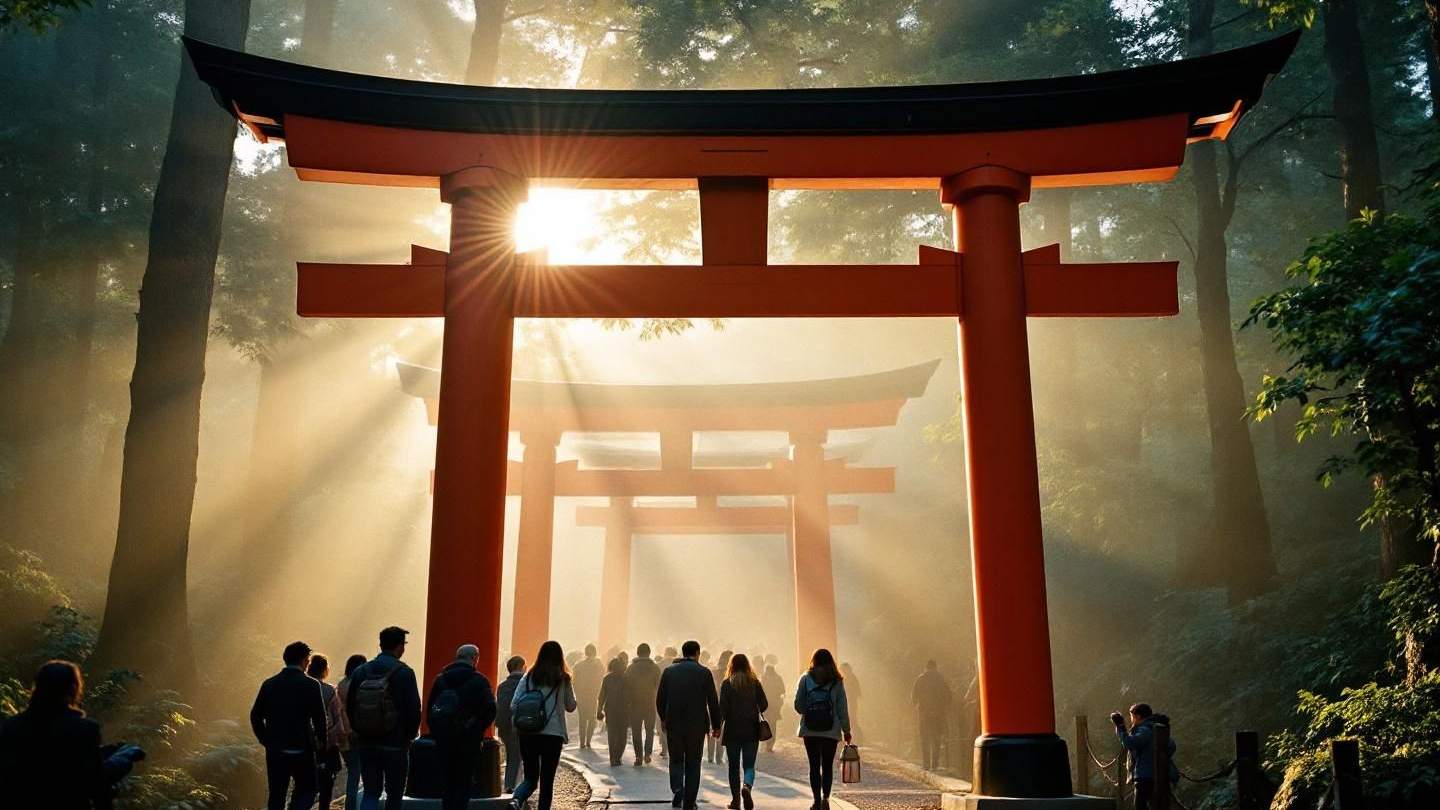
Fushimi Inari is Kyoto’s most visited sight and one of Japan’s most iconic images: thousands of vermillion torii gates winding up the forested slopes of Mount Inari in a continuous tunnel. The shrine is dedicated to Inari, the deity of rice, sake, and business — each torii gate was donated by a company or individual, with the donor’s name and date inscribed on the back.
The shrine never closes and admission is free. The full hike to the summit (233 meters) and back takes two to three hours. Most visitors only go as far as the Yotsutsuji intersection about a third of the way up, which offers good views over Kyoto and is where the crowds start to thin dramatically. The upper mountain paths pass smaller sub-shrines, stone fox statues, and tea houses, and feel genuinely remote despite being 20 minutes by train from central Kyoto.
Timing: Arrive before 7 AM to have the lower gates in relative quiet. Arriving after 9 AM on weekends means navigating significant crowds up to the Yotsutsuji point. The upper mountain is always quieter. Night visits are atmospheric — the paths are lit and the crowds are gone, though some of the small tea houses are closed.
Access: Inari Station on the JR Nara Line (two stops from Kyoto Station, ¥150). The shrine entrance is directly in front of the station exit. Total journey from Kyoto Station is 5 minutes.
Kinkaku-ji (Golden Pavilion)
Kinkaku-ji is one of those sights that manages to meet its own hype. The three-story Zen pavilion, covered entirely in gold leaf, sits at the edge of a mirror pond. The reflection in still water on a clear morning produces an image so composed it looks like a painting. Built as a retirement villa for Shogun Ashikaga Yoshimitsu in 1397 and converted to a temple after his death, it was burned by a disturbed monk in 1950 and rebuilt in 1955. The current gold leaf is the result of a 1987 restoration that used five times the original gold concentration.
Admission is ¥500. The garden is a walking circuit — enter, follow the path past the pavilion view, continue through the garden, exit through the souvenir area. The entire circuit takes 30–40 minutes. There is no interior access to the pavilion itself.
Timing: The garden opens at 9 AM. Arrive at opening or in the late afternoon (after 3:30 PM) to avoid the heaviest tour groups. Mid-morning from 10 AM to 1 PM is the most crowded period.
Practical note: Kinkaku-ji is in northwest Kyoto, which is not well served by the subway. Take bus 101 or 205 from Kyoto Station (¥230) or bus 12 from Shijo-Karasuma. Budget 30–40 minutes of travel time from the city center.
Arashiyama
Arashiyama is a district rather than a single sight — a sweep of forested hills, river walks, temples, and bamboo groves in the western reaches of Kyoto. It warrants at least a half day and ideally a full day if you want to see it properly.
Bamboo Grove: The narrow path through the Sagano bamboo forest is a short walk from Arashiyama Station. The bamboo here grows to 20–25 meters and creates a cathedral-like light effect at any time of day. It’s at its most atmospheric in the early morning or on a slightly overcast day when the light is even. The path is only about 400 meters long but connects through to Okochi Sanso villa (¥1,000 admission, includes matcha tea and sweet).
Tenryu-ji is the most important temple in Arashiyama and one of the five great Zen temples of Kyoto. The garden, designated a UNESCO World Heritage Site, uses the Arashiyama hills as its backdrop through the technique of “borrowed scenery” (shakkei). The garden alone (¥500) is worth visiting even without entering the temple buildings. The interior costs an additional ¥300. The seasonal changes in the garden — cherry blossoms in spring, lotus in summer, blazing maples in autumn, bare elegance in winter — are all worth seeing.
Iwatayama Monkey Park sits atop a 20-minute climb from the Togetsukyo bridge side of the river. The park is home to around 170 Japanese macaques that live semi-freely on the hillside. Visitors pay ¥600 to climb up and feed the monkeys (from inside a wire cage, for safety — the monkeys are outside). The summit also has one of the best panoramic views of Arashiyama and the Kyoto basin.
Togetsukyo Bridge is the 155-meter wooden bridge spanning the Oi River that has been a symbol of Arashiyama since it was first constructed in 836 AD. The current structure dates from 1934. The views from the bridge toward the forested hills are excellent in all seasons — particularly during autumn foliage, when the hillsides turn orange and red.
Getting to Arashiyama: JR Sagano Line from Kyoto Station to Saga-Arashiyama (16 min, ¥240), or Hankyu Arashiyama Line from Katsura to Arashiyama (10 min, from ¥200). The Randen (Keifuku Electric Railway) tram line from Shijo-Omiya is the most atmospheric option (30 min, ¥250).
Kiyomizu-dera
Kiyomizu-dera occupies a hillside in eastern Kyoto and has been drawing pilgrims since its founding in 778 AD. The main hall is built on a massive wooden stage extending over the hillside on 139 pillars of Japanese zelkova wood, assembled without a single nail — the entire structure was rebuilt in 1633. From the stage, views extend across the Kyoto basin to the distant Higashiyama mountains.
Admission is ¥400. The complex includes several subsidiary shrines and a waterfall (Otowa-no-taki) at the base of the main hall, where visitors drink from three separate streams said to grant longevity, success in studies, and luck in love. Drinking from all three is considered greedy.
Ninenzaka and Sannenzaka: The stone-paved approach streets below Kiyomizu-dera are among the most photographed lanes in Japan, lined with wooden machiya townhouses converted into shops selling ceramics, yatsuhashi (cinnamon-flavored mochi, Kyoto’s most iconic sweet), matcha drinks, and craft goods. Ninenzaka (Two Year Slope) connects to Sannenzaka (Three Year Slope), which connects further down to the Gion district — a 30–40 minute walk in total.
Timing: Kiyomizu is open from 6 AM, and the early morning hours before 8 AM are worth the effort — the approach streets are empty and the temple grounds have a completely different character. Evening illuminations are held during cherry blossom season and autumn foliage (¥400, separate ticket), when the stage is lit and views over the city are spectacular.
Ryoan-ji
Ryoan-ji contains Japan’s most famous Zen rock garden. Fifteen stones are arranged across 248 square meters of raked gravel, positioned so that only 14 of the 15 stones are visible from any single vantage point. No one knows who designed it or exactly when — it dates from approximately the late 15th century. The meaning is not explained and is considered deliberately open.
The experience is unusual and requires a particular disposition to fully appreciate. Sit on the wooden veranda in front of the garden and give it ten minutes. The compulsive tourism energy of Kinkaku-ji, a short walk away, drains away. The garden asks you to stay still.
Admission is ¥600. The temple grounds also contain a large pond garden (Kyoyochi Pond, dating from the 12th century) that is pleasant to walk. The souvenir shop sells decent ceramics.
Timing: Ryoan-ji opens at 8 AM (9 AM December to February). The first hour after opening is the quietest time. Tour groups peak between 10 AM and 2 PM.
Ginkaku-ji (Silver Pavilion) and the Philosopher’s Path
Ginkaku-ji is often described as Kinkaku-ji’s understated sibling. The 15th-century pavilion is covered not in silver but in dark wood — the silver coating was planned but never applied. What you get instead is a more subdued and arguably more beautiful building, surrounded by exceptional garden design that includes a dramatic cone of white sand said to represent Mount Fuji, and a garden of moss and raked gravel.
Admission is ¥500. The garden walk takes about 30 minutes, including an upper path through the forested hillside with views back over the garden and city.
Philosopher’s Path (Tetsugaku no Michi) begins just south of Ginkaku-ji and runs 2 kilometers along a canal to Nanzen-ji. It’s named after philosopher Nishida Kitaro, who was said to have practiced walking meditation here. The path is lined with cherry trees (about 500 somei yoshino) that make it one of Kyoto’s most beautiful hanami spots in early April. At other times of year the canal walk is pleasant but not essential.
Tofuku-ji
Tofuku-ji is the autumn foliage destination in Kyoto. A bridge (Tsutenkyo) crosses the ravine between the main hall and the sub-temple of Kaisando, and the maple trees in the ravine below create one of Japan’s most spectacular autumn scenes when they peak in mid-to-late November. The approach to the bridge fills up entirely on peak weekends — arrive before 8:30 AM or after 3:30 PM.
Admission to the main compound and bridge is ¥600 (¥1,000 during peak autumn). The famous checkerboard-pattern dry gardens around the Hojo (abbot’s quarters) cost ¥500 separately and are among the best modern garden designs in Kyoto — created in 1939 by Mirei Shigemori.
Access: JR Nara Line to Tofuku-ji Station (two stops from Kyoto Station, ¥150), then a 10-minute walk. Or Keihan Line to Tofukuji Station. One of the most accessible temples from Kyoto Station.
Nanzen-ji
Nanzen-ji is one of the most important Zen temples in Japan and contains a peculiarity that delights everyone who sees it: a 9-meter-tall Roman-style red brick aqueduct running directly through the temple grounds. The aqueduct, built in 1890 to carry water from Lake Biwa to Kyoto, looks entirely out of place and is now one of the best photo subjects in the city.
The temple complex is large and largely free to wander. The Sanmon gate (¥600) gives access to a rooftop view over the treetops. The Hojo garden (¥600) contains one of Kyoto’s finest Edo-period dry gardens. The surrounding Nanzen-ji district includes several excellent sub-temples (Tenjuan and Konchi-in have particularly fine gardens, ¥400–¥500 each).
Access: Keage Station on the Tozai subway line, 10-minute walk. From Ginkaku-ji, the Philosopher’s Path leads directly here (30–40 minute walk south).
Daitoku-ji
Daitoku-ji is a vast Rinzai Zen temple complex in northwest Kyoto containing 24 sub-temples, several of which are open to the public and most of which are comparatively uncrowded. It’s where the serious garden connoisseurs spend their time.
Daisen-in (¥400) has one of the finest dry landscape gardens in Japan, with rocks, sand, and pruned trees creating a miniature mountain and river landscape inside a tiny courtyard. A priest explains the symbolism (in Japanese, with some English signage available). Zuiho-in (¥400) has a garden designed in 1961 that subtly incorporates a Christian cross pattern in the arrangement of stones — a reference to the Christian daimyo Otomo Sorin, who funded the temple.
Daitoku-ji is a 15-minute walk from Kinkaku-ji and makes an excellent combined half-day with the Golden Pavilion.
The Geisha Districts
Gion
Gion is Kyoto’s most famous geiko (the Kyoto term for geisha) district, centered on Hanami-koji — a stone-paved street running south from Shijo-dori lined on both sides with ochaya (teahouses) where geiko and maiko entertain private clients. The ochaya are entirely private, but the street and surrounding lanes are public.
The best time to observe geiko and maiko is between 5:30 PM and 7 PM on weekdays, when they travel on foot or by taxi to evening engagements. Hanamikoji itself is the obvious spot, but the smaller lanes of Gion — particularly Shinbashi-dori — offer more intimate views when you do spot someone.
Photography etiquette. This has become a serious issue in recent years as social media has driven increasingly intrusive behavior from visitors. Do not photograph geiko or maiko without permission. Do not stand in front of them to force a stop. Do not chase them down the street. Do not enter the ochaya or private alleys marked with “no photography” signs. The Gion district has introduced fines for photographing on certain streets. Treat any encounter with a geiko or maiko as you would a professional on their way to work — because that’s exactly what it is.
The broader Gion district extends well beyond Hanamikoji. Gion Shirakawa is a small canal district just north of Shijo-dori with willow trees overhanging the water — one of Kyoto’s most beautiful spots, especially at night during cherry blossom season. Yasaka Shrine anchors the eastern end of Shijo-dori and is always accessible, including 24 hours.
Pontocho
Pontocho is a narrow alley roughly 500 meters long running parallel to the Kamo River between Sanjo and Shijo, lined almost entirely with restaurants and bars. It’s one of the best dining streets in Japan: high concentration, high quality, all formats from formal kaiseki to standing ramen to craft cocktail bars. In summer, many restaurants extend wooden platforms (kawadoko) over the river for outdoor dining — one of Kyoto’s most pleasant seasonal experiences.
Pontocho is also a geisha entertainment district, though smaller than Gion. You’re unlikely to see maiko here as they tend to arrive and depart by taxi. The alley is best experienced as a dinner destination rather than a sightseeing walk.
Cultural Experiences
Tea Ceremony
The Japanese tea ceremony (chado or “the way of tea”) is a ritualized preparation and consumption of powdered matcha tea, developed in Kyoto over several centuries under the influence of Zen Buddhism. The full formal ceremony involves precise choreography of movement, the careful selection and presentation of the ceramic bowl, and a period of silent contemplation. What you participate in as a tourist is an abbreviated version, but it’s still genuinely instructive. Our Kyoto tea ceremony guide covers every option in detail.
Options range from tourist-facing quick ceremonies to serious multi-hour experiences with practicing tea teachers. En tea ceremony near Gion (¥3,500–¥4,500) is a good mid-level option in an authentic setting. Urasenke Tankokai (from ¥5,000) represents one of the main traditional schools and can arrange more serious experiences for groups. Camellia Tea Experience in a historic machiya (¥2,500–¥4,000) is frequently recommended for solo travelers. Book at least a week ahead in spring and autumn.
Kimono Rental
Wearing kimono in Kyoto is not kitsch — it’s a legitimate way to engage with the city’s material culture, and the narrow lanes of Higashiyama, the Ninenzaka, and the approach to Fushimi Inari take on a different dimension when you’re wearing one. Rental packages (kimono, obi, accessories, dressing assistance, and return service) run ¥3,000–¥6,000 for a half day, with hair styling available for an additional ¥1,000–¥2,000. Kyoto Kimono Rental Wargo (multiple locations, from ¥3,300) is the most accessible chain. Independent shops in Higashiyama tend to have better quality fabric selections. Book the day before at minimum; during cherry blossom and autumn foliage season, book one to two weeks ahead.
Cooking Class
Kyoto cooking classes typically teach two or three dishes from the city’s traditional cuisine: miso soup from dashi stock, tofu dishes, and one or two main courses using seasonal ingredients. Cooking Sun (¥5,800 for a half-day) is well-regarded and runs classes in a traditional machiya. Uzuki (¥6,500) focuses specifically on Kyoto-style vegetarian cooking (shojin ryori). Most classes include a market visit to Nishiki or a local greengrocer and last three to four hours.
Meditation and Zazen
Several Kyoto temples offer zazen (seated Zen meditation) sessions for visitors, typically in the early morning. Kennin-ji (¥500, 7 AM most Sundays) and Tofuku-ji (call ahead for scheduling) run accessible sessions that don’t require prior experience. You sit in silence for 30–45 minutes on cushions in a meditation hall. The resident priest may use a flat stick (keisaku) to sharply tap the shoulders of anyone who asks — it’s not punishment but stimulation for focus. The experience is more useful if you understand the context beforehand.
Calligraphy
Calligraphy (shodo) workshops run regularly in Kyoto’s cultural centers and several machiya studios. A one-hour introduction costs ¥2,000–¥3,500 and will cover basic brush technique and one or two practice characters. The Kyoto International Community House and several private studios in Higashiyama offer drop-in sessions. You take your practice sheets home.
Kyoto’s Food Scene
Kyoto’s cuisine (kyo-ryori) is defined by its distance from the sea, its proximity to excellent tofu producers, and its centuries of catering to Buddhist institutions that required vegetarian cooking of extraordinary sophistication.
Kaiseki is the pinnacle: a multi-course tasting meal rooted in the tea ceremony tradition, where seasonal ingredients are prepared with extreme technical refinement and presented with equal care. Michelin-starred kaiseki in Kyoto starts at ¥20,000 per person at lunch, ¥30,000–¥80,000 at dinner. More accessible kaiseki is available at Pontocho restaurants for ¥8,000–¥15,000 at lunch. For an introduction to kaiseki at a reasonable price, try a kaiseki bento box at Kyoto Station’s Cube food area (¥1,500–¥2,500).
Yudofu (simmered tofu) is Kyoto’s most distinctive humble dish — blocks of silken tofu simmered in konbu dashi and dipped in ponzu sauce. The tofu restaurants of Nanzen-ji area specialize in it. Junsei and Okutan are two of the oldest and most respected (¥3,000–¥5,000 for a set course). It’s genuinely excellent and a complete contrast to the richness of most Japanese comfort food.
Nishiki Market is Kyoto’s most important food market, a covered arcade about four blocks long running parallel to Shijo-dori. Nicknamed “Kyoto’s kitchen,” it sells Kyoto pickles (tsukemono), fresh tofu and yuba, skewered foods, specialty sweets, dried goods, and all manner of local produce. Go on a weekday morning for the best experience. Try the fresh tofu skin (yuba) skewers (¥300), the grilled fish (¥400–¥600), and the assorted pickles available for sampling at most stalls.
Matcha desserts have become one of Kyoto’s dominant food experiences. Nakamura Tokichi (Uji, day trip) is the historical benchmark. In Kyoto proper, Ippodo Tea (near the Imperial Palace) sells high-grade matcha for brewing. Tsujiri in Gion does excellent soft serve (¥400–¥500). In Arashiyama, most cafes offer a matcha parfait or shaved ice (kakigori) topped with matcha sauce — budget ¥600–¥1,000 and choose carefully to avoid over-priced mediocre versions.
Tofu and yuba are worth seeking out beyond Nanzen-ji. Morika Tofu in the Fushimi district makes fresh tofu daily. Yuba (the skin that forms on heating soy milk) appears throughout Kyoto menus as a topping, a side dish, or a main course in temple vegetarian cooking (shojin ryori).
Tsukemono (Japanese pickles) reach their highest form in Kyoto. Nishizawa and Murakami-ju in Nishiki Market are two respected producers. Kyoto’s most famous variety is suguki (fermented turnip), followed by shibazuke (purple pickles with beefsteak leaf) and senmaizuke (wafer-thin salted turnip). A good assortment costs ¥800–¥2,500.
Obanzai is Kyoto’s traditional home cooking tradition — multiple small dishes (nimono, aemono, sunomono, pickles) that constitute a complete, balanced meal at minimal cost. The most accessible format is the obanzai set lunch, available at dozens of machiya restaurants in Higashiyama and Pontocho for ¥1,000–¥1,800.
Yatsuhashi is the standard Kyoto souvenir sweet — a thin sheet of cinnamon-flavored rice cake, available baked (crispy, the original version) or unbaked (nama yatsuhashi, now more popular). Nama yatsuhashi is folded around red bean paste or various seasonal fillings. Honke Nishio and Shogoin are two of the older producers. Budget ¥600–¥1,200 for a box.
Kyoto’s Neighborhoods
Higashiyama
The eastern hill district stretches from Kiyomizu-dera in the south through the Ninenzaka and Sannenzaka lanes, past Chion-in and Shoren-in temples, to Nanzen-ji in the north. This is Kyoto’s most scenically coherent area — the combination of stone lanes, machiya shophouses, temple gates, and wooded hillsides produces the visual image of Kyoto that most people carry in their minds before they arrive.
The southern portion (Kiyomizu approach) is the most crowded and most touristy. The northern portion (Nanzen-ji and Philosopher’s Path area) is quieter and more residential. Spending a full day walking the entire length of Higashiyama from south to north, stopping at Kiyomizu-dera, Ninenzaka, Chion-in, Maruyama Park, and ending at Nanzen-ji, is one of the best ways to spend a day in Kyoto.
Arashiyama
Covered in detail above. Arashiyama deserves its own half to full day and operates best as a morning excursion — the bamboo grove and Tenryu-ji garden are best seen before the day-trippers from Osaka arrive (typically from about 10 AM).
Gion and Pontocho
Together these form the entertainment and geisha district of central Kyoto. Gion sits east of the Kamo River; Pontocho runs along the western bank. Best in the evening, when the lantern-lit alleys fill up and restaurants come alive.
Downtown Kyoto (Shimogyo and Nakagyo)
The commercial center of Kyoto around Shijo-dori and Karasuma-dori. Nishiki Market is here, along with the main department stores (Takashimaya, Isetan, Daimaru), the covered Teramachi and Shinkyogoku shopping arcades, and a high density of mid-range restaurants.
The Kyoto Botanical Garden (¥200) in the northern part of downtown is excellent in spring and autumn and rarely crowded.
Fushimi
The southern Kyoto district containing Fushimi Inari Taisha (covered above) and Fushimi Momoyama, where several sake breweries have operated since the feudal era. The Gekkeikan Okura Sake Museum (¥600, includes tasting) tells the story of sake production in the area. Walking the sake brewery district (there are several in the area of Fushimi-Momoyama Station on the Kintetsu Line) gives a different and less-visited dimension of Kyoto.
Getting to Kyoto
From Tokyo: Tokaido Shinkansen from Tokyo Station. The Nozomi reaches Kyoto in 2 hours 15 minutes (¥13,910 unreserved, ¥14,170 reserved). The Hikari takes 2 hours 40 minutes and is covered by the JR Pass. Unreserved seats are available on most Hikari trains but can fill up on weekends and holidays. Recommended: book a reserved seat.
From Osaka: JR Special Rapid Service (Shinkaisoku) from Osaka Station to Kyoto Station, 29 minutes (¥580). This is one of the most useful and most underused connections in Japan — Osaka as a base with day trips to Kyoto is a legitimate and often cheaper strategy.
From Nara: JR Nara Line from Nara to Kyoto Station, 45 minutes (¥720). Direct without change.
From Kansai Airport (KIX): Haruka Limited Express to Kyoto Station, 75 minutes (¥1,880–¥2,900 depending on seat type). Runs twice hourly.
Getting Around Kyoto
Cycling is the single best way to see Kyoto. The city center is mostly flat. Bike rental is available near Kyoto Station (Kyoto Cycling Tour Project, from ¥1,000/day) and near most major neighborhoods. A bicycle allows spontaneous detours that buses and taxis cannot accommodate, and the small roads of Higashiyama, Gion, and the tofu district around Nanzen-ji are best seen at cycling pace.
City buses cover Kyoto extensively. A single ride is ¥230. The City Bus One-Day Card (¥700) pays off if you take three or more bus rides. However, tourist routes (100, 101, 102) are frequently severely crowded. Whenever cycling or walking is feasible, it’s preferable.
Kyoto Subway has two lines: the Karasuma Line (north-south) and the Tozai Line (east-west). The subway is fast and clean but covers fewer tourist destinations than the bus network. The Karasuma Line connects Kyoto Station to the Gion-Shijo and Keihan areas. A subway and bus day pass (¥1,100) offers good value for heavy transit users.
Taxi is practical for travel between distant temples when you don’t want to navigate buses. Starting fare is ¥680. Most taxi drivers know major temple names — pointing at a map on your phone is sufficient communication.
Best Time to Visit
For more seasonal advice including cherry blossom forecasts, see our cherry blossom in Japan guide.
Best Time by Activity
| Activity | Best Season | Notes |
|---|---|---|
| Cherry blossom viewing | Late March–early April | Maruyama Park, Philosopher’s Path, Gion Shirakawa |
| Autumn foliage | Mid–late November | Tofuku-ji, Eikando, Arashiyama hillsides |
| Temple garden visits (uncrowded) | January–February | Cold but quiet; Kinkaku-ji in snow is extraordinary |
| Tea ceremony and cultural experiences | Year-round (book ahead spring/autumn) | Spring and autumn require 2–4 weeks advance booking |
| Gion Festival | July (main procession July 17) | Largest summer festival; evening street stalls |
| Kimono rental and Higashiyama walk | Spring and autumn | Best photo conditions; book 1–2 weeks ahead |
| Kawadoko riverside dining | June–September | Pontocho and Kibune; summer specialty |
| Fushimi Inari early morning hike | Any season | Year-round; best before 7 AM regardless of season |
Spring — Cherry Blossoms (late March to mid-April)
Kyoto’s most famous season. The specific spots to know: Maruyama Park (huge weeping cherry tree, lit at night, always crowded), the Philosopher’s Path (canal walk lined with cherry trees, peak usually first week of April), Kiyomizu-dera (excellent views over blossoming city), Hirano Shrine (one of Kyoto’s oldest and least-crowded cherry blossom spots), and the canal streets of Gion Shirakawa (willow and cherry together over the water). Peak blossom typically lasts 7–10 days. The week before and the week after full bloom are also excellent and slightly less crowded.
Accommodation must be booked two to four months ahead for the peak week. Prices are 30–80% higher than off-season.
Autumn — Foliage (mid-November to early December)
Many experienced Japan travelers consider this their favorite time in Kyoto. The temple gardens, already excellent, become extraordinary when framed by maples in full color. Key spots: Tofuku-ji (peak usually mid to late November, ravine view from Tsutenkyo bridge), Eikando (night illuminations, ¥600, one of the most magical autumn experiences in Japan), Kitano Tenmangu (late November koyo, combined with remaining chrysanthemum season), Katsura Imperial Villa grounds (requires advance booking through the Imperial Household Agency — free but limited entry). Arashiyama’s hillsides in November are exceptional from the Togetsukyo bridge.
Summer (June to August)
Hot (32–36°C in August), humid, and peak Gion Matsuri season. The Gion Festival runs throughout July with the main yamaboko float procession on July 17. The procession route is closed to vehicles and lined with food stalls selling festival food. June brings the rainy season (tsuyu) but also the ajisai (hydrangea) bloom at Mimurotoji in Uji and Fushimi shrine. Kawadoko riverside dining along Pontocho and Kibune (north of Kyoto) is a summer specialty.
Winter (December to February)
Kyoto’s underrated season. Temples are quiet. Kinkaku-ji in snow is one of Japan’s most iconic sights (and genuinely unpredictable — snow falls perhaps three to five times per winter). Cold (3–8°C) but usually dry. Year-end temple bell ceremonies on December 31 (joya no kane) are atmospheric. Fushimi Inari in early morning winter fog is extraordinary.
Practical Tips
Plan temple visits for early morning. Fushimi Inari never closes. Many temples open at 8 or 9 AM. The difference in atmosphere and crowd density between 7 AM and 10 AM at most major sites is substantial. If you have only one strategy for improving your Kyoto experience, this is it. Our Japan etiquette guide is also essential reading before visiting temples and shrines.
Get an IC card. ICOCA is the Kansai equivalent of Tokyo’s Suica, covering Kyoto buses, subway, and most regional trains. You can use a Tokyo Suica card in Kansai as well. Reload at any station vending machine or convenience store.
Dress comfortably for walking. A typical day in Kyoto involves 15,000–25,000 steps over temple grounds, stone paths, and hillside stairs. Good walking shoes are not optional.
Carry cash. Smaller temples, traditional restaurants, and craft shops often do not accept cards. Keep ¥5,000–¥10,000 in cash at all times. 7-Eleven ATMs across Kyoto accept foreign cards.
Book in advance for popular experiences. Tea ceremonies, kimono rental, cooking classes, and certain special access temple tours fill up weeks ahead during spring and autumn. Do this before you arrive. Browse Kyoto things to do for the full list of bookable experiences. For accommodation options across every budget, see where to stay in Kyoto.
Use Kyoto Station as a hub. The station is large and confusing to navigate at first, but it contains excellent food options (the Kyoto Cube, Isetan basement, Porta underground mall), all bus and rail connections, coin lockers for luggage, and tourist information. It’s also where the Haruka airport express departs.
Buy a taxi ride to save time, not money. Taxis are not cheap, but if you’re trying to reach Arashiyama from Fushimi Inari with heavy bags, a taxi (around ¥2,500) saves an hour of bus transfers. Make the call when it matters.