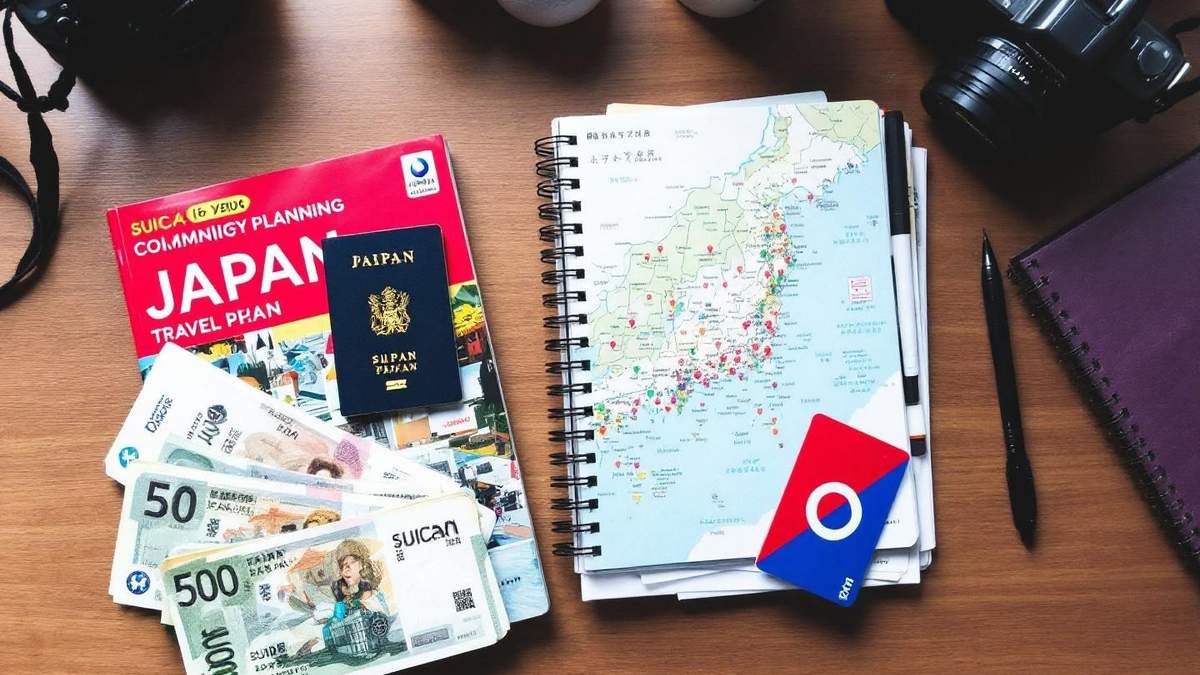
Japan for First-Timers
Last updated: March 2026
Is Japan easy to visit as a first-timer?
Yes. Japan is one of the easiest countries in Asia for first-time visitors. It is extremely safe, clean, and well-organized. English signage is widespread in tourist areas, public transport is world-class, and Japanese people are exceptionally helpful. The biggest challenge is the language barrier, which is easily managed with translation apps.
Japan for first-timers is one of travel’s most rewarding propositions. The country you imagined — a collision of ancient temples, neon-lit cities, extraordinary food, and immaculate organisation — matches reality almost exactly. Better yet, the fears that hold back first-time visitors to Japan are almost universally unfounded. Japan is not expensive for what you get. The language barrier is genuinely manageable. You will not get lost on the trains. And the food is outstanding even for picky eaters.
This guide is for first trip to Japan planners who want to walk in confident and prepared, covering everything from common misconceptions to practical on-the-ground knowledge that takes most visitors multiple trips to accumulate.
Common First-Timer Fears: Debunked
Fear 1: “I Can’t Read Japanese”
English signage covers all Shinkansen stations, major city subway systems, airports, and most tourist attractions. Google Translate’s camera function — point your phone at any text and it translates in real time — handles menus, vending machines, and accommodation instructions. A free translation app downloaded offline handles the rest.
The language barrier in Japan is real but not limiting. Most interactions at convenience stores, restaurants, and hotels require only pointing, nodding, and saying “arigato” (thank you). First-time visitors to Japan rarely encounter a situation they cannot navigate within 30 seconds.
Fear 2: “Japan Is Too Expensive”
Japan is not cheap, but it is far more affordable than its reputation suggests — especially compared to London, Paris, or New York. A realistic daily budget for a first Japan trip:
| Budget Level | Per Day Per Person | What You Get |
|---|---|---|
| Budget | ¥7,000–¥12,000 | Hostel or capsule hotel, convenience store meals, free temples |
| Mid-range | ¥15,000–¥25,000 | Business hotel, restaurants for all meals, paid attractions |
| Comfortable | ¥25,000–¥45,000 | 3-star hotels, good restaurants, day trips, cultural experiences |
| Luxury | ¥60,000+ | Ryokan with meals, premium experiences |
Food is particularly good value: a bowl of ramen costs ¥800–¥1,200. A sushi set lunch at a good restaurant runs ¥1,500–¥2,500. A convenience store meal (genuinely excellent in Japan) costs ¥500–¥800.
Fear 3: “I’ll Offend Japanese People”
Japanese culture has rules around etiquette, but the cultural grace extended to foreign visitors is enormous. Japanese people do not expect foreigners to know every custom, and they appreciate any attempt at respect. The essential rules are simple: remove shoes when entering homes and many traditional restaurants; be quiet on trains and public transport; carry cash (Japan is still heavily cash-based); don’t eat or drink while walking; and tip no one (tipping is not practised in Japan and can cause confusion).
See our Japan etiquette guide for a full breakdown. The short version: be considerate, follow what locals do, and you will be fine.
Fear 4: “The Food Will Be Strange”
Japanese food is one of the world’s greatest culinary traditions and is internationally the most accessible of all East Asian cuisines. Ramen, sushi, tonkatsu, teriyaki, tempura, gyoza — these are now globally familiar. Even strongly unfamiliar items (fermented soybeans, raw fish, offal dishes) appear alongside mainstream options in all restaurants. Being vegetarian is harder than being an omnivore, but even vegetarians can navigate Japan with preparation. See our Japanese food guide for a full breakdown.
Fear 5: “The Transport System Is Too Complicated”
Japan’s train system looks intimidating on a map and is simple in practice. Every station has English signage. Every ticket machine has an English option. Google Maps works perfectly for all public transport in Japan — type in your destination, select the train option, and follow the directions exactly. The Suica IC card eliminates the need to buy individual tickets: tap in, tap out, and the correct fare is deducted automatically.
What Makes Japan Uniquely Good for First-Timers
Safety: Japan consistently ranks among the world’s safest countries. Petty theft is rare; violent crime targeting tourists is essentially non-existent. You can leave belongings at a table to reserve it while you queue. Children travel unaccompanied on trains. The safety level is genuinely remarkable and transforms how you experience city travel — no alert mode, no defensive posture, just presence.
Organisation: Everything runs on time. The Shinkansen’s average delay is 36 seconds. Queues form properly and move efficiently. Information is accurate and signage is clear. For visitors from chaotic cities, the organisational culture of Japan is itself a pleasure.
Density of interest: Japan packs an extraordinary amount of things to see and do into a small geographic area. Tokyo alone offers 100 days of genuine interest. The Tokyo–Osaka corridor (accessible by Shinkansen in 2.5 hours) contains more UNESCO World Heritage Sites, world-class restaurants, and unique experiences than most countries.
Service culture: Japanese service — called omotenashi — is world-class in every price category. A ¥1,000 ramen shop delivers the same attentiveness as a fine dining restaurant. Convenience stores are cleaner and better stocked than supermarkets in most countries.
The Recommended First Japan Itinerary
For a first trip to Japan, the classic Tokyo–Kyoto corridor route is recommended for good reason: it is logical, efficient, hits the highest-impact highlights, and is served by direct Shinkansen.
7 days (minimum viable first trip):
- Days 1–3: Tokyo — Shinjuku, Shibuya, Asakusa, day trip options
- Day 4: Travel to Kyoto by Shinkansen (2h 15m, ~¥13,600 with JR Pass)
- Days 4–6: Kyoto — Fushimi Inari, Arashiyama, Gion, temples
- Day 7: Osaka — Dotonbori, Namba, Kuromon Market; fly home from KIX
10–14 days (better first trip):
- Add Nara as a day trip from Kyoto (deer, Todaiji temple, 45 min each way)
- Add Hakone as a day trip or overnight from Tokyo (Mount Fuji views, onsen)
- Add Hiroshima and Miyajima island from Kyoto or en route to Osaka
This route is covered in detail in our 7 days in Japan itinerary.
Before You Go: Essential Checklist
| Task | When | Notes |
|---|---|---|
| Check visa requirements | 3+ months before | Most nationalities get 90-day visa-free entry |
| Book flights | 3–6 months before | Cheaper and more choice with advance booking |
| Book accommodation | 2–4 months before | Cherry blossom / Golden Week: 6 months ahead |
| Get JR Pass (if applicable) | Before departure | Must be purchased outside Japan |
| Set up Suica on Apple/Google Pay | 1 week before | Or buy physical card at airport on arrival |
| Download offline maps | 1 week before | Google Maps, Japan Offline Map |
| Download translation app | 1 week before | Google Translate (offline Japanese pack) |
| Notify bank of travel | 1 week before | Avoid card blocks; Japan uses Visa/Mastercard |
| Get travel insurance | Before departure | Include medical cover; Japan healthcare is excellent but costs without insurance |
| Get yen | At arrival airport | Narita and Haneda have 24-hour ATMs (7-Bank ATMs accept foreign cards) |
First-Timer’s Top 10 Tips for Japan
1. Get a Suica IC card immediately on arrival. Buy it at the airport or add it to Apple Wallet before you land. It works on almost all trains, buses, and subways across Japan, plus convenience stores and vending machines. Do not waste time buying individual tickets. See our Suica card guide for full instructions.
2. Carry cash. Despite Suica covering most transport and small purchases, many restaurants (particularly traditional ones), some temples, and rural accommodations are cash-only. Withdraw ¥30,000–¥50,000 at the airport 7-Bank ATM (accepts all foreign cards, 24 hours).
3. Convenience stores are your friend. 7-Eleven, FamilyMart, and Lawson in Japan are not like convenience stores elsewhere. Hot food, fresh onigiri, quality sandwiches, beer, medicine, ATMs, printing, and Wi-Fi — all in one. The food is genuinely good and costs ¥500–¥800 per meal.
4. Wear comfortable shoes. You will walk 15,000–25,000 steps per day. This is not an exaggeration. Pack your most comfortable walking shoes. New shoes will destroy you.
5. Buy a JR Pass only if you are travelling long distances. The JR Pass is excellent value if you are taking multiple Shinkansen journeys. The standard 7-day pass costs ¥50,000 and covers the Tokyo–Osaka Shinkansen return (¥28,000) plus additional routes. If you are staying in one city, you do not need it.
6. Book popular restaurants in advance. Ramen and gyoza shops are walk-in. But if you want to eat at a famous or Michelin-recognised restaurant, book online at least 2 weeks ahead (Tabelog or the restaurant’s own site).
7. Don’t overplan. Japan rewards wandering. Some of the best experiences come from turning down an unfamiliar alley, following locals into a neighbourhood festival, or discovering a craft sake bar with no English menu. Build flexibility into your itinerary.
8. Use Google Maps for everything. It works offline, covers all rail and subway routes, and provides walking directions between major spots with exceptional accuracy. Download the offline map of Japan before you leave.
9. Respect quiet on trains. Phone calls on trains are frowned upon. Conversations should be in quiet voices. Earphones are expected for music and video. This is not strict policing — just a cultural norm that makes Japan’s trains a genuinely pleasant environment.
10. Visit a convenience store 7-Eleven or FamilyMart ATM for cash. Japan Post ATMs and 7-Bank ATMs (in 7-Eleven) accept virtually all foreign Visa and Mastercard debit and credit cards. Japan can feel intimidating about card acceptance — lean on ATMs and carry a float of yen.
First-Timer Culture Moments to Embrace
Vending machines everywhere: Japan has approximately 5.5 million vending machines. Hot and cold drinks, snacks, cigarettes, umbrellas, and in some locations fresh ramen — all available 24 hours, everywhere from city streets to mountain hiking trails.
Capsule hotels: Sleeping in a capsule (a private sleeping pod roughly 2m x 1m) is a quintessential Japan experience. Modern capsule hotels are clean, efficient, and often include shared onsen facilities. Prices ¥3,500–¥6,000 per night.
The 100-yen shop: Daiso and Seria are 100-yen shops (¥110 including tax) that sell an extraordinary range of goods — organisational tools, kitchenware, travel accessories, stationery, and seasonal items. A visit is both practical and culturally fascinating.
Quiet streets at night: Japanese cities feel completely safe at all hours. Walking back to your hotel at midnight through quiet residential streets, past vending machines humming orange in the dark, is a sensory experience that visitors remember for years.
Budget Estimate for a First Japan Trip (7 Days, Solo)
| Category | Budget Level | Mid-Range | Comfortable |
|---|---|---|---|
| Accommodation (7 nights) | ¥35,000 | ¥84,000 | ¥175,000 |
| Food (3 meals/day) | ¥28,000 | ¥56,000 | ¥105,000 |
| Transport (JR Pass + local) | ¥55,000 | ¥55,000 | ¥62,000 |
| Attractions & activities | ¥8,000 | ¥18,000 | ¥35,000 |
| Shopping & miscellaneous | ¥10,000 | ¥25,000 | ¥50,000 |
| Total (approx.) | ¥136,000 | ¥238,000 | ¥427,000 |
Transport assumes Tokyo–Kyoto route with 7-day JR Pass (¥50,000). Budget accommodation: hostels/capsule hotels. Mid-range: business hotels. Comfortable: 3-star hotels plus one ryokan night.
Japan for first-timers is genuinely accessible, deeply rewarding, and — for most visitors — the beginning of a lifetime of return trips. The combination of extraordinary food, exceptional safety, cultural depth, and sheer variety of experiences is difficult to match anywhere. Go prepared, stay curious, and let Japan surprise you.
For next steps, see our plan a trip to Japan guide and Japan travel budget guide.
Understanding Japan’s Cities: Where to Go First
One of the most common first trip to Japan planning questions is which cities to prioritise. Here is a clear breakdown:
Tokyo: Japan’s capital and the world’s largest metropolis is the default first stop and for good reason. It combines extraordinary food, world-class museums and art, the highest concentration of Michelin-starred restaurants on earth, the best shopping, and a dozen completely distinct neighbourhoods each with their own character. Three days is a minimum; five days works well for a first visit. Base yourself in Shinjuku (best transport hub), Asakusa (most traditional atmosphere), or Shibuya (modern Tokyo energy).
Kyoto: The cultural heart of Japan. Kyoto was the imperial capital for over 1,000 years and is home to more UNESCO World Heritage Sites (17) than any comparably sized city in the world. The contrast between Kyoto and Tokyo — quieter, older, more traditionally oriented — is itself one of the most valuable Japan travel experiences. A minimum of two nights; three nights is better.
Osaka: Japan’s food capital and the country’s most extrovert city. Osaka people are famous for their warmth, directness, and obsession with eating. Dotonbori — the neon canal district — is one of Asia’s most photogenic urban spaces. One to two days from Kyoto is sufficient as a first visit.
Nara: The closest thing to a perfect day trip from Kyoto or Osaka. Nara is compact, walkable, home to Japan’s largest bronze Buddha (Todaiji), and populated with hundreds of wild deer that roam freely through the park. 45 minutes from Kyoto by local train; ¥720.
Hiroshima: The Peace Memorial and Museum are among the most important sites in modern Japan — historically profound, meticulously presented, and ultimately life-affirming rather than merely tragic. Hiroshima is 45 minutes from Kyoto by Shinkansen and can be combined with a visit to Miyajima island’s famous floating torii gate in a single day or a relaxed overnight.
Hakone: The closest thing to a complete Japan experience in a small area — mountain scenery, hot springs, outdoor sculpture, classic ryokan culture, and views of Mount Fuji. Hakone makes an ideal 1–2 night stop between Tokyo and Kyoto or as a day trip from Tokyo.
Japan’s Train System for First-Timers
Japan’s train network is the world’s finest and the foundation of travel across the country. Understanding the basics makes navigation effortless.
The key distinction: Japan has two overlapping train networks — Japan Railways (JR), operated by the government-privatised national rail company, and private railways operated by separate companies (Tobu, Odakyu, Hankyu, etc.). In practical terms, the JR lines are marked on maps in a different colour (usually light blue for JR East in Tokyo, green for JR in Osaka).
How fares work: Each journey has a fare calculated by distance. With a Suica IC card, you tap in at origin and tap out at destination — the correct fare is automatically deducted. You never need to calculate fares manually.
JR Pass: The JR Pass is a prepaid pass for unlimited travel on most JR lines including the Shinkansen. It is only available for purchase outside Japan and is cost-effective if you are making multiple long-distance journeys. The 7-day pass costs ¥50,000 and covers round-trip Tokyo–Kyoto Shinkansen (normally ¥27,200) plus additional routes.
Getting lost: You will not get lost on Japan’s trains. Every station has English signage, English announcements, and the train number and destination are marked on every platform screen. Google Maps routes all journeys perfectly. Even if you accidentally board the wrong train, the worst outcome is getting off at the next stop and catching the right one.
Common Etiquette Rules for First-Timers
Japan etiquette for visitors can be summarised in a few rules that cover the vast majority of situations:
| Situation | Rule | Why |
|---|---|---|
| Entering homes / ryokan | Remove shoes at genkan (entrance step) | Floors are kept spotless; shoes bring outside dirt |
| Trains | No phone calls; quiet voices | Communal quiet is a social norm |
| Eating/drinking | Do not walk while eating | Considered messy and disrespectful |
| Temples/shrines | Follow posted rules; some require removing hats | Respect for sacred spaces |
| Onsen | Wash thoroughly before entering bath | Onsen water is shared; cleanliness is essential |
| Tipping | Do not tip anyone | Tipping can cause confusion or offence |
| Escalators | Stand on the left (Tokyo); right (Osaka) | Walkers use the free side |
| Cash | Pay exactly if possible; handle change carefully | Cash transactions are treated with care |
| Rubbish | Carry it with you to a bin | Public bins are rare; litter is essentially non-existent |
See our complete Japan etiquette guide for a deeper treatment of cultural rules.
Money and Payments for First-Timers
Japan is still a cash-forward society. While card acceptance has improved significantly since 2020, cash remains essential. The Japan first time visitor who does not carry yen will encounter restaurants, temples, small hotels, and rural transport that accept nothing else.
ATMs: The most reliable ATMs for foreign cards are 7-Bank (inside 7-Eleven convenience stores) and Japan Post Bank ATMs. Both accept Visa, Mastercard, and most foreign debit cards. Both are 24-hour in convenience stores. Withdraw ¥30,000–¥50,000 on arrival; replenish every few days.
Credit cards: Visa and Mastercard are accepted at major hotels, department stores, chain restaurants, and tourist-facing shops. American Express has patchy acceptance. UnionPay works at many tourist locations. Do not rely on any single card; always have cash backup.
Tipping: Do not tip. Japan does not have a tipping culture. Service is part of the price and is consistently excellent because of professional pride, not financial incentive. Leaving money on the table at a restaurant will typically result in the server running after you to return it.
What to Do in the First 24 Hours in Japan
The first day in Japan for a first-time visitor to Japan is typically arrival day, often after a long flight. A practical first-24-hours plan:
- At the airport: Activate your IC card (Suica on Apple Wallet or buy physical card at the station). Withdraw ¥50,000 from a 7-Bank ATM. Pick up any pocket Wi-Fi or activate your eSIM.
- Transport to city: Book your Narita to Tokyo or Haneda to city transport in advance if arriving during busy periods.
- Check in early or store luggage: Japanese hotels typically allow early check-in requests; if room is not ready, hotel stores luggage while you go explore.
- First meal: Find a conveyor belt sushi restaurant (kaiten-zushi) or a department store food hall basement (depachika) for an immediate immersion in Japanese food culture with minimal language barrier.
- First evening: Walk your neighbourhood. The density of interesting things within 15 minutes of any Tokyo hotel — ramen shops, vending machine alleys, 100-yen shops, tiny izakayas — is extraordinary. Let jet lag push you to sleep by 9–10 PM for a 5 AM natural start the next day.
Japan for first-timers is one of travel’s greatest experiences precisely because the gap between expectation and reality is so surprisingly positive. You expected it to be difficult, you discovered it is effortless. You expected the food to be challenging, you discovered it is magnificent. You expected language to be a barrier, you discovered translation apps are extraordinary. Japan meets first-timers more than halfway — all you need to do is show up prepared.