Cherry Blossom Season in Japan
Last updated: March 2026
When is cherry blossom season in Japan?
Cherry blossoms typically bloom from late March to mid-April in most of Japan. Tokyo and Kyoto usually see peak bloom around late March to early April. The season moves from south to north — Okinawa blooms in January, while Hokkaido blooms in May.
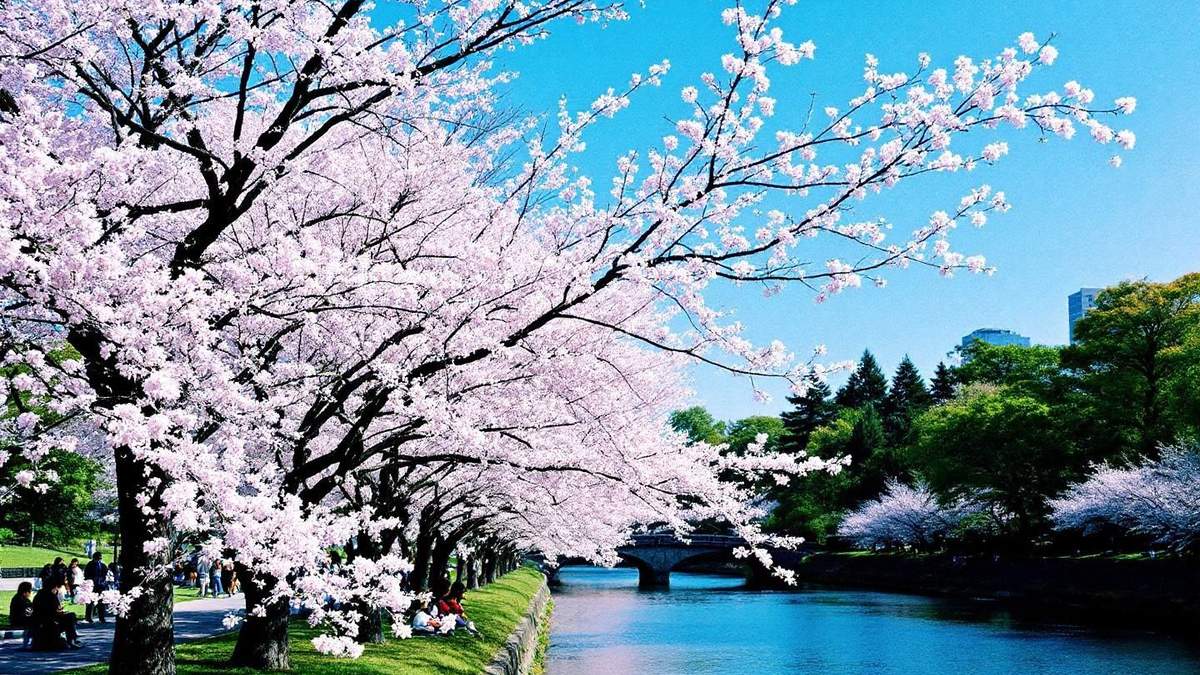
There is a reason Japan’s cherry blossom season is one of the most anticipated natural events in the world. For a few weeks each spring — sometimes as few as ten days at any single location — the country transforms. Parks, riverbanks, castle moats, and mountain roads become tunnels of pale pink and white blossoms. The Japanese word for it is sakura, and the annual ritual of gathering beneath the blooming trees to eat, drink, and celebrate is called hanami: flower viewing.
This is the most complete guide to experiencing cherry blossom season in Japan: when to go, where to go, how to do it properly, and what to do when the blossoms are not quite where you expected.
What Is Hanami?
Hanami (literally “flower viewing”) is a practice with roots in Japan going back over a thousand years. The aristocracy of the Heian period (794–1185) held elegant outdoor parties beneath blossoming plum and cherry trees, writing poetry and drinking sake. The practice gradually spread to all levels of society, and by the Edo period (1603–1868) it had become the mass celebration it remains today.
Modern hanami is not reserved for special occasions or formal gatherings. It is a spontaneous, democratic pleasure. Office workers spread blue tarps under cherry trees in local parks and eat bento, drink beer, and talk for hours. Families bring picnic blankets and sakura mochi. Couples walk the illuminated riverbanks after dark. Foreign tourists discover that the Japanese enthusiasm for sakura is not performative — it is genuine joy at the annual return of beauty.
The blossoms last such a short time — peak bloom in any location is typically 7–14 days, and full bloom lasts only a few days within that window — that their transience has become philosophically significant in Japanese culture. The concept of mono no aware (a bittersweet appreciation of impermanence) is often illustrated with sakura. Their beauty is partly inseparable from the fact that they will fall.
How the Sakura Forecast Works
Japan has a sophisticated and widely followed system for predicting cherry blossom bloom. The Japan Meteorological Corporation and multiple weather services issue annual sakura forecasts (sakura yoho) from around January onward, updated regularly as the season approaches.
The forecast tracks the “sakura front” — a line marking where blossoms are expected to open, moving progressively northward from southern Kyushu and Okinawa through Honshu and eventually reaching Hokkaido. The front moves at roughly the pace of warming spring temperatures.
Key Terminology
Kaika (開花): The first flowers open on the “standard tree” at a monitoring station. This is the official start of the cherry blossom season at that location.
Mankai (満開): Full bloom — typically defined as 80% or more of the flowers on the standard tree being open. This is peak viewing time and usually arrives 7–14 days after kaika.
Chirashi (散り): The blossoms begin to fall. Even this stage is beautiful — fallen petals drift across the ground and water in a phenomenon called hanafubuki (flower blizzard).
Where to Check the Forecast
Japan Meteorological Corporation releases official forecasts (available in English on major travel websites). Weather sites like Weathernews Japan and tenki.jp issue highly detailed local forecasts down to the neighborhood level. Search “sakura forecast 2026” for the most current predictions for your travel dates.
Be aware that cherry blossom timing is notoriously difficult to predict precisely, even for professional meteorologists. The forecast can shift by a week or more depending on winter temperatures and spring warming patterns. Build flexibility into your travel dates if at all possible.
Typical Bloom Dates by City
These are historical averages. In any given year, dates can shift 1–2 weeks earlier or later.
Okinawa (Naha): Late January to mid-February. Okinawa’s cherry trees are primarily kanhizakura (a tropical variety), which bloom earlier and look different from the standard Yoshino cherry — deeper pink and more tubular. Still beautiful and a chance to see sakura in winter warmth.
Fukuoka (Kyushu): Mid to late March
Hiroshima: Late March to early April
Osaka: Late March to early April (typically 1–3 days after Tokyo)
Kyoto: Late March to early April (typically around the same time as Tokyo, sometimes a day or two later)
Tokyo: Late March to early April (the most-watched benchmark; peak bloom typically falls around March 28 to April 5 in a typical year)
Nagoya: Late March to early April
Kanazawa: Early to mid-April
Sendai (Tohoku): Mid to late April
Aomori (Tohoku): Late April to early May
Matsumoto: Late April to early May
Sapporo (Hokkaido): Late April to early May
Hakodate (Hokkaido): Early to mid-May
This north-to-south progression means a savvy traveler can follow the sakura front for several weeks, experiencing peak bloom in multiple locations by moving progressively northward.
Best Cherry Blossom Spots in Tokyo
Tokyo has hundreds of excellent hanami locations, from major parks to neighborhood riverbanks. These are the standouts.
Ueno Park (Taito Ward)
Ueno Park is the most famous hanami site in Tokyo and arguably in Japan. Approximately 1,000 cherry trees line the main promenade and fill the park, creating a spectacular canopy of blossoms at peak. During the day, the central path becomes so crowded it can be difficult to move. In the evening, paper lanterns illuminate the blossoms for yozakura (night viewing) until around 21:00.
The experience here is not quiet or contemplative — it is festive, crowded, and extremely fun. Blue tarps cover every available square meter, food and drinks stalls line the paths, and the smell of yakitori mixes with sakura petals. This is hanami at its most celebratory and its most chaotic. Come early in the morning (before 09:00) if you want to walk freely. Come in the evening for the magical lantern-lit atmosphere.
Access: Ueno Station (JR, Tokyo Metro Ginza Line and Hibiya Line). Free entry to the park.
Shinjuku Gyoen
Shinjuku Gyoen is a formal garden rather than a public park — entry costs 500 yen, and alcohol is not permitted. The combination of these two facts means it is significantly calmer than Ueno or other major hanami spots. It is, by a significant margin, the most beautiful cherry blossom location in Tokyo.
The garden contains over 1,000 trees of more than 65 varieties, meaning the season here is longer than at single-variety sites — early-blooming varieties open the season and late varieties extend it. The Yoshino cherries at peak bloom against the traditional garden landscape and the glasshouse is exceptional photography territory.
Access: Shinjuku-gyoenmae Station (Tokyo Metro Marunouchi Line) or Sendagaya Station (JR Chuo Line). Opens 09:00, closes 18:00 (last entry 17:30). Closed Mondays except during cherry blossom season.
Chidorigafuchi
Chidorigafuchi is a moat on the northwest side of the Imperial Palace, lined with weeping cherry trees whose branches trail over the water. Rowing boats (500 yen for 30 minutes) allow you to paddle directly under the blossoms with petals falling into the water around you. In the evening, the National Forest of Japan illuminates the trees with soft lighting for one of Tokyo’s most atmospheric yozakura experiences.
The rowboat queue can be 1–3 hours during peak bloom. Plan to queue or arrive at opening (10:00). The walking path along the moat is freely accessible at all times and spectacular even without a boat.
Access: Kudanshita Station (Tokyo Metro Hanzomon Line, Tozai Line, Toei Shinjuku Line). Free path access; boats 500 yen.
Meguro River
The Meguro River flows through the Nakameguro and Daikanyama neighborhoods, lined on both banks with cherry trees whose branches meet overhead to form a tunnel of blossoms. The cafes, restaurants, and boutiques lining the riverbank make this the most stylish hanami setting in Tokyo — you can walk the 4km stretch with a coffee or glass of wine from one of the many riverside businesses.
In the evening, the illuminated reflections of the blossoms on the river are arguably Tokyo’s most beautiful yozakura experience. The area is a major Instagram destination and becomes significantly crowded during peak bloom — arrive on a weekday, or before 10:00 on a weekend.
Access: Nakameguro Station (Tokyo Metro Hibiya Line, Tokyu Toyoko Line). Free.
Sumida River
The Sumida River embankment between Asakusa and Mukojima has over 1,000 cherry trees lining both banks, visible from the river itself on sightseeing boats. This is a more relaxed, traditionally-inflected hanami experience than Ueno or Chidorigafuchi. The view of blossoms with Senso-ji’s pagoda in the background is one of Tokyo’s classic sakura compositions.
The TOKYO SKYTREE looms in the background on the Mukojima side, adding a striking contemporary contrast to the historic scene.
Access: Asakusa Station (multiple lines). Free.
Best Cherry Blossom Spots in Kyoto
Kyoto’s cherry blossoms are experienced differently from Tokyo’s — the city’s density of historic temples and shrines means blossoms appear in carefully composed traditional settings rather than parks and riverside promenades. See our full Japan in Spring guide for seasonal travel tips.
Maruyama Park (Maruyama Koen)
Maruyama Park in the Higashiyama district is Kyoto’s most famous hanami spot, centered on a magnificent shidarezakura (weeping cherry tree) of extraordinary size and beauty. The park fills with food stalls and picnicking locals and tourists from before dawn to after midnight during peak bloom. The illuminated weeping cherry at night, with its cascading branches of blossoms, is one of the most photographed subjects in Japan during spring.
The park itself is free and open at all hours. The food stalls make it self-catering for a hanami picnic.
Access: Gion-Shijo Station (Keihan Line), then 15 minutes on foot. Free.
The Philosopher’s Path (Tetsugaku no Michi)
A 2km canal-side path through the Higashiyama district, lined with several hundred Somei Yoshino cherry trees whose branches arch over the water to form a continuous tunnel of blossoms. The path connects several important temples — Nanzen-ji at the south end, Ginkaku-ji (Silver Pavilion) at the north — making it the perfect spine for a full day of temple-hopping during sakura season.
The Philosopher’s Path is most beautiful in the early morning or late afternoon when the light catches the petals on the water. It can become very crowded during midday at peak bloom.
Access: Walk from Nanzen-ji (Keage Station, Tozai Line) to Ginkaku-ji (then bus back). Free.
Kiyomizu-dera
Kiyomizu-dera temple, perched on a hillside with a famous wooden veranda jutting out over the forested slope, offers dramatic views of surrounding cherry blossoms at peak season. The approach path (Kiyomizuzaka and Ninenzaka) is also lined with trees and is atmospheric even at the dense crowds that characterize peak season. The temple is illuminated for night viewing during sakura season.
Access: Bus from Kyoto Station to Kiyomizumichi stop, then walk. Entry fee 400 yen.
Arashiyama
The Arashiyama district in western Kyoto combines the famous bamboo grove with beautiful riverside sakura viewing along the Oi River. The riverbank (Nakanoshima Park) is an excellent spot for a calm hanami picnic, and the Togetsukyo Bridge with blossoms on the surrounding hills behind it is one of Kyoto’s iconic spring images. The hillsides above Arashiyama, accessible by the Sagano Scenic Railway, are carpeted with cherry trees.
Access: Randen Arashiyama Station or JR Sagano Line to Saga-Arashiyama Station.
Nijo Castle
Nijo Castle’s moat and grounds contain over 300 cherry trees of multiple varieties. The castle grounds are open for extended evening illumination events during sakura season, with light projections on the walls and trees that make for a spectacular modern-meets-historic combination.
Access: Nijo-jo-mae Station (Tozai Line). Entry 1,030 yen.
Best Cherry Blossom Spots in Osaka
Osaka Castle Park: The moats and grounds of Osaka Castle contain approximately 3,000 cherry trees, with the castle donjon rising behind the blossoms in one of Japan’s most composed spring views. The surrounding park hosts food stalls and large hanami gatherings.
Mint Bureau (Zoheikyoku): One of Osaka’s most distinctive sakura events — the grounds of the government mint, normally closed to the public, open for exactly one week during cherry blossom season to show off over 130 varieties of cherry trees, many of them rare cultivars not seen elsewhere. The queue can be long, but the variety of blossoms (including deep pink, white with pink center, and double-petal varieties) is extraordinary.
Kema Sakuranomiya Park: A 4.2km riverside park along the Okawa River with approximately 4,700 cherry trees — one of the longest unbroken stretches of riverside sakura in Japan.
Other Outstanding Cherry Blossom Destinations
Hirosaki Castle (Aomori): Widely considered one of Japan’s top three hanami spots. The castle moat turns pink with fallen petals that pile up against the walls and reflect the blossoms above. Because Aomori is in northern Honshu, bloom comes in late April to early May — a good option for those who cannot travel during the main March–April window. The 2,600 trees include many old, gnarled specimens with extraordinary character.
Takato Castle (Nagano): The “Takato” cherry is its own variety — a deeper pink than standard Yoshino cherries, native to the Ina Valley. Approximately 1,500 trees cover the castle ruins in late April, with the mountains of Nagano as a backdrop. It is one of the most photogenic sakura scenes in Japan and receives far fewer international visitors than the main tourist cities.
Yoshino Mountain (Nara): Mount Yoshino has been one of Japan’s most famous cherry blossom viewing spots for over a thousand years. Approximately 30,000 trees cover the mountainside in a progression from the base to the peak — early-blooming varieties open first at the lower elevations, with late varieties still in bloom at the summit weeks later. The views from the mountain are stunning. Access from Kyoto or Osaka via Kintetsu rail.
Fuji Five Lakes (Yamanashi/Shizuoka): Cherry blossoms with Mt. Fuji as a backdrop. The most famous composition: the torii gate at Lake Kawaguchiko with a row of blossoms and Fuji behind. This is peak Japanese photography territory, though the spot is extremely crowded.
Night Cherry Blossoms: Yozakura
Yozakura (night cherry blossoms) are one of the most beautiful experiences sakura season offers, and many visitors do not know to look for them. Cherry trees are illuminated by spotlights, lanterns, or LED lighting after dark, creating an entirely different atmosphere from daytime viewing — more mysterious, more romantic, and often less crowded.
Major yozakura events run from approximately sunset to 21:00–22:00 at specific locations including:
- Ueno Park (Tokyo): lantern illuminations along the main promenade
- Chidorigafuchi (Tokyo): LED illuminations along the moat
- Meguro River (Tokyo): restaurant and bar lighting reflecting on the water
- Maruyama Park (Kyoto): spotlight on the weeping cherry
- Nijo Castle (Kyoto): projection mapping and illumination
- Osaka Castle: floodlit castle with illuminated blossoms
Check the specific dates for illumination events as they typically run only during the peak bloom period and are sometimes cut short by rain or wind that causes early petal fall.
Hanami Etiquette: How to Do It Right
Claiming your spot: At very popular spots (Ueno Park, Chidorigafuchi), people claim hanami spots with blue tarps from early morning — sometimes before 07:00. Junior office workers are traditionally sent ahead to claim and hold spots for afternoon office parties. If you want a good spot at a popular location, send someone early with a tarp.
Blue tarps: Bright blue tarps are the traditional hanami groundcover and are sold at every convenience store and 100-yen shop during the season. Bring one — the grass is often damp, and the blue tarp is as much a cultural artifact as a practical item.
Food and drink: Hanami food is casual and portable. Convenience store bento, onigiri, sushi rolls, edamame, takoyaki, and beer are all standard. Sakura-flavored items — sakura mochi (sticky rice cake with red bean and a pickled cherry leaf), sakura flavored Kit-Kats, sakura drinks at Starbucks — are widely available during the season.
What to bring: Tarp or picnic blanket, food and drinks from a convenience store or nearby market, portable wet wipes (for hands), small bin bag (there are no public bins), a jacket (spring evenings are cold), and an umbrella (spring weather is unpredictable).
Noise and rubbish: Hanami is one of the few occasions in Japan when outdoor socializing at reasonable volume is entirely acceptable. But carry your rubbish home or to a convenience store bin. Leave the site as clean as you found it.
Planning Tips for Cherry Blossom Season
Book accommodation 4–6 months in advance. This is not optional advice for popular timing. Hotels in Kyoto, Tokyo, and Osaka during peak bloom dates (roughly late March to mid-April) sell out at a pace that surprises most travelers. See our best time to visit Japan guide for broader seasonal planning. Prices also increase significantly — a hotel that normally costs 12,000 yen per night may charge 18,000–25,000 yen during peak bloom.
Stay flexible with dates. If your dates are fixed months in advance, you may arrive before or after peak bloom — which is entirely possible and happens to many travelers. The forecast cannot be predicted precisely that far ahead. Build in flexibility if at all possible: 10–14 day trips with some flexibility in the middle have a much higher chance of catching at least some peak bloom.
Consider the shoulder — early and late bloom. The days just before mankai (full bloom) and just after, when petals begin to fall, are often less crowded and still very beautiful. Especially the “petal fall” phase — hanafubuki, the flower blizzard — can be more poetic and less crowded than peak bloom.
Use multiple cities: Because the bloom front moves north over several weeks, a well-planned two-week trip can experience peak bloom in multiple locations. For example: Kyoto (late March), Tokyo (early April), Sendai or Hirosaki (mid to late April).
Sakura-Themed Food and Drinks
Cherry blossom season brings an explosion of seasonal food and beverages across Japan:
Sakura mochi: The quintessential spring confection — a pink sticky rice cake wrapped around sweet red bean paste, enclosed in a pickled cherry leaf. The leaf is edible (and salty-savory, contrasting beautifully with the sweet rice). Available at wagashi shops, convenience stores, and train station kiosks throughout the season.
Hanami dango: Three rice dumplings on a skewer in the traditional hanami color trio — pink, white, and green (the green is often flavored with mugwort). Sold by street vendors and at convenience stores.
Sakura lattes and drinks: Starbucks Japan releases annual sakura-season drinks (usually a sakura latte and a sakura frappuccino) that become genuine events in Japanese pop culture. McDonald’s, Lawson, and other chains follow with their own seasonal sakura items.
Sakura beer: Several Japanese craft brewers release cherry blossom ales during the season, typically light, floral wheat beers. Look for them at craft beer shops and department store food halls.
Photography Tips
Golden hour: The soft light of early morning and late afternoon enhances the pale pink tones of cherry blossoms in ways that harsh midday light cannot. Wake up early — you will also encounter far smaller crowds.
Rain: A light rain during cherry blossom season is actually one of the best conditions for photography — the petals become heavy and the colors deepen, and the reflections on wet pavements and water create extraordinary images.
Petal fall: The phase when petals fall (usually 1–2 weeks after peak bloom) offers some of the most beautiful photographic subjects — petals drifting on rivers, accumulated on the ground around a red torii gate, or floating in a cup of tea at an outdoor cafe.
Perspective: At the most popular spots, everyone photographs the obvious composition. Walk further along, look up through the branches rather than across them, find the less-crowded angle. The best sakura photographs from Japan’s most famous spots are usually not the most obvious shots.
What If You Miss Peak Bloom?
This happens more often than visitors hope, and it is not a disaster.
Before peak: Even before mankai, cherry trees in the opening (kaika) phase have a spare, delicate beauty — a few clusters of blossoms against bare branches. The parks and viewpoints are far less crowded.
After peak: The petal fall phase (hanafubuki) is genuinely beautiful and emotionally resonant. The ground beneath the trees turns pink. Petals drift on water. The Japanese find this phase particularly moving, as it represents the aspect of cherry blossoms most connected to the philosophy of impermanence.
Yaezakura: Many parks and garden sites have late-blooming double-petal varieties (yaezakura) that reach peak bloom 1–2 weeks after the standard Yoshino cherries. Shinjuku Gyoen is particularly good for this — the cherry blossom season there extends over nearly a month due to the variety of species planted.
And remember: Japan is extraordinarily beautiful in spring even when the sakura are not at their peak. The fresh green of new leaves, the abundance of other spring flowers (plum, peach, wisteria), and the gentle weather make this one of the best times to visit the country regardless of blossom timing.
Final Thoughts
Cherry blossom season in Japan lives up to its reputation — and then exceeds it. No photograph fully conveys the scale of it, the way an entire city changes character for a few weeks, or the feeling of sitting under a canopy of blossoms with good food and good company while petals drift down around you.
Plan carefully, book early, stay flexible, and go.