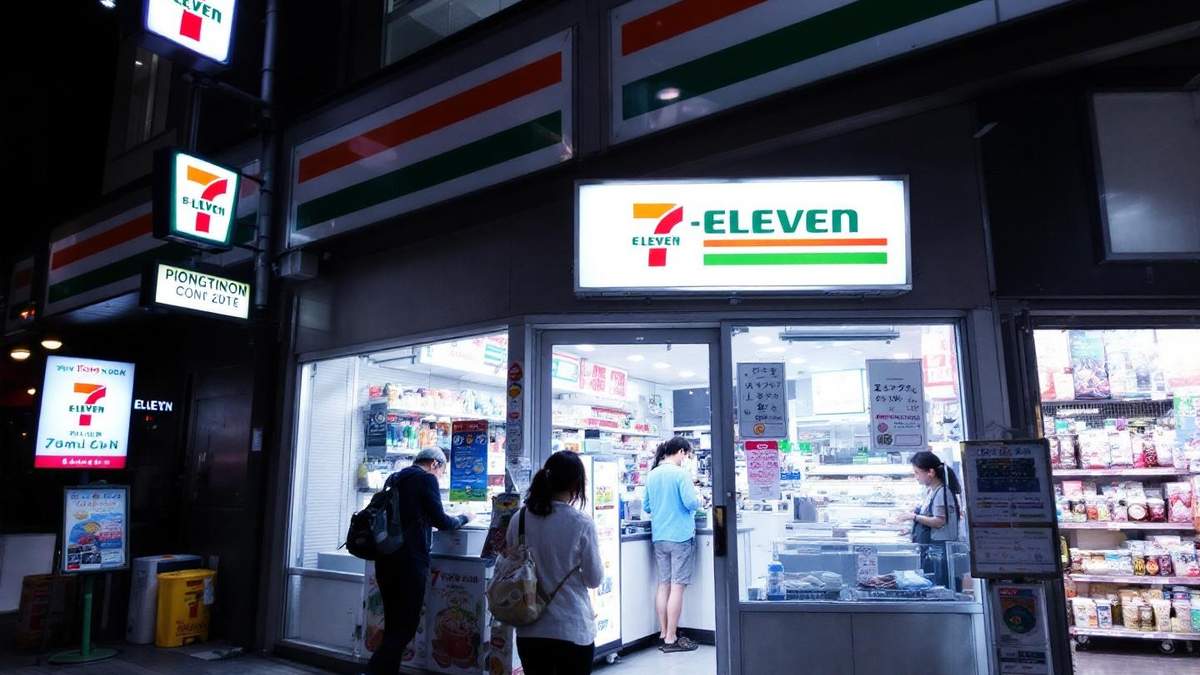
Why Japanese Convenience Stores Are the Best in the World
Last updated: March 2026
If you arrive in Japan and have not yet been to a convenience store, you have missed something essential. For a broader overview of Japanese food culture, see the Japanese food guide. This is not a mild exaggeration — Japanese convenience stores, known as konbini, are genuinely extraordinary institutions that occupy a cultural and practical role unlike anything their Western counterparts approach.
There are approximately 55,000 konbini in Japan. The three major chains — 7-Eleven (the world’s largest operator, headquartered in Japan), Lawson, and FamilyMart — operate within a few hundred metres of virtually every train station in the country. In urban areas they are open 24 hours. They are consistently clean, efficiently staffed, and stocked with an astonishing variety of genuinely good food.
The Food
Onigiri
The onigiri is the soul of the konbini. A rice ball formed around a filling — pickled plum, grilled salmon, tuna mayonnaise, seasoned kelp, mentaiko (spiced cod roe), teriyaki chicken, and dozens of seasonal variations — wrapped in nori seaweed and sold in individual packaging that keeps the nori crisp and separate from the rice until you open it. The packaging design, with its numbered tabs and ingenious tear-away strips, is an engineering achievement in its own right.
A konbini onigiri costs 110 to 175 yen. It takes thirty seconds to open and eat standing at a counter or on a train. It is one of the most perfectly designed convenience foods ever created. Eating your first proper 7-Eleven tuna mayo onigiri is a small but genuine revelation.
Hot Foods
Every konbini has a heated glass case near the register containing nikuman (steamed pork buns), anman (sweet bean paste buns), and seasonal variations. In winter, these warm steamed buns are one of Japan’s great comfort foods. Display racks near the register offer fried chicken (the 7-Eleven fried chicken has achieved genuine fame), corn dogs, and various hot snacks. Point to the item and the cashier will use tongs to bag it.
Sandwiches
Japanese konbini sandwiches bear no resemblance to their Western equivalents. Made fresh daily with soft Japanese milk bread (shokupan), cut diagonally, with fillings that include egg salad, katsu (fried pork cutlet), tuna, and various combinations. The egg salad sandwich — soft boiled egg with Japanese mayonnaise on fluffy white bread — has developed a genuine following among travellers and locals alike.
Bento Boxes
A full bento box from a konbini — rice, a main protein, pickled vegetables, and several side dishes — costs between 450 and 650 yen. The range changes seasonally and by region. The quality is not restaurant quality, but it is significantly better than prepared supermarket food in most countries. Many Japanese workers eat konbini bento several times per week not from lack of alternatives but by genuine preference.
Hot Drinks and Coffee
Every major konbini chain operates a coffee machine at the register. A regular coffee costs 100 yen. A latte costs 150 to 180 yen. The coffee is genuinely good — made with freshly ground beans, not the brown liquid that “convenience store coffee” implies in most countries. The 100-yen konbini coffee reportedly affected the Tokyo cafe industry significantly when it was introduced.
In winter, the heated drink cans and bottles in the beverage sections — hot canned coffee, hot matcha milk, hot corn soup — are cold-day essentials. The can is warm to hold, which matters more than it should on a January morning in Tohoku.
Oden
Oden is one of the most specifically Japanese konbini offerings, particularly in autumn and winter. A large heated pot behind the register holds an assortment of items simmering in dashi broth: daikon radish, various fish cakes, tofu, konnyaku (konjac), boiled eggs, and more. You point at what you want and the cashier fishes it out with ladles and tongs. Prices are 80 to 150 yen per item. The soup ladled over everything is deeply comforting on a cold night. Oden is how konbini start to feel like a local social institution rather than just a shop.
Seasonal and Regional Items
Japanese konbini chains rotate stock seasonally and produce regional exclusives for specific areas. Cherry blossom season brings sakura-flavoured everything. Winter brings oden, hot soups, and warming sweet drinks. Summer brings kakigori (shaved ice) flavours and cold noodle dishes.
Regional items are a genuine konbini pleasure for travelling visitors. Hokkaido 7-Elevens stock Hokkaido dairy products unavailable elsewhere. Okinawa Lawsons carry Okinawan sweet potato items and Orion beer. Kyushu FamilyMarts have tonkotsu ramen variants. Part of the joy of moving around Japan is tracking what each region’s stores stock differently.
Kit Kats and Unique Snacks
Japan has produced over 300 flavours of Kit Kat, many exclusive to specific regions or seasons. The matcha Kit Kat, wasabi Kit Kat, sake Kit Kat, sakura Kit Kat, and shiro (white chocolate) Kit Kat are among the most famous. These make excellent, light-weight, affordable souvenirs. They are available at konbini everywhere and represent good value compared to dedicated souvenir shops.
The Services
Japanese convenience stores long ago transcended food retail and became full-service neighbourhood hubs. The range of services available at a standard konbini is remarkable.
ATMs
7-Eleven ATMs and Japan Post ATMs accept international cards reliably and charge reasonable fees — typically 110 yen per transaction. These are often the easiest way for visitors to access yen outside bank hours, and they operate 24 hours a day. Post offices with ATMs are found next to or within many konbini in rural areas.
Printing and Photocopying
Every konbini has a multi-function copying and printing machine. For visitors, the most useful function is document printing: upload a file from your phone via the chain’s free app and print it in-store for 10 to 20 yen per page. This is invaluable for printing hotel bookings, transport reservations, or immigration documents when you need a physical copy.
Ticket Purchasing
Concerts, sporting events, theme parks, and travel tickets can be purchased and printed at konbini ticket kiosks. The Loppi machine at Lawson and the Famiport machine at FamilyMart handle ticketing for major events. These systems are primarily in Japanese, but with a smartphone translation app they are navigable with patience.
Bill Payment
Japanese utility bills, internet bills, insurance premiums, and many other invoices can be paid at any konbini counter. Hand the bill to the cashier with the appropriate cash and receive a receipt. This is how many Japanese people pay bills that do not have direct debit arrangements, and it is entirely normal to see someone paying a stack of invoices at the register.
Parcel Delivery and Luggage Forwarding
Convenience stores are collection and drop-off points for Japan’s major parcel delivery services, including Yamato Transport’s Kuroneko service. You can receive packages at a konbini rather than your hotel, send luggage ahead to your next destination, and ship purchases home at competitive rates. The takuhaibin luggage forwarding service is particularly useful for travellers who do not want to carry suitcases on the Shinkansen. Drop your bag at a 7-Eleven in Tokyo in the morning and collect it from your Kyoto hotel that evening.
Scanning and Administrative Services
Konbini multi-function machines can scan documents to USB or email, send and receive faxes, and handle various official forms. This is increasingly niche but worth knowing about if you need to handle paperwork on the road.
The Experience
Walking into a Japanese convenience store produces an immediate sensory impression: bright lighting, the chime of the automated door sensor, and the instant, genuine “irasshaimase!” called out by every member of staff the moment you cross the threshold. This greeting is not perfunctory — staff are trained and expected to deliver it with energy. It is briefly startling the first few times and becomes strangely comforting thereafter.
The stores are arranged with remarkable consistency across all locations. Drinks along the back wall, hot foods near the register, magazines and manga along one side, daily foods occupying the central shelving. In a country where konbini are visited multiple times per week by most of the population, this consistency means you can find what you need in any konbini in any city within thirty seconds of entering.
The standard of service is noticeably higher than in equivalent stores in most other countries. Staff are trained to handle every possible transaction — from the standard coffee sale to the complex ticketing kiosk procedure to bill payment to parcel pickup — with professionalism and efficiency. Cashiers work with a precision and speed that becomes impressive when you observe it over multiple visits.
Budget Travel and Konbini
For budget travellers, the Japanese convenience store is a genuine strategic resource. See also our Japan travel budget guide for more money-saving tips. A full day of konbini-sourced meals costs approximately 1,000 to 1,500 yen:
- Breakfast: two onigiri and a canned coffee comes to around 350 yen
- Lunch: a bento box and green tea is approximately 650 yen
- Dinner: a sandwich and cup soup runs around 450 yen
This is not deprivation eating. These are foods that Japanese students, salarypeople, and travellers eat by choice, not necessity. The quality is genuinely good. Over three weeks of travel, replacing restaurant meals with konbini meals three times per day funds a ryokan night, a Shinkansen upgrade, or several paid museum admissions.
Konbini Culture Beyond the Practical
There is something else about the konbini that is harder to articulate: it functions as a reliable, always-open, no-judgment refuge in the city. When it is 2am and you are tired and slightly lost, the konbini is always there. When you need to sit down with something warm and familiar in an unfamiliar place, the konbini provides it. When you want to understand something specific about a local food tradition or seasonal moment, the konbini’s seasonal product rotation reflects it.
The konbini is Japan at its most practically optimised — maximum usefulness and quality in minimum space. It reflects the same national disposition toward precision and care that appears in everything from train punctuality to bento box presentation to the folding of wrapping paper in department stores.
The Three Major Chains: What Makes Each Different
While all three major chains cover similar ground, each has developed its own character and specialities that make exploring all three worthwhile.
7-Eleven Japan is the market leader with over 21,000 locations. It is generally considered to have the finest prepared food quality, particularly its onigiri and sandwiches. The 7-Eleven brand was acquired by a Japanese company decades ago, making Japan the true home of the 7-Eleven corporation despite its American origins. The 7-Eleven fried chicken and its premium ice cream selections are frequently cited by visitors as standout items.
Lawson has over 14,000 locations and is known for its premium product lines. Lawson Premium is a higher-grade tier of products — premium rolled egg sandwiches, quality desserts, and better-grade bento — that represents a step above standard convenience store offerings. Lawson also has a strong health-oriented product line (Natural Lawson at some locations) and excellent dessert selections, including its famous Baumkuchen cake ring.
FamilyMart operates over 16,000 locations and is known for its Famichiki fried chicken, which has a devoted following. The FamilyMart coffee machine is widely considered excellent. FamilyMart also tends to have slightly more adventurous limited-edition seasonal items and collaborations with anime and cultural properties.
All three chains have robust apps that offer digital points, mobile payment, and the document-printing service described above. The apps are primarily in Japanese but can be navigated with translation assistance.
Navigating the Konbini as a Non-Japanese Speaker
The language barrier at a Japanese convenience store is genuinely minimal. Most products have photographs or illustrated labels. The ticket machines for hot food involve pointing at items. The ATMs at 7-Eleven have English-language interfaces. The multi-function printer apps are navigable in English.
The one interaction that occasionally requires assistance is paying for a bill or handling a parcel. For these, showing the relevant document to the cashier and allowing them to guide the transaction works well. The staff at major konbini in tourist areas have handled this many times before.
Learning the word “sumimasen” (excuse me) and the phrase “kore wa nan desu ka?” (what is this?) is sufficient Japanese for most konbini interactions.
Visit one within your first hour in Tokyo or whichever city you arrive in. Go back multiple times every day. By the end of your trip you will understand why Japanese travellers returning home from abroad list the return to konbini culture as one of the specific things they look forward to most.