Traveling Japan with Kids: A Complete Guide
Last updated: March 2026
Japan is an outstanding family travel destination — one that is often overlooked because it is perceived as better suited to adults seeking refined culture. See our Japan for families guide for a complete overview. The reality is considerably more interesting. Japan has world-class theme parks, interactive museums, aquariums, zoos, toy shops, arcades, and a food culture that children typically love from the first bowl of ramen. The country is safe, clean, and built around public convenience in ways that directly benefit travelling families.
There are genuine logistical challenges — stroller navigation in crowded train stations, dietary accommodations for picky eaters, managing long travel days with young children. This guide addresses both the opportunities and the practicalities honestly.
Why Japan Works for Families
Safety
Japan is one of the safest countries in the world, and this is doubly valuable with children in tow. Losing sight of a child in a Japanese park or shopping area does not produce the same panic response as it might in many other destinations. Japanese people will assist a lost child without hesitation. Crime against tourists is minimal. Children can move through public spaces with a freedom that is increasingly rare in densely populated urban countries.
Child-Friendly Infrastructure
Japan has invested significantly in family infrastructure. Baby changing facilities are in most public toilets, often with dedicated changing stations in both men’s and women’s bathrooms. Nursing rooms exist in major shopping centres and department stores, marked with a clear symbol. Children’s meal menus are standard at sit-down restaurants. Discounted or free admission for young children is universal at paid attractions. Train platforms and stations have barriers, clear markings, and staff present at gates.
Children Are Welcome Everywhere
Japanese society is genuinely welcoming to children in public spaces. You will not feel awkward or unwelcome in restaurants with a toddler. Staff at ryokan and traditional restaurants typically delight in serving foreign children. Strangers on trains smile at babies and occasionally attempt to play with them. Japan is not a child-free culture.
Food That Children Love
Japanese food skews toward flavours that children typically enjoy: mild, umami-rich, with protein and carbohydrate combinations that feel satisfying and safe. Ramen, udon, onigiri, gyoza, teriyaki chicken, karaage (fried chicken), sushi (particularly simple rolls and salmon nigiri), yakitori, and soba are foods that most children eat happily. The idea that Japanese food is challenging for children underestimates both the cuisine and most children’s adaptability.
Best Family Destinations
Tokyo
Tokyo Disneyland and DisneySea: In Maihama, 15 minutes from central Tokyo by train, these two parks are among the most popular theme park destinations in Asia. Tokyo DisneySea is considered one of the world’s finest theme parks in terms of immersive design and experience, with a slightly older age skew than Disneyland next door. Both require full days and advance ticket purchase — do not arrive at the gate expecting to buy tickets.
teamLab digital art installations: The teamLab Borderless and teamLab Planets facilities offer immersive rooms of interactive projected digital art that are genuinely spectacular for all ages. Children are typically mesmerised. Ticket booking is required well in advance.
Ueno Park: Contains Tokyo Zoo (the oldest in Japan), the National Museum of Nature and Science, and several other cultural institutions. The Nature and Science museum is excellent for children with its life-size whale skeleton, dinosaur displays, and interactive science exhibits. The zoo has giant pandas, which remain a reliable draw.
Odaiba: The artificial island in Tokyo Bay has Joypolis (an indoor Sega theme park), the National Museum of Emerging Science and Innovation (Miraikan, with robot demonstrations and space exploration exhibits), and extensive waterfront space for children to run around. The ferry crossing from central Tokyo to Odaiba is itself a fun excursion.
Character shops: Akihabara’s multi-floor character goods shops, the Pokemon Center in Shibuya and other locations, the Nintendo Tokyo store in Shibuya, and character-themed cafes in Harajuku are experiences unique to Japan that children with any interest in gaming or anime remember for years.
Osaka
Universal Studios Japan: One of the world’s best Universal Studios parks, featuring the Wizarding World of Harry Potter (an exceptional recreation of Hogsmeade), a Mario Kart ride combining augmented reality with physical kart driving, and other attractions with globally recognised intellectual property. The park is very popular and requires advance ticket purchase, particularly for the Harry Potter area’s time-entry system.
Osaka Aquarium Kaiyukan: One of the world’s largest and finest aquariums, centred around an 8-metre deep main tank containing whale sharks. Multiple floors of exhibits spiral down around the central tank. Children can easily spend three or four hours here.
Osaka Castle and surroundings: The castle tower has an accessible elevator, excellent historical exhibits inside, and sweeping views from the top. The surrounding park has space for children to run and a moat that younger children enjoy circumnavigating.
Kyoto
Kyoto is more culturally demanding for young children than Osaka or Tokyo, but several experiences work exceptionally well for families.
Fushimi Inari’s tunnel of thousands of orange torii gates is universally loved by children — the visual drama of the gate corridor is immediately obvious, and running through it is irresistible. The lower section is walkable for young children in 15 to 30 minutes; the full mountain circuit takes 2 to 3 hours.
The Arashiyama bamboo grove is a short walk producing a strong visual impression. Rickshaw rides from the Togetsukyo bridge area appeal to children and provide a perspective on the neighbourhood that is hard to replicate on foot.
Nishiki Market, Kyoto’s narrow covered food market, is sensory overload in the best sense — grilled items on skewers, colourful pickles, fresh tamagoyaki, unusual produce. Children who enjoy food markets find it fascinating.
Nara
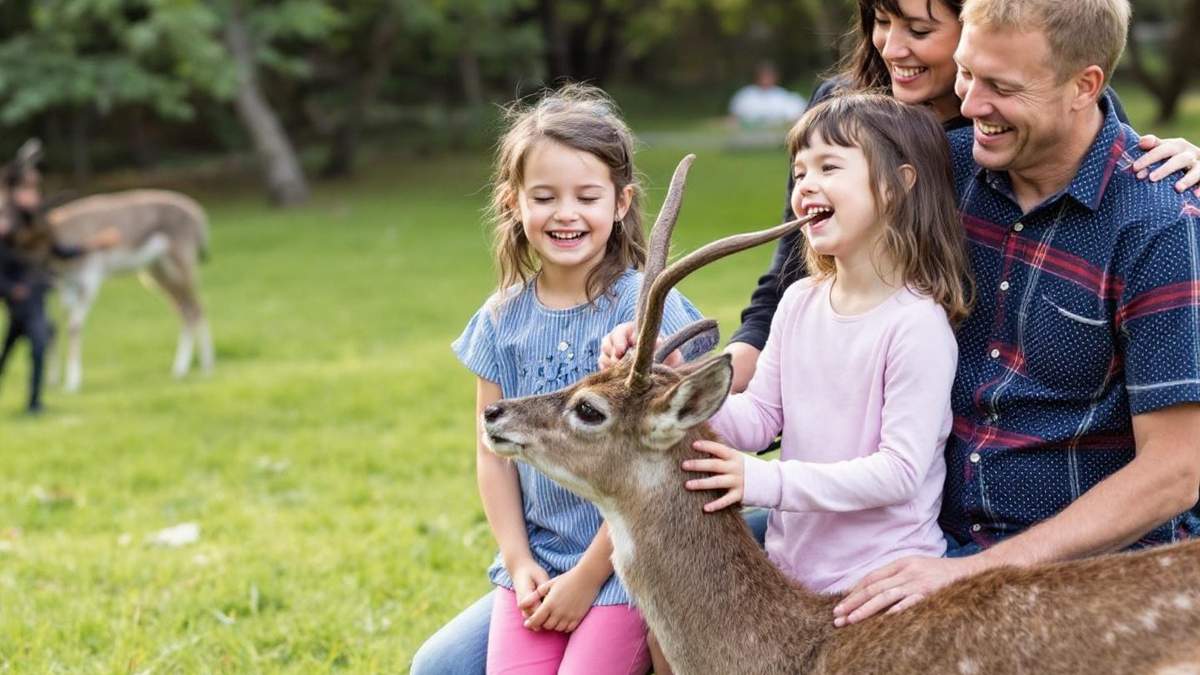
The freely wandering deer in Nara Park are a consistently beloved family experience. Children can buy shika senbei (deer crackers) from vendors and feed the deer that approach them. The Todai-ji temple and its enormous bronze Buddha — one of the world’s largest bronze statues — are genuinely impressive at scale for children who might otherwise find temple visiting abstract. Allow plenty of time in the park for deer interaction.
Hokkaido
For families interested in outdoor activities, Hokkaido in summer offers unparalleled scenery without the humidity of Honshu. Farm tours in the Furano and Biei areas, lavender fields, and the wide open spaces of the interior are unlike anything in the more densely developed south. In winter, Hokkaido’s ski resorts — particularly Niseko — have excellent children’s ski schools and beginner terrain.
Logistics: The Practical Realities
Strollers and Prams
Japan is stroller-accessible in modern areas and genuinely challenging in older temple and shrine districts. The tension is real. Japan has elevator access at most major train stations, but many historical areas have stone staircases, gravel paths, and uneven surfaces that require carrying a stroller.
A lightweight, foldable stroller is strongly recommended over a large pram. Japanese parents use compact city strollers for exactly this reason. Alternatively, a baby carrier for infants under 18 months substitutes well for areas where strollers are impractical.
At train stations: look for lifts at the gate area. They exist at most major stations and are always marked. Allow extra transit time when navigating with a stroller.
Train Travel with Young Children
Japanese trains are quiet and orderly. Young children who are loud or active create mild social friction, though Japanese passengers are invariably polite about it. Travel in the quieter middle-of-day period where possible, bring activities and snacks for long journeys, and reserve seats on the Shinkansen — having a guaranteed seat to contain a toddler is worth the booking step.
Shinkansen trains have space at the rear of each carriage for strollers. Some services have family or nursery seating areas. Check when reserving.
Accommodation with Children
Western-style hotels almost universally offer family rooms or adjoining options. Specify needs when booking. Children under a certain age (often 6 or 12 depending on the property) stay free in the same bed as adults.
Traditional ryokan are often not child-friendly in their standard form, but many welcome families and have family suites with private baths and adapted meal options. Contact the ryokan before booking to confirm child accommodation and whether child-appropriate meals can be prepared. Children under primary school age often stay free or at significantly reduced rates.
For families of four or more, renting a self-catering apartment via Airbnb or VRBO in major cities provides kitchen access for breakfast and baby food preparation, more space than hotel rooms, and often better value overall.
Food for Picky Eaters
If your children eat ramen, rice dishes, grilled chicken, or fried foods, Japan presents no difficulty. For children with more restricted palates:
McDonald’s and MOS Burger are everywhere and provide familiar reference points when needed. Japanese McDonald’s menus include some local items worth trying. Family restaurant chains like Denny’s Japan, Jonathan’s, and Gusto offer extensive illustrated menus covering Japanese and Western dishes, including children’s sets. Convenience stores have onigiri, sandwiches, and yoghurt that are universally available. Italian food has been thoroughly absorbed by Japan and is available at every price point.
Jet Lag Management
Flying to Japan from Europe or North America involves significant time zone differences. Children often adapt more quickly than adults but are unpredictable. Plan the first one or two days without fixed commitments. Give children time to sleep when they need to. Use outdoor exercise and morning light to reset body clocks as quickly as possible. Build in low-key afternoons during the first few days rather than scheduling full itinerary days from arrival.
Ages and Expectations
Under 3: Japan is manageable but genuinely demanding. Stroller logistics, sleep schedules, and the intensity of a foreign environment mean keeping days short and paced around nap times. Focus on outdoor spaces, parks, and sensory experiences — deer in Nara, a beach in Kamakura, a market with interesting food — rather than trying to cover conventional sightseeing targets.
Ages 3 to 7: This age group often gets the most from Japan. Old enough to engage with novelty, young enough to be delighted by deer, trains, robots, and new foods. Keep activity levels manageable and build in unstructured play time. Theme parks and interactive museums are excellent for this age.
Ages 8 to 12: This age group typically loves Japan. They can appreciate the food, the technology, the scale of cities, and the cultural differences in a more articulate way. Anime, gaming, and pop culture connections give Japan a specific resonance for many children in this range. Tokyo in particular aligns well with their interests. Consider giving them structured decision-making — letting them choose a day’s activity, pick a restaurant, or navigate a short journey.
Teenagers: Japan is excellent for teenagers who are into anime, gaming, food, fashion, or simply new experiences. The independence and safety of Japanese cities allow supervised freedom that many cities worldwide cannot offer safely. Shibuya, Harajuku, Akihabara, and Osaka’s Shinsaibashi are particularly engaging. Teenagers who are given ownership of parts of the itinerary typically engage more deeply with the experience.
Practical Tips for Family Travel
Start days early and end them reasonably. Japan’s popular attractions are less crowded before 9am, and children who wake early due to jet lag make natural use of those windows. Pack a foldable umbrella — Japanese weather changes quickly. Carry your children’s health insurance documentation and know the location of the nearest international clinic in each city you visit. Japan has excellent medical care; knowing where it is reduces anxiety.
Take the pace down a notch from what you would manage travelling as adults. Japan has more than any itinerary can accommodate. The reward of going slower with children — letting them lead the deer in Nara for twenty minutes longer than planned, finding an arcade that absorbs everyone for an hour — is typically a richer family experience than efficiently ticking off highlights.
Japan rewards families that approach it with reasonable flexibility and openness. The challenge of managing logistics in a foreign country with children is real, but the rewards — the deer, the trains, the food, the scale of Tokyo, the strange beauty of a temple garden at dawn — are experiences that most families say are among the most memorable they have shared together.