Why Winter Is Japan's Most Underrated Season
Last updated: March 2026
Spring cherry blossoms get the magazine covers. Autumn foliage fills the travel photography feeds. Our Japan in winter guide covers the full season in detail. Summer has the festivals and fireworks. And winter? Winter sits quietly at the end of the season rankings, often mentioned as a practical footnote — avoid if you dislike cold — when it deserves to be described as Japan’s most distinctive and in many ways most rewarding season.
This is the season when snow monkeys sit in steaming outdoor onsen with snow on their heads in the Nagano mountains. When Hokkaido’s ski resorts receive the world’s finest powder snow. When Kyoto’s Kinkaku-ji becomes genuinely magical with snow on its gold-leafed roof and around its reflection pond. When onsen culture is at its most pleasurable. When the crowds that make cherry blossom season feel like a slow-moving queue have disappeared, and you can walk through Fushimi Inari at dawn with almost no one around.
Here is the full case for winter Japan.
Snow Monkeys: An Image That Lives Up to Reality
Jigokudani Monkey Park in Nagano Prefecture is home to a troop of Japanese macaques that have discovered, over generations, that the natural outdoor hot spring pool in the valley floor is an excellent place to warm up in winter. Photographs of their pink faces and closed, contented eyes peeking out of steaming water with snow falling around them have become iconic images of Japan.
The reality lives up to the image. The monkeys are entirely wild and entirely habituated to human visitors, which means you walk within arm’s reach of them without causing alarm. They groom each other, care for infants, squabble over prime bathing positions, and ignore visitors with the practiced disdain of animals who have been the subject of a thousand camera lenses.
The walk to the park from Kanbayashi Onsen (the nearest bus stop) is 30 minutes through forest along a path that becomes atmospheric with winter snow. Visit in January and February for the highest probability of seeing the monkeys in the water — when temperatures rise in late winter and early spring, they use the pool less. Combine a monkey park visit with a night at one of Yamanouchi’s onsen, where you can sit in an outdoor bath while snow falls — a parallel experience to the monkeys just up the road.
World-Class Skiing
Japan’s ski resorts are among the world’s finest, and they are significantly underappreciated outside Asia and the Australian ski market. Cold Siberian air masses crossing the Sea of Japan and picking up moisture produce snowfall patterns — consistently fine, dry powder in volumes that European and North American resorts rarely see — that have made “JaPow” a widely used term in the global skiing community.
Hokkaido: Niseko and Beyond
Niseko, on Hokkaido’s Shiribeshi Subprefecture, is Japan’s most internationally known ski resort. Its four interconnected resorts (Grand Hirafu, Hanazono, Niseko Village, and Annupuri) sit on the flanks of Mount Niseko-Annupuri and receive on average 15 metres of snowfall per season. The powder is legendary: light, cold, and deep. The resort has developed significant international infrastructure including English-speaking staff, Western-style restaurants, and international accommodation standards that make it uniquely accessible to non-Japanese visitors.
Niseko is not the only worthwhile destination in Hokkaido. Furano, in the island’s interior, has excellent skiing, beautiful scenery, and considerably fewer international visitors. The ski culture there is more Japanese in character — quieter, less expensive, and with superior local food at lower prices. Rusutsu has one of Japan’s best resort layouts with its interconnected hills. Tomamu’s Ice Village winter installation — ice castles, an ice bar, and frozen water activities on a resort estate — is a remarkable attraction beyond the skiing itself.
Nagano: Hakuba and Nozawa Onsen
The 1998 Winter Olympics left Nagano with world-class ski infrastructure. Hakuba, the primary venue, has nine interconnected resorts serving all ability levels and receives heavy snowfall from Japan Sea weather systems. The skiing in the Hakuba Valley is excellent and the town has developed solid international facilities.
Nozawa Onsen combines skiing with one of Japan’s finest onsen towns in a way that perfectly captures what winter Japan offers at its best. The village has 13 communal outdoor baths (sotoyu) that locals and visitors use freely, walking between them in yukata and wooden clogs in the snow. This combination of ski culture and traditional Japanese bathing culture — the steam, the snow, the worn stone paths between bath houses — is unique to this village.
Zao: Snow Monsters
Zao Onsen in Yamagata Prefecture is famous for its juhyo — “snow monsters,” the extraordinary shapes formed when wind-blown snow and ice accumulate on fir trees at high altitude, creating massive alien formations that line the ski runs. Skiing between rows of snow monsters in mist is a Japan-exclusive visual experience that has no equivalent anywhere else in the ski world.
Winter Illuminations
Japan’s winter illumination culture is one of the season’s most visible features. Every major shopping district in every major city installs winter lights from late November through January. Department stores compete for the most elaborate exterior displays. Theme parks and gardens create dedicated illumination events that draw visitors specifically.
The most famous illuminations are worth planning a trip around:
Nabana no Sato in Mie Prefecture is an island garden that transforms entirely into an illumination park from October through mid-March. The main tunnel of lights — a 200-metre corridor of LED flowers that change in programmed sequence — is one of Japan’s most photographed seasonal images.
Kyoto’s Arashiyama Hanatouro and Higashiyama Hanatouro events light the lanterns and pathways through historical districts in early to mid-December. Walking the stone-paved lanes of Higashiyama under hanging lanterns while the old machiya townhouses glow softly behind paper screens is one of the most atmospheric seasonal events in Japan.
Ashikaga Flower Park in Tochigi Prefecture transforms for winter with light recreations of its famous wisteria flowers, drawing visitors who come in spring for the real blooms.
Onsen at Their Finest
The relationship between winter and onsen in Japan is fundamental. Read our guide on onsen and tattoos in Japan if you have tattoos before visiting. Soaking in hot mineral water while cold air bites at your face and snow falls around you or settles in caps on surrounding cedar branches is one of the most purely pleasurable experiences available in Japan. Outdoor baths (rotenburo) are the definitive winter onsen experience. The contrast between the typically 40 to 42 degree water and the cold air — often below zero in Hokkaido and Nagano — is immediate and intense and deeply relaxing.
Recommended winter onsen destinations:
Noboribetsu in Hokkaido is Japan’s most dramatic geothermal landscape, with boiling sulphurous rivers running through the valley and multiple spring types with different mineral compositions. Snow-covered and atmospheric in winter.
Nyuto Onsen in Akita Prefecture consists of seven isolated onsen inns deep in the Tazawa-ko highland, each with different mineral springs, surrounded by beech forest under winter snow. One of Japan’s most remote and genuinely atmospheric onsen destinations, and worth the journey.
Kinosaki Onsen in Hyogo Prefecture has seven public baths in an Edo-period town. Visit all seven in one evening, walking between them in yukata through lightly falling snow. Extraordinarily beautiful and one of the most complete traditional onsen-town experiences in Japan.
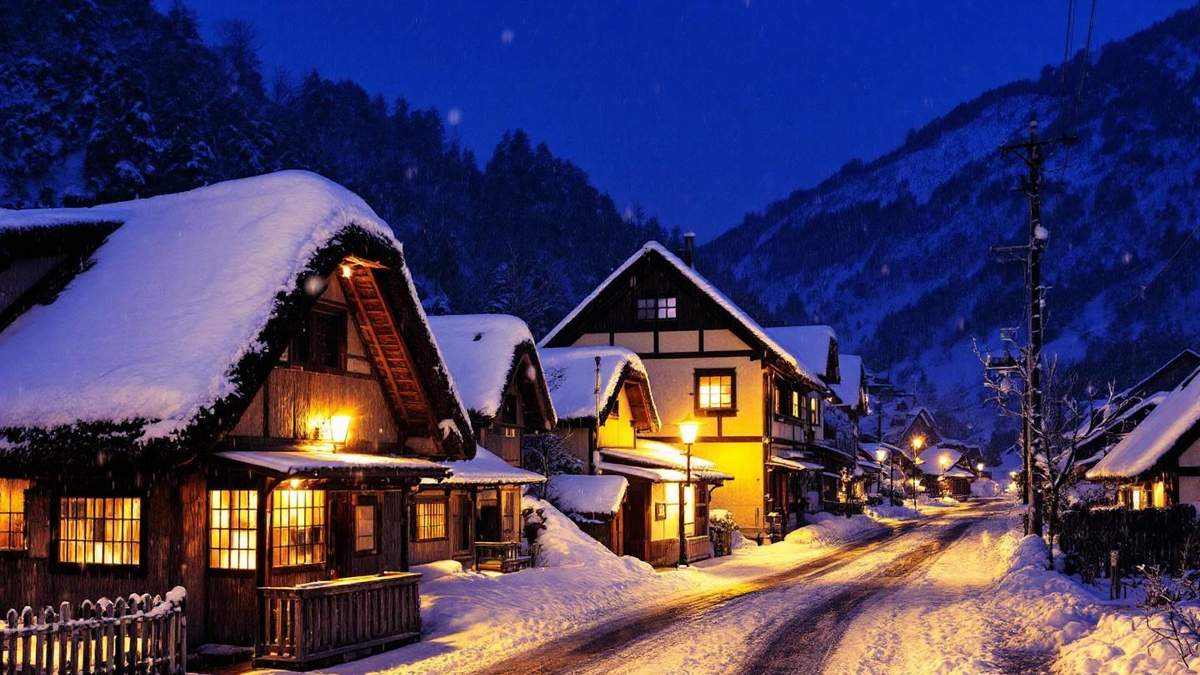
Ginzan Onsen in Yamagata Prefecture is perhaps the most photogenic onsen town in Japan — historic wooden inn buildings lining both sides of a river gorge, gaslights burning in the snow, steam rising from every surface. The photographs that most reliably cause people to add Yamagata to their itinerary were taken here in winter.
Fewer Crowds and Lower Prices
January and February are Japan’s quietest tourist months. Cherry blossom season has not begun. Summer holiday travel has ended. Golden Week is months away. The combination produces conditions that are rare in popular Japan.
At Fushimi Inari on a weekday morning in January, you can walk the full mountain circuit with almost no other people. At Arashiyama’s bamboo grove, the same. At Kyoto’s most popular temples, entry is possible without queuing. The experience of being at these places — which are genuinely extraordinary in themselves — is fundamentally different when you are not moving through them in a dense crowd.
Accommodation prices in January and February are typically 20 to 40 percent lower than peak spring season prices. Business hotels that charge 12,000 yen per night during cherry blossom season drop to 8,000 yen. Ryokan in popular areas are available without the months-in-advance booking requirement of peak season.
The one exception is the New Year period from January 1 to January 3, when domestic travel peaks and accommodation prices spike accordingly. The period from January 4 through late February is otherwise Japan’s quietest and most affordable tourist window.
Winter Food Culture
Japan’s food culture is deeply seasonal, and winter produces some of its finest ingredients and most satisfying dishes.
Nabe (hot pot) is the definitive winter food. A pot of broth maintained at a simmer at the table, into which you add sliced beef or pork, tofu, vegetables, mushrooms, and mochi, cooking and eating continuously. Shabu-shabu and sukiyaki are the celebrated formal versions; informal nabe at an izakaya or in a restaurant is more relaxed and just as good. Eating nabe while looking out at a snowy street is one of winter Japan’s essential experiences.
Fugu (puffer fish) is considered a winter delicacy. The fish’s clean white flesh is served as translucent sashimi, in hot pot, or deep-fried as karaage. The famous toxicity of specific organs means it is served only by licensed chefs who have completed rigorous training. The flavour is mild and delicate — the experience combines excellent food with a frisson of its legendary reputation.
New sake (shiboritate) arrives in November and December. Sake brewing is traditionally a winter activity, and freshly pressed new sake (shiboritate) — unpasteurised, unfiltered — has a freshness and vitality that differs significantly from aged sake. Sake breweries across Japan hold open days and new sake release events from November through January. Attending a sake brewery open day in winter, particularly in Niigata, Kyoto, or Hyogo Prefecture, is one of the best food experiences Japan offers.
Crab: Hokkaido’s king crab, snow crab (zuwaigani), and horsehair crab are at peak season in winter. Eating freshly caught crab in a Hokkaido fishing town — broiled, steamed, or in hot pot — is a winter Japan experience with no seasonal equivalent. The Hokkaido city of Hakodate has exceptional crab at its morning market.
Oden: The simmered hot pot of fish cakes, tofu, daikon, and various items in dashi broth, sold at convenience stores and izakaya throughout winter, is comfort food at its most accessible. A cup of oden in a warm konbini on a cold evening is one of winter Japan’s small but reliable pleasures.
Kyoto in Winter: An Underappreciated Moment
Kyoto without the crowds is a different city. The garden at Ryoan-ji filled with snow, the 15 stones visible in silence with no queue behind you — this is the version of that garden that the designer intended. Kinkaku-ji with snow on its golden roof and frost around its reflection pond is what the photographers who made that image famous actually saw, before it became the world’s most visited Japanese postcard.
The Philosopher’s Path in early February, with bare branches and frost on the canal, has a spare beauty that the maple canopy of autumn or the cherry blossoms of spring — as spectacular as both are — does not produce. It requires a different aesthetic sensibility, one that finds beauty in restraint and emptiness. But it is there for the traveller willing to visit in the cold.
The Practical Case
Beyond aesthetics and experience, winter Japan makes logistical sense.
Lower accommodation prices across the board mean your budget stretches further or allows for upgrades. Fewer queues at popular attractions mean your time is spent experiencing rather than waiting. Availability of ryokan and specialist accommodation that would be fully booked months in advance during peak seasons makes certain experiences accessible that are otherwise difficult to arrange. The cold weather encourages the kind of slowing down — longer meals, more time in onsen, evenings in warm izakaya — that produces some of the most memorable travel experiences Japan offers.
The counter-argument — that winter is cold, some mountain roads are closed, and some outdoor activities are restricted — is true but manageable. Japan has an excellent indoor culture. Cities are heated. Trains are warm. Onsen are everywhere. The cold is not a hardship but the condition that makes the warmth meaningful.
Winter Japan is not a compromise destination. It is a fully realised seasonal experience that reveals aspects of Japan — its relationship to snow, to warmth, to the pleasures of a hot pot with cold sake and good company on a freezing evening — that no other season shows quite as clearly.