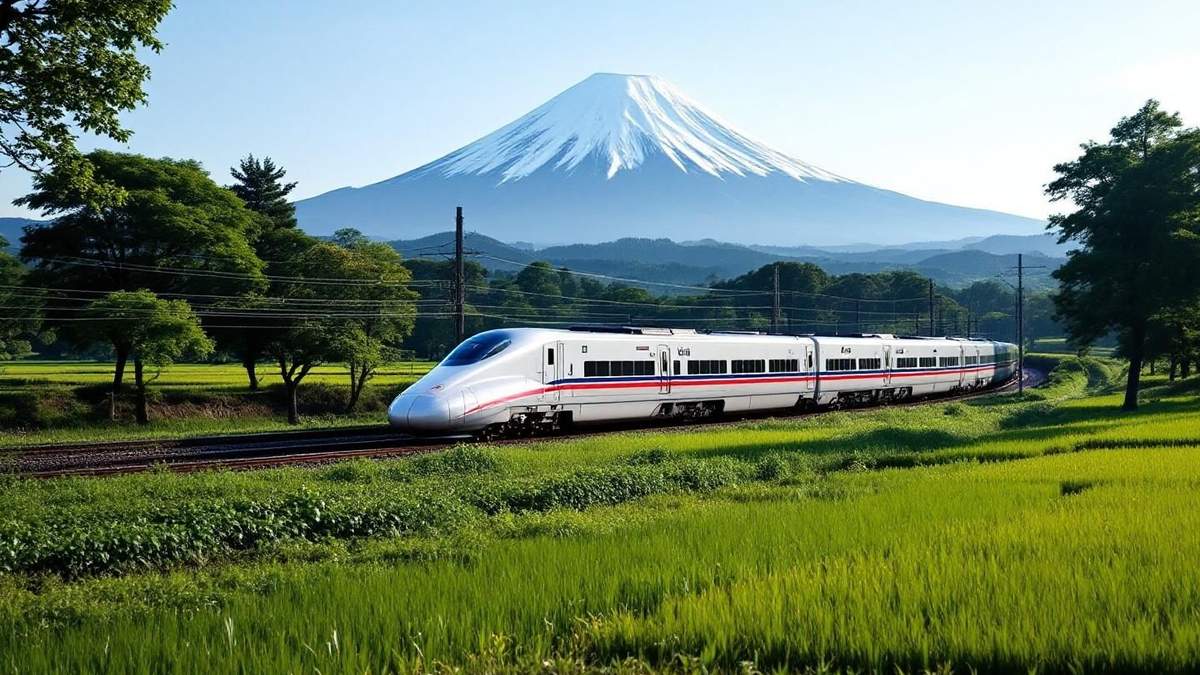
The 10 Best Day Trips from Tokyo
Last updated: March 2026
Tokyo is one of the world’s great cities, but its greatest practical advantage for the traveller might be its location. The Tokyo day trips guide covers all options in depth. Within two hours by train lies an extraordinary range of escapes: volcanic mountain landscapes, feudal shrine complexes, old castle towns, fishing harbours, river gorges, and coastal promenades. No other major city in the world places this variety this close to its centre. Whether you have a week in the capital or a month, these ten day trips will broaden your experience of Japan enormously.
1. Hakone
Hakone is the classic Tokyo day trip, and for good reason. Set in a volcanic caldera on the edge of Fuji-Hakone-Izu National Park, the area combines mountain scenery, geothermal activity, excellent museums, and some of Japan’s finest ryokan. On clear days — most reliably in autumn and winter — Mt Fuji appears above the lake in a view that has been celebrated in Japanese art for centuries.
The Hakone Free Pass (available from Odakyu stations and their website) covers return travel from Shinjuku on the Romancecar limited express, plus unlimited travel on all of Hakone’s transport network: the Hakone-Tozan switchback railway, the Gora cable car, the Owakudani ropeway, and the Lake Ashi ferry. It also includes discounts at most major attractions. Buy it even if you plan to use a JR Pass for the inbound journey.
Key stops: the Hakone Open-Air Museum, the geothermal vents at Owakudani, a ropeway crossing above volcanic steam, and the ferry across Lake Ashi to the traditional torii gate visible from the water. The town of Yumoto offers excellent onsen foot baths and a relaxed shopping street.
Travel time: approximately 85 minutes from Shinjuku on the Romancecar limited express.
2. Nikko
Nikko is arguably the most ornate place in Japan. The Tosho-gu shrine complex — built to enshrine the founder of the Tokugawa shogunate — is a riot of gold leaf, lacquer, carved mythological animals, and coloured woodwork that stands in absolute contrast to the austere simplicity found elsewhere in Japanese architecture. The complex is surrounded by towering cryptomeria cedar forests and backed by mountains, which makes the setting as memorable as the buildings.
The main sights are clustered together and walkable. Beyond Tosho-gu, the Rinno-ji temple, Futarasan Shrine, and the famous Sleeping Cat carving are all within the same complex. A few kilometres away, the Kegon Waterfall drops 97 metres into a rocky gorge. If you visit in autumn, the surrounding mountains put on a foliage display that rivals anything in the country.
Nikko requires a full day. Take the first train and return on the last one. The JR Pass covers the journey from Ueno on the JR Nikko line, but the Tobu Nikko line from Asakusa is often faster and more convenient, and tourist passes are available.
Travel time: approximately 2 hours from Asakusa on the Tobu Spacia limited express.
3. Kamakura
Kamakura was Japan’s de facto capital in the 12th and 13th centuries, and the legacy of that era fills the hillsides and valleys around this small coastal town. The Great Buddha (Kotoku-in Daibutsu) — a 13.35-metre bronze figure seated in open air since its enclosing hall collapsed in a typhoon in the 15th century — is the most famous image, but Kamakura’s true pleasure is the network of hiking trails that connect its temples and shrines through forested hills.
The Daibutsu Hiking Trail links Kita-Kamakura station to the Great Buddha and then to Hase, passing several atmospheric woodland temples. The Tenen Hiking Course offers even more dramatic forest scenery. Down by the sea, Kamakura’s coast has a relaxed beach town energy that feels completely different from Tokyo — cafe-lined streets, surf shops, and a working fishermen’s harbour.
Kamakura pairs well with Enoshima (see below) as the two are only a few kilometres apart. The Kamakura-Enoshima pass from Tokyo makes this combination economical.
Travel time: approximately 1 hour from Tokyo Station on the Yokosuka line.
4. Kawagoe
Known as “Little Edo,” Kawagoe preserves a remarkably intact district of Edo-period warehouse buildings (kura-zukuri) made of clay-walled fireproof construction. Walking the main street of these dark-plastered buildings, past traditional sweet shops and confectioners selling the town’s signature sweet potato snacks, feels genuinely like stepping back into the merchant-town atmosphere of 19th-century Japan.
The candy alley (Kashiya Yokocho) is a short lane packed with old-fashioned sweet shops that has been trading continuously since the Meiji era. The Toki no Kane bell tower marks the hour in the middle of the historic district. The area is small enough to cover comfortably in half a day, which makes it an easy morning trip if you want to return to Tokyo for an evening activity.
Kawagoe is on the Tobu Tojo line from Ikebukuro — no reserved seats required, no complex passes needed. It is the most straightforwardly accessible day trip on this list.
Travel time: approximately 30 minutes from Ikebukuro on the Tobu Tojo Express.
5. Yokohama
Japan’s second-largest city is so close to Tokyo that many travellers include it as an afternoon extension rather than a dedicated day trip. But Yokohama deserves a full day. Its Minato Mirai waterfront district has a different scale and atmosphere from anything in Tokyo: wide harbour promenades, art deco-influenced buildings, the Landmark Tower observation deck, and excellent museums.
Yokohama’s Chinatown is the largest in Japan and one of the best in Asia — not a tourist confection but a working community with restaurants that have been feeding the city for over a century. The Sankeien Garden in the southeast of the city is one of the finest landscape gardens in the Kanto region, with traditional buildings transplanted from around Japan set in a classical garden layout.
The Yamashita Park waterfront walkway, the NYK Hikawa Maru museum ship, and the vintage Akarenga (Red Brick Warehouse) complex at the waterfront round out a very satisfying day.
Travel time: approximately 30 minutes from Shibuya on the Tokyu Toyoko line.
6. Enoshima
Enoshima is a small island connected to the mainland by a stone causeway, lying just off the coast at the mouth of the Katase River. It punches far above its size. The island rises steeply from its tourist-facing entry street (lined with seafood restaurants, dried fish vendors, and souvenir shops) up to a cliff-edge garden with views of the Shonan coast and, on clear days, Mt Fuji standing out above the Pacific Ocean.
The Iwaya Caves at the island’s far end are ancient sea caves used for Buddhist worship, accessible via a short walk through tunnels lit by candles. The Enoshima Sea Candle lighthouse tower charges a small fee but offers one of the most photogenic views in the Kanto region at sunset.
Enoshima pairs naturally with Kamakura, just a few kilometres north, or with the beach town of Shonan for a summer day. The Enoshima Electric Railway (Enoden) connecting the two is a narrow, heritage-feel rail line that runs through residential streets and along the coast.
Travel time: approximately 1 hour from Shinjuku on the Odakyu line to Katase-Enoshima.
7. Mount Takao
Mt Takao (Takaosan) is the most climbed mountain in the world by some counts, and with good reason. At 599 metres it is accessible to virtually everyone, reachable from central Tokyo in under an hour, and genuinely beautiful. The mountain is covered in dense broadleaf forest that turns extraordinary colours in autumn. A network of trails of varying difficulty leads to the summit, some paved and suitable for anyone, others unpaved and more demanding.
Trail 1 is the main route — paved, with a chairlift option partway up, passing the Yakuo-in temple complex perched dramatically on the mountainside. The temple’s Tengu (long-nosed goblin deity) iconography appears everywhere on the mountain and gives it a distinctly mystical character. From the summit, Mt Fuji appears on clear days, especially in winter when the air is most transparent.
Mt Takao is the easiest day trip to organise: take the Keio line from Shinjuku directly to Takaosanguchi station, no advanced planning required. It is ideal for a half-day escape, suitable for children, and requires no specialist equipment.
Travel time: approximately 50 minutes from Shinjuku on the Keio line.
8. Chichibu
Chichibu sits in a mountain valley northwest of Tokyo, ringed by peaks and cut through by the Arakawa River. It is one of the least-visited areas on this list — which is precisely its appeal. The town has a genuine local character that many day-trip destinations have lost to tourism. Its main draw is the Chichibu Shrine at the town’s centre and the famous Chichibu Night Festival in December, one of Japan’s three great float festivals, which draws enormous crowds for the fireworks and illuminated procession.
Outside festival season, Chichibu offers excellent hiking, particularly in autumn when the surrounding hills are blanketed in red maples and yellow ginkgoes. The Nagatoro rafting area (see below) is just a short local train ride away and pairs well with Chichibu. The Seibu Chichibu line from Ikebukuro runs regular limited express services that make the journey smooth.
Travel time: approximately 80 minutes from Ikebukuro on the Seibu Chichibu limited express.
9. Mount Fuji Area (Fuji Five Lakes)
Mt Fuji itself is climbable only in summer (July to early September), but the Fuji Five Lakes region at its northern base offers year-round access to Japan’s most iconic scenery. Read our Mount Fuji guide for full details on visiting. Lake Kawaguchiko is the most accessible and the most developed, with boat trips, tourist hotels, and the Kachi Kachi Ropeway providing elevated views of the mountain reflection in the lake.
For less-visited perspectives, Lake Motosu is where the 1,000-yen banknote view was photographed. Lake Saiko has a quieter, more natural atmosphere and access to the Narusawa Ice Cave and Fugaku Wind Cave — lava tubes formed by the mountain’s last major eruption. The Chureito Pagoda at Arakurayama Sengen Park, reached by a long staircase above Fujiyoshida town, is one of the most photographed views in Japan: the five-storey pagoda in the foreground, Mt Fuji filling the sky behind.
Bus services connect the area from Shinjuku’s highway bus terminal or from Kawaguchiko and Fujisan stations. Allow a full day — the area is spread out and relies heavily on infrequent local buses.
Travel time: approximately 2 hours from Shinjuku by highway bus to Kawaguchiko.
10. Nagatoro
Nagatoro is where the Arakawa River cuts through a narrow gorge of dramatically eroded rock, creating a landscape unlike anything else within reach of Tokyo. The gorge walls — polished smooth and sculpted into flowing forms by millions of years of river action — are a designated natural monument. Traditional wooden river boats (yakatabune) pole visitors through the gorge for a 30-minute journey that is genuinely atmospheric, particularly in autumn.
The area also has good hiking along the Hodosan ridge, a pleasant temple at Hodosan Shrine above the gorge, and excellent local soba restaurants. The river swimming and camping in summer attract domestic visitors seeking an escape from city heat. Nagatoro is refreshingly underdeveloped for its natural quality and makes for a very relaxed, crowd-free day out even in peak seasons.
It combines naturally with Chichibu, just a few stops away on the Chichibu Railway — an old regional line that is itself a pleasure to ride.
Travel time: approximately 2 hours from Ikebukuro, transferring at Hanyu or Yorii to the Chichibu Railway.
Planning Your Day Trips
Most of these destinations are best visited midweek if your schedule allows. Weekend crowds at Kamakura, Hakone, and the Fuji area can be substantial, particularly in cherry blossom season and autumn foliage season. Start as early as possible — Japan’s day trippers tend to sleep in, and arriving before 9am at most of these destinations gives you the first hour with dramatically fewer people.
For transport, the Suica IC card handles all local transport within the destinations. For the journey out from Tokyo, each destination has its own most efficient route described above. Carrying a printed or downloaded map is worthwhile for destinations with limited English signage, particularly Nikko, Chichibu, and Nagatoro.